Genesis 1:14-19
And God said, “Let there be lights in the vault of the sky to separate the day from the night and let them serve as signs to mark sacred times, and days and years, and let them be lights in the vault of the sky to give light on the earth.” And it was so. God made two great lights—the greater light to govern the day and the lesser light to govern the night. He also made the stars. God set them in the vault of the sky to give light on the earth,to govern the day and the night, and to separate light from darkness. And God saw that it was good. And there was evening, and there was morning—the fourth day.
Last month, we looked at the context Francis was living in prior to his composition of the Canticle of the Creatures and we witnessed Francis experiencing a very human moment of despondency related to the suffering he was enduring. To counteract his despair, he turned to God in prayer. God responded by promising Francis the Kingdom and Francis then committed himself unconditionally to the praise of God from that moment forward. The Canticle is the culmination of Francis’ desire to teach all of Creation to properly praise God, as is His due.
Francis likely composed his masterpiece in three pieces at three separate times. Strophes one through nine and fourteen came first. One and two are introductory and praise God directly. Fourteen, also a direct statement of praise, is most likely a refrain that would have been repeated after each of the others. Three through nine are exhortations directed to the Sun, Moon, Stars, Wind, Water, Fire and Earth. Each begins with the words “praised be you, my Lord,” ensuring that the theme of praise is preeminent throughout the whole of the composition.
Strophes ten and eleven, with their message concerning pardon and peace, came next in response to a dispute between the Mayor and Bishop of Assisi. Finally, the last two strophes, focused on Sister Death, come at the very end of Francis’ life as he is facing his own mortality.
The most typical way to view the structure of the Canticle is to see it in three parts corresponding to the three distinct time frames in which it was composed. But over the years, commentators have discovered other ways to interpret how the work is organized. In this reflection and the next, we will look at two of those alternatives in the hope of gaining a more profound insight into the depth and quality of Francis’ work.
_________
In his book Francis: Master of Prayer, Leonhard Lehmann, OFM Cap, suggests that the Canticle can be organized into five sections as follows:
- Strophes 1-2: Opening
- Strophes 3-5: Concerning Heaven
- Strophes 6-9: Concerning the Four Constituent Elements of Creation
- Strophes 10-13: Concerning Man
- Strophe 14: Closing
When the Canticle is looked at from this perspective, we find that it is organized according to the flow of Creation. The first section is directed to the source of Creation, God. God existed before Creation, and it is His Love that causes Creation to come into being. The very first verse of Genesis confirms this:
“In the beginning God created the heavens and the earth.”
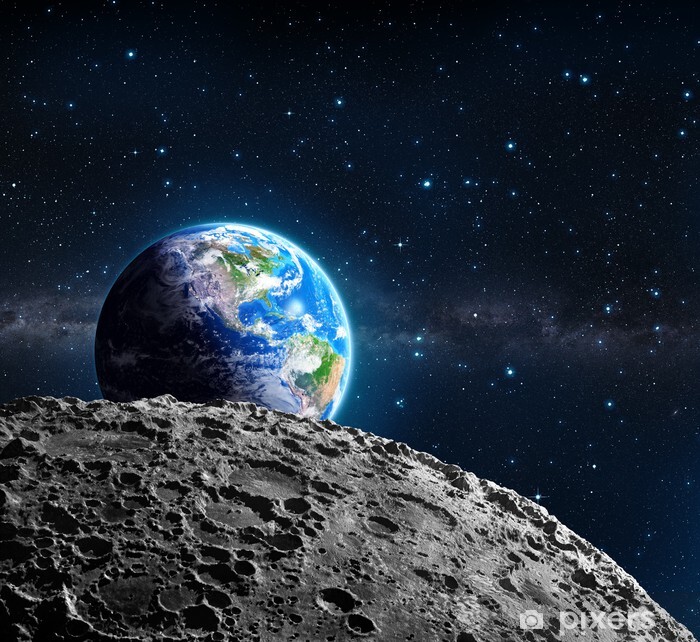
After acknowledging and praising the Creator, Francis then moves to the first aspect of God’s Creation, His own personal domain, the heavens. These are represented in the composition by Brother Sun, Sister Moon, and the stars. Brother Sun comes first and is given special accord because he “bears a likeness to You, Most High One.” As the source of light, he is “beautiful and radiant with great splendor,” and he alone merits the honorific “Sir.” His proximity to God the Creator is indisputable.
From there the flow moves to the earth. To fully appreciate what Francis is doing here, we must recall that before the advent of modern science, the ancients defined the four classical constituent elements of matter as Air (or Wind), Water, Fire and Earth. These classifications held in medieval times as well. Francis predates modern chemistry and physics, and he would not have been aware of atoms or the more than one hundred chemical elements we now use to define matter.
When he refers to Brother Wind, Sister Water, Brother Fire and Sister Mother Earth, he is referring to what he believed to be the building blocks of all matter. It seems strange to us to identify them as creatures, but to Francis, they are in fact the initial creations that God then used to create everything else. By labeling the fundamental elements creatures and insisting that they praise their Creator, Francis is effectively calling on all matter within Creation to praise God in a concrete and tangible way.
From here, the flow then moves to man. If you review the entire first chapter of Genesis, you find that everything else is created before man. The heavens, the sea, the dry land, plants, the creatures of the sea, the birds of the air, and the animals on the land all precede man in Creation. Only at the end of the sixth day does God fashion man in His image to rule over all that He has already brought into existence.
Man appears to be at the end of the flow of Creation, but the flow is ultimately not linear, but circular. For the flow to be complete, the final movement must be back to God. Creation does not become whole until it is referenced back to the Being who initiated the process and who perpetually sustains it via His Love. Thus, the final strophe returns to praise for the Creator.
_________
- Were you aware that Air, Water, Fire and Earth were thought to be the constituent elements of all matter in Francis’ time? How does understanding that illuminate Francis’ desire to exhort all of Creation to the praise of God through the Canticle? Article 8 of the Rule says that “prayer and contemplation” should be “the soul of all they are and do.” How does praise fit into your prayer life? Will praise receive a greater share of your prayer time after seeing the Canticle from this perspective?
- This structure suggests a circular pattern to the flow of Creation, including your creation. God is the alpha and the omega, the initiator of Creation and its destination. God deliberately loved you into being and He desperately wants you to return to Him. Sister Bodily Death plays a key role in this pattern. Does looking at the Canticle as a circle help you understand what it means to “serenely tend toward the ultimate encounter with the Father” as you are called to by Article 19 of the Rule?
 OFS Ongoing
5 thoughts on “Canticle of the Creatures: The Flow of Creation”