The Major Legend of Saint Francis by St. Bonaventure, Chapter Nine:
Aroused by everything to divine love,
he rejoiced in all the works of the Lord’s hands
and through their delightful display
he rose into their life-giving reason and cause.
In beautiful things he contuited Beauty itself
and through the footprints impressed in things
he followed his Beloved everywhere,
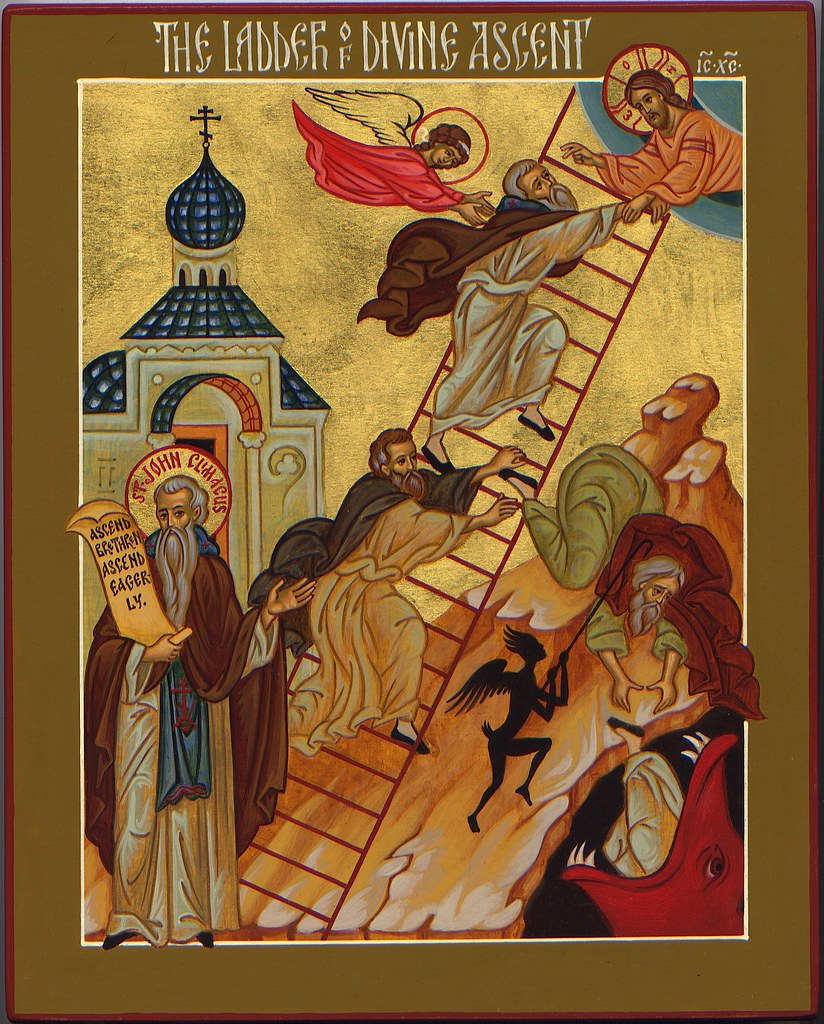
out of them making for himself a ladder
through which he could climb up to lay hold of him
Who is utterly desirable.
With an intensity of unheard devotion
he savored
in each and every creature
--- as in so many rivulets ---
that fontal Goodness
and discerned
an almost celestial choir
in the chords of power and activity
given to them by God,
and, like the prophet David,
he sweetly encouraged them to the praise of the Lord.
In the last two reflections we looked at the themes of “Goodness” and “Kinship” present in the Canticle. We saw these were not isolated but intimately connected. The shared commonality of the “Goodness” inherent in all elements of Creation generates a unity between God’s creatures best described by the idea of kinship. We also found that mankind is deeply dependent on the rest of Creation for its well-being while acknowledging that, in return, human beings have a singular responsibility to the balance of Creation. Kinship bestows on us the duty of providing an enlightened and loving stewardship to all our “brothers” and “sisters,” animate and inanimate, that they may thrive and function in the exact way that God providentially designed them to.
The same holds true as we move on to our third theme. We will find these themes once again building on one another and we will see them culminate in a final theme that will bring our series examining the Canticle to a close. This final theme explores Creation’s ability to reveal God to us and to continually bring our attention back to Him.
At the end of the last reflection, we concentrated on article eighteen of the OFS Rule as we considered a couple questions to help us complete our understanding of the idea of kinship. That article states that all of God’s creatures “bear the imprint of the Most High.” This quote then provides the jumping off point for our final reflection.
If we look closely at the opening quote from Bonaventure, we find the source for the word “imprint” in the Rule. When Bonaventure talks about “the footprints impressed in things,” he is talking about the “imprint” God has left on each and every element of His Creation.
In today’s crazy and hectic world, it is easy to take for granted the Love that God imbues into every aspect of this paradise that He has placed us in. We often go through the motions of our daily life, never stopping to notice God’s Loving action and presence in each and every detail that surrounds us.
- Did you thank Him for “Brother Sun” and the blue sky that greeted you today when you awoke?
- Or for your “sister” birds that serenaded you?
- Or, if it was cloudy or raining, did you thank Him for the live giving gifts of “Sister Water?”
- Or if it was a chilly winter morning, did you thank Him for the gift of “Brother Fire” and the heat he generates to protect you from the cold?
- Did you thank Him at each meal and snack for the sustenance that “Sister Mother Earth” provides?
- Or for the loveliness of the flowers that she furnishes to bring Beauty into your day?
- Or for the trees at the side of the road that work with “Brother Wind” to provide the oxygen you breathe?
We are meant to see Him, recognize Him, and discern His Loving Nature and Goodness in every moment of every day. Everything surrounding us calls us to Him and we are expected to be open and present to His call at all times. In every instant, He does everything He can to make Himself known. First by constantly sustaining this paradise that is our home, and then second by sending His son into our paradise via the Eucharistic, which He causes to be celebrated non-stop so that our opportunity at redemption is continuous and never ending.
If we properly embrace Poverty and Penance in our life, then we will always be turning away from worldliness and toward Him. Creation, in accord with His perfect and precise design, calls us to this conversion incessantly, most especially in times of distress and difficulty. If we are intent on righteousness and virtue, then we will not allow ourselves to be diverted by the enemy and the chaos he intentionally introduces into our earthly existence. Instead, we will focus on the exquisiteness of Creation and allow it to call us back to Him and we will center our lives on the Most Beautiful Savior that God continually sends to bring us back into full and complete communion with Himself.
When Creation convinces us to turn our countenance away from worldliness and toward God, we then have a chance to live into the ecstasy of Francis which is the basis of the quote from Bonaventure.
We can be “aroused by everything to divine love.”
We can “rejoice in all the works of the Lord’s hands” and “through their delightful display, rise into their life-giving reason and cause,” which is God Himself.
We can intuit “Beauty itself,” and “make for ourselves a ladder” which will allow us to “climb up and lay hold of Him who is utterly desirable,” Who is Jesus Himself.
We can “savor the fontal Goodness” of God and hear the musical “chords of power of the celestial choir” of Creation. This in turn should cause us to sing our own canticle of praise as we are inspired by the Holy Spirit to follow the examples of David, Daniel and Francis. Or, if we are not confident in our ability to craft our own song, we can use one of theirs (Franciscans, or course, would opt first for the Canticle) and we can be assured that God will accept it as our own.
Just as with the first two themes, this final theme is also universal and foundational within the Franciscan charism. The words “Poverty” and “Penance” may not be overtly present, but in the Franciscan context, these words call on us to continually turn away from worldliness and to focus all our energies and all our being on God. As Francis calls the creatures of Creation to praise, he is also purposefully and inevitably calling on their ability to reveal God to us as we focus on them. When we pray and/or sing the Canticle, we are, without a doubt, practicing Poverty and Penance. The Canticle and the praise it engenders compels us to turn away from the world and focus on God as we perform it.
This confirms the unavoidable link between the first two themes and this one. The goodness of Creation and the kinship it generates endow on it the ability to reveal God to mankind. When we make ourselves attentive to the wonders of Creation, the “imprint of the Most High” speaks to us whether we realize it or not. It works on our subconscious even when we are not purposefully thinking of God. We are awestruck by Sister Moon and the stars when we consider the night sky because it is the nature (and purpose) of Creation to speak to us about God when presented with even the slightest opening.
This aspect of Creation is what then creates in us a happy dependence. We rely on Creation to call us back to God continually and inexorably. At the same time, we are tasked with the responsibility to properly steward Creation because our own salvation depends on it. We must preserve the wellness of Creation because we are hardwired to trust it to keep us focused on the Love of God that brought us and it into being in the first place.
- As we come to the close, we now see the Canticle revealed as a powerful expression of several of the foundational ideas of the Franciscan charism. The complimentary themes of Goodness, Kinship, and Revelation make the charism (and the Canticle) a potent force for good in a world that can easily go astray. They have allowed the Franciscan movement to endure to its eight hundredth Centenaro, flourishing brightly for most of that time. Do you agree that now seems to be a time when the message of St. Francis is needed in the world as much as ever?
- Mull the three major themes of the Canticle over for a few moments. Remind yourself of the role Penance and Poverty play in encouraging Franciscans to turn away from the distractions of the world so that they might focus fully and continually on God, Jesus and the gospels. Do you recognize that Penance and Poverty must be underlying themes in the Canticle?
- Do you see the Canticle in a new light as our reflections come to their conclusion? Will you reference it more often in your prayer life? Would you consider praying it every day as part of your prayer routine? Why is it a fitting vehicle for praying for the well-being of the world in general? Will you now look for openings to introduce it to others?
 OFS Ongoing
One thought on “The Canticle of the Creatures: Creation as Revelation of God”