Chapter Four: Penance

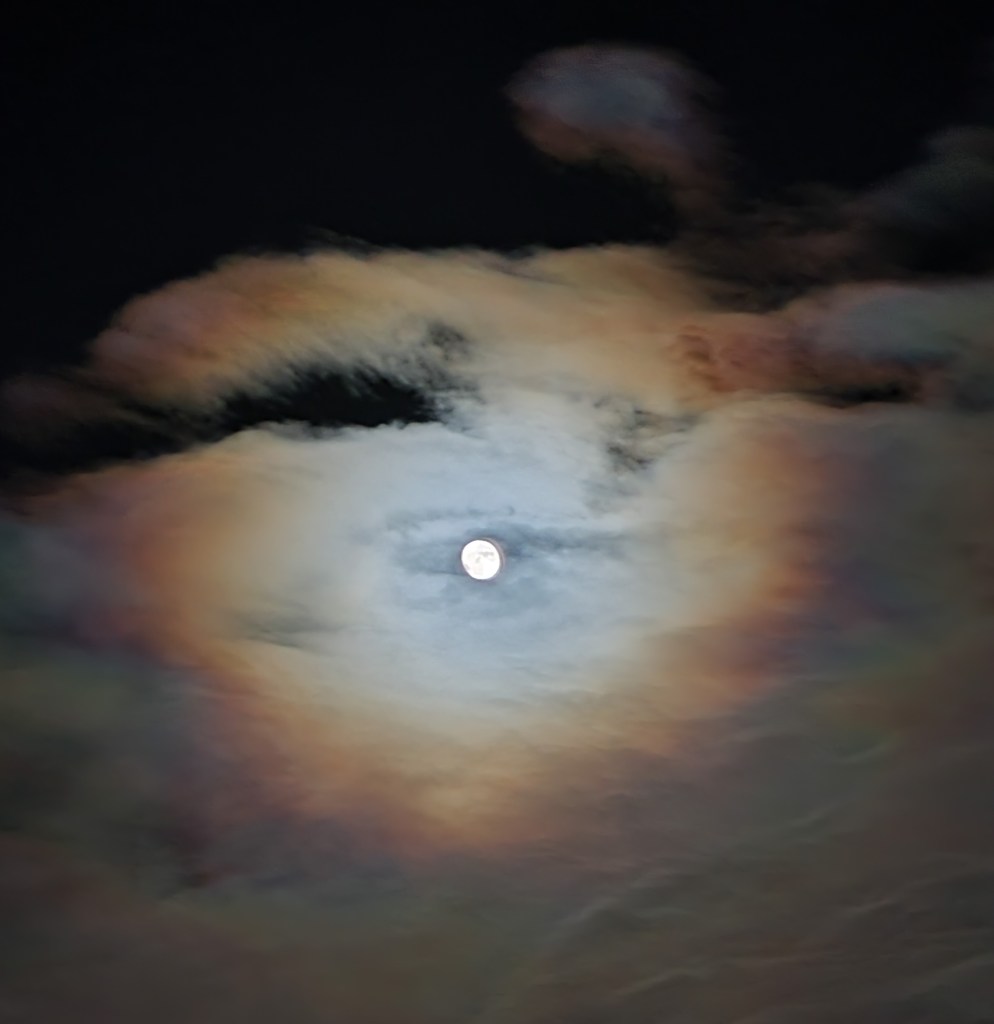
Full Moon over Port Aransas Bay, Goose Island State Park, Rockport, Texas

The Gospel of Mark: 1:4, 14-15:

And so John the Baptist appeared in the wilderness, preaching a baptism of repentance for the forgiveness of sins………… After John was put in prison, Jesus went into Galilee, proclaiming the good news of God. “The time has come,” he said. “The kingdom of God is near. Repent and believe the good news!”

The gospel of Mark begins with a call to Penance.  In just the fourth verse, we hear the message of John the Baptist defined as “a baptism of repentance.”  And then, in the first words that Jesus speaks in this gospel, He repeats and reinforces John’s message: “Repent and believe the good news.”  The first words of his public ministry in the gospel of Matthew are nearly identical: “Repent, for the kingdom of heaven is near.”

Jesus’ first act as He reveals Himself is to reinforce John’s call to repentance.  The Father, in His Mercy, has sent His Son to show us the path to redemption and salvation and the Son makes it immediately clear with His first public words that participation in the Kingdom requires an embrace of Penance. 

If we are to obey His teaching, we must have a clear understanding of what the word Penance means.  This is especially true in the modern world.  The farther we get from the time of Jesus and the birth of the Church, the more our culture wants to evolve toward the primacy of man.  Man seeks more and more to supplant God and to make himself the ruler of himself and all he perceives. 

As the culture evolves, it follows directly that the definition of Penance becomes watered down.  This is because the traditional definition of Penance directly challenges the course that modern man wishes to pursue.  Penance wants to be a restraint on man.  It wants to call him to discipline, obedience, and submission to the teaching of Jesus and the Will of God.  Many modern men do not want their freedom restricted by such considerations.  They do not want to accept that the responsibility associated with freedom can, in many ways, be determined by the traditional definition of Penance and its consequences.  Instead, they want to define responsibility and freedom entirely on their own terms.      

Technology has caused this change in our culture to accelerate.  The more connected we are, the faster impiety becomes acceptable and customary.  It becomes harder and harder to escape the messaging that calls us to these attitudes of sinfulness, and the outcome is a degradation of unity that already seems irreversible.  On one hand, many have embraced the secular rise of man.  On the other, many are doing everything they can to hold on to the Christian teachings that they believe are fundamental to living a moral life.  This division, which the traditionalist sees as the clear work of the enemy, is tearing the fabric of our culture apart.     

The tension between a traditional understanding of Jesus’ call to Penance and the desire of modern man to push the limits of his ascendancy is well established.  The genie may not go back in the bottle.  It seems theoretically possible for technology to be used to spread the teaching of Jesus, but it also seems that the negative influences are quickening and that the damage already done is extensive. 

This is reflected in the tragedies (particularly the violence) that our culture experiences on a regular basis.  It would seem obvious that a change in course is required and that the current path is untenable.  It would seem obvious that traditional values must be part of the answer.  But it also seemed obvious that the people of Jesus’ hometown should not have taken offense at Him, or that the Pharisees should have embraced Him instead of plotting to kill Him.

_________________

I do not have the power to control the destiny of our culture.  I do not have the power to control the decision making of others. 

I only have the power to control my personal choices and the example I set. 

Once again, I have found that the Scripture I encounter in Mass speaks directly to the writing I have undertaken.  Today is the fourth Sunday in Ordinary Time, Year C.  The second reading comes from chapter thirteen of the first letter of St. Paul to the Corinthians.  It is one of the most well-known passages in the New Testament.  In part, it reads:

If I speak in human and angelic tongues,
but do not have love,
I am a resounding gong or a clashing cymbal.
And if I have the gift of prophecy,
and comprehend all mysteries and all knowledge;
if I have all faith so as to move mountains,
but do not have love, I am nothing.
If I give away everything I own,
and if I hand my body over so that I may boast,
but do not have love, I gain nothing.

Love is patient, love is kind.
It is not jealous, it is not pompous,
It is not inflated, it is not rude,
it does not seek its own interests,
it is not quick-tempered, it does not brood over injury,
it does not rejoice over wrongdoing
but rejoices with the truth.
It bears all things, believes all things,
hopes all things, endures all things.

Love never fails.

As a Christian, the current culture likes to accuse me of intolerance, even of hate.  It is “a resounding gong, a clashing cymbal,” in my ears, but not in a good way.  It seems as if it is entirely bereft of the kind of Love that is spoken about here.  It often amounts to nothing, and if I were to conform myself to it, I would gain and become nothing.

I must choose to answer the culture in the true spirit of the above passage.  I must not brood over the injuries, real or perceived, that the culture brings to me.  I must bear with the culture and endure it.  I must not be jealous, pompous, or rude.  I must not seek my own interests or be quick-tempered.  In response to it, I must be patient and kind.  I must be a hopeful messenger about the true nature of Love.   

The reading in Mass ended with these words: “So faith, hope, love remain, these three; but the greatest of these is love.”  Love is the greatest because it is, to hearken back to chapter two, “both the fuel and the product of an engine of Life and Light” that God put into place to govern Creation.  Love is also the motivation which caused God to send His Son into the World to secure my salvation.  Love is God and God is Love, and this is what makes Love the primary, paramount, unassailable force in the Cosmos.    

Faith. Hope. Love.  These, with the addition of joy, are what form the expanded beginning of this journey that I defined at the close of the last reflection.  The pertinence of this Scripture to my writing is prescient and revelatory.  That my writing is at the stage where this Scripture speaks to it directly is not accidental.  I find it to be a part of the plan and a direct expression of the Will of God.   It demands that my sense of gratitude be expanded even further.

If I believe, as the Scripture indicates, that “Love never fails,” how can I make anything other than returning God’s Love to Him the primary pursuit of my life? If returning Love is my primary pursuit, does that not require obedience to God in general, and obedience to the opening words of Jesus in the gospels of Matthew and Mark in particular?

How can I not rush to understand and embrace Jesus’ call to Penance?

_________________

The acceleration of the expansion of technology has happened within my adult life.  I can remember when cable TV did not exist, let alone the streaming devices and apps that have made traditional modes of watching TV obsolete.  I did not get my first computer until I was a senior in college.  When I began my working career, there was no such thing as the Internet or email.  My first cell phone came when I was over thirty years old.  The pace of change is unprecedented in the course of history.    

St. Francis was born about the year 1181.  He lived more than a thousand years after the birth of the Christ, but his understanding of Penance would have closely mirrored that of Jesus.  The progress of man was slow enough at that point in history, and Francis was committed enough to following the teachings of Jesus precisely, that I can surely glean the original intent of the teaching of Jesus on Penance from the life of St. Francis.     

Therefore, to introduce the full and proper definition of Penance, I am comfortable relying on the first chapter of Love’s Reply.  Please understand that even though this definition occurs in a Franciscan setting, its application is universal.  There is no order within the Catholic Church that would disagree with casting Penance in these terms.  Note that even though these words are more than sixty years old, they anticipate the assertion of the primacy of man and the influence of technology in today’s world.  These changes were just beginning at the time that Esser and Grau were writing, but they could already intuit the long-term impact they would have.

Here is a what Love’s Reply has to say about the true meaning of Penance:

“Unfortunately, in modern usage the word “penance” has taken on a somewhat narrow meaning.  By “penance” we usually understand the practice of works of external mortification, works that we undertake of our own initiative.  When penance is mentioned we almost involuntarily think of fasting………As a result, the “life of penance” has acquired a very restricted, not to say even a distorted, meaning.”

“Francis had in mind something greater and deeper since he understood penance primarily in the sense of gospel “Metanoia,” which literally implies a change of mind, the complete and unceasing renewal of a man who tends to God with all his being.”

What I wish to concentrate on here is the word “Metanoia,” and the idea that Penance calls me to an “unceasing renewal” that requires me to “tend to God with all my being.”

This is the opposite of what current culture calls us to.  In terms of Love’s Reply, the distinction sounds like this: 

If the Kingdom of God is thus established wherever God is made once more the center of life of the individual and of mankind, that kingdom is destroyed or threatened whenever man by sin puts himself in the place of God, for thereby he seeks to be lord unto himself, and loves himself rather than God.

In terms of the beginning of chapter seven of the gospel of Mark, which is now the subject of my daily Lectio Divina, it sounds like this:

“Isaiah was right when he prophesied about you hypocrites, as it is written:  
These people honor me with their lips,
But their hearts are far from me.
They worship me in vain.
Their teachings are but rules taught by men.”

Technology and the pace of change seem to cast the desire of man to replace God as a new problem.  But in truth, it is age old.

In this passage from Mark, the Pharisees have questioned Jesus about the practices of his disciples.  They eat with “unclean” hands, and the Pharisees want to know why they do not follow the tradition of the elders.  Jesus informs the Pharisees that many of their traditions are contrary to the commands of God.  He talks about how the teachings of the Pharisees inhibit the teaching of Moses and the command of God to “honor your father and your mother.”  He summarizes his reply to the Pharisees by stating, “you do many things like that.”

He then calls the crowd to Him, and to emphasize the sinful will of men, He teaches that “nothing outside a man can make him unclean.”  Instead, it is “out of men’s hearts” that evil comes.

Metanoia, with its call to “tend to God with all my being,” asks me to live counter to the current culture and to the hypocrisy of the Pharisees.  Instead of “putting myself in the place of God and seeking to be a lord unto myself,” I am to condemn myself and my sinfulness and put Love for God ahead of all other concerns.  Instead of following the “rules taught by men,” and thereby locating my heart far from the Love of Jesus, I am called to discern and follow the commands of God, and thereby locate myself in the closest possible proximity to my Creator.

All of this requires the “unceasing renewal” of Metanoia.  Again, human frailty and the teaching of article seven of the OFS rule comes to mind:

United by their vocation as “brothers and sisters of penance,” and motivated by the dynamic power of the gospel, let them conform their thoughts and deeds to those of Christ by means of that radical interior change which the gospel itself calls “conversion.” 

The Rule calls me to “conform my thoughts and deeds to those of Christ.”  This is tantamount to asking me to “tend to God with all my being.”  The “conversion” of the Rule corresponds to the “unceasing renewal” of Love’s Reply.

The same equivalencies are also found in the Earlier Exhortation of St. Francis to the Brothers and Sisters of Penance, which serves as the Prologue to the OFS Rule.  Here is the opening of the first section, Concerning Those Who Do Penance:

All who love the Lord with their whole heart, with their whole soul and mind, with all their strength, and love their neighbors as themselves and hate their bodies with their vices and sins, and receive the Body and Blood of our Lord Jesus Christ, and produce worthy fruits of penance.

Oh, how happy and blessed are these men and women when they do these things and persevere in doing them, ………………………

To “love the Lord with my whole heart, my whole soul and mind, and with all my strength” is to “tend to God with all my being.”  To “persevere in doing these things” is to embrace “unceasing renewal.”

Of course, these words by Francis are, in turn, taken directly from the gospel.  In the twelfth chapter of Mark, Jesus is asked which is the most important command of all by a teacher of the law.  He responds,

“Love the Lord your God with all your heart and with all your soul and with all your mind and with all your strength.  The second is this:  Love your neighbor as yourself.  There is no commandment greater than these.”

I begin with a gospel passage that shows Jesus instructing the Pharisees that their traditions are often in conflict with the commands of God.  I travel from that gospel passage to the OFS Rule, and then to the words of Francis, and then back to the gospel, all to confirm what I have found in the writing in Love’s Reply.  In doing so, I embrace article four of the Rule as mentioned in the last reflection, which instructs me to go “from gospel to life and life to gospel.”

This action is an example of Metanoia.  I am leaving behind the worries of the world and searching for relationship with God.  I am committing myself to placing that relationship with God at the center and core of my being.  I am not relying on my judgment, but I am instead seeking the words of my Father Francis, and even more so, the words of my Lord Jesus Christ, to guide me into Truth.  As Francis would have me do, I am seeking to become lesser, and in doing so, I am subordinating myself to God and the teachings of Christ.

This is an example of how I can “tend to God with all my being,” at least for a short stretch of time.  If my embrace of Penance is going to be complete, then I need to learn to follow this pattern “unceasingly.”

_________________

God wants me to be relentless.  He wants me to devote myself to Penance unequivocally.  Therefore, according to the path to salvation that He has established for me in the gospels, He gives me everything I need to do so.  The gospel is full of passages that call me to this way of life. 

If I possessed enough energy and was a hundred times smarter, I could spend the rest of my life writing books on this topic.  I could read all four gospels from end to end, taking almost every story that Jesus tells and every event in His life, and fit them into the idea of tending to God with all my energy.  I could then revisit the Old Testament and the balance of the New Testament and reinforce this idea further.   In many ways, all that is in Scripture is an echo or amplification of this need to turn myself unambiguously toward God.

It would be the work of a lifetime.  But that is appropriate, because Penance is meant to be the work of a lifetime.  It is never complete.  It always calls to us.  It always seeks to capture our imagination and to direct our action.  It is an overarching concept that requires all the attention we can give it.  Thus the need for “unceasing renewal” as discussed above and “daily conversion” as called for in article seven of the Rule.

Here are several more examples from the gospels that might help keep both the need and the desire for Penance active in our consciousness.

  • In the first chapter of Luke, Mary is visited by an angel.  The news that Gabriel brings to Mary is overwhelming.  And yet, she responds by surrendering herself to the Will of God.  Then, when she visits her cousin Elizabeth, she declares, in one of the most beautifully subtle and sensational sentences I have ever encountered in my life, “My soul magnifies the Lord.”  She is speaking of using her soul as a tool to “tend to God with all her being.”  The result of her tending is joy, the same joy that became pervasive in the life of Francis when he learned to focus his entire being on the life and gospel of his Lord Jesus Christ.  The same joy that I added to the definition of beginning at the end of the last chapter.

These passages do not appear back-to-back in the gospel, but I began to pray them end-to-end while on my journey.  They are slightly tweaked to suit my purpose.

I am the handmaid of the Lord.
May the Holy Spirit come upon me,
and may the power of the Most High overshadow me.
May it be done to me and through me according to your Will and Word.
My soul magnifies the Lord,
and my spirit rejoices in God my savior,
for he has regard for the humble and lowly estate of his servant.

I invite you to spend time praying with these words in this configuration.  Can they be used to express a desire to draw as close to God as I possibly can?  Do they express the humility and surrender that is required for such proximity to be developed?  Are they words that could be repeated often, not just daily, but multiple times each day, to help reinforce a desire to encounter God regularly in an attitude of unceasing conversion?    

  • In Luke chapter nine (also Mark chapter eight), Jesus teaches his disciples about the path that He, as the son of Man, must follow.  And then He calls them to the same path:

“The Son of Man must suffer many things and be rejected by the elders, chief priests, and teachers of the law, and he must be killed and on the third day be raised to life.

If anyone would come after me, he must deny himself and take up his cross daily and follow me.  For whoever wants to save his life will lose it, but whoever loses his life for my sake will save it.  What good is it for a man to gain the whole world, and yet lose or forfeit his very self?”

If you read these words in the context of this discussion of Penance, is the true and deep meaning of Penance and Metanoia clear?  Does Jesus’ call to “deny myself” and to “lose my life for His sake” ring out to me as an invitation to tend toward Him with all my being?  Does the instruction to “take up my cross daily and follow Him” remind me of the need for unceasing renewal and constant conversion?  When He speaks about “gaining the world but losing my very self,” can I do anything other than think about the distorted state of the current culture I live in and the need to strive against the sinful usurpations it calls me to?

  • If a reminder of my dogged tendency toward sinfulness will help my embrace of Penance, then I can find this in the gospels as well.  Peter’s intractable inability to grasp what Jesus was teaching gives me great hope, because I can see by his example that even the rock upon which Jesus would build his Church was fallible.  He was in direct contact with Jesus, a part of his inmost circle, and yet he often faced away from Christ, turning inward as he clung to his own very worldly definition of what salvation would entail.

He had to undergo adversity and conversion before he could decipher how to “tend to God with all his being” in a posture of “unceasing renewal.”  Only after he figured this out, was he fit to fulfill the role that Jesus selected him for.

Here is Matthew 16:21-23 (also Mark chapter eight), which demonstrates Peter’s inwardness and “human concern” perfectly.

From that time on Jesus began to explain to his disciples that he must go to Jerusalem and suffer many things at the hands of the elders, the chief priests, and the teachers of the law, and that he must be killed and on the third day be raised to life. Peter took him aside and began to rebuke him. “Never, Lord!” he said. “This shall never happen to you!”  Jesus turned and said to Peter, “Get behind me, Satan! You are a stumbling block to me; you do not have in mind the concerns of God, but merely human concerns.”

And then Matthew 26:31-35, where, in his inwardness and worldliness, he has the audacity to directly contradict what Jesus is telling him:

Then Jesus told them, “This very night you will all fall away on account of me, for it is written:

“‘I will strike the shepherd,
               and the sheep of the flock will be scattered.’

But after I have risen, I will go ahead of you into Galilee.”  Peter replied, “Even if all fall away on account of you, I never will.”   “Truly I tell you,” Jesus answered, “this very night, before the rooster crows, you will disown me three times.”  But Peter declared, “Even if I have to die with you, I will never disown you.” And all the other disciples said the same.

Peter’s bravado could be excused, perhaps, if it only happened once and he learned his lesson.  But it seems that it was an ongoing problem.  The rebuke from Jesus in the first passage is stern.  I have a hard time imagining how I would react to Jesus calling me Satan.  That would shake me up, and I would hope that if it did happen, it would lead to my permanent conversion. 

But, if I am honest, I must admit that He regularly reveals my sinful nature to me.  Peter did not get it the first time, nor have I.  Even after the rebuke, Peter could not let go of his own view of what the coming of the Messiah meant, so it is not surprising that I struggle to let go of my own sinful need to control everything that happens around me. 

Peter and I are like the Pharisees.  We hold on to our worldliness even though it is in direct conflict with the commands that God speaks to us directly.  Peter may have been physically present, but the gospels make me as present to Christ as I need to be, and I also have recourse to the Advocate, the Holy Spirit.  Even though we are both right there for the message of Jesus, we often cannot free ourselves sufficiently from our human perspective to accept and adopt His teaching.  This is true even though we both confess Jesus to be the Messiah. (Luke 9:20)

Peter’s hubris, which amounts to an instance of the same ascendancy of man that is so prevalent in our modern culture, ultimately leads to a significant mistake.  At his lowest point, he denies Jesus outright, and he ends up with the bitter tears that initiate the Penance that will allow him to be reinstated by Jesus at the end of John’s gospel.

Do you, like me, see yourself as more like Peter than you wish you were?  Do you often fail to get the message and as a result repeat the sins you swore you would put behind you?  Is Peter an example of the need for “unceasing renewal?”  And are there times when your remorse is so bitter and you are so anxious to be forgiven that you would metaphorically jump out of the boat and swim to shore because you cannot wait one extra moment to be reunited with Jesus? 

Then the disciple whom Jesus loved said to Peter, “It is the Lord.”  As soon as Simon Peter heard him say, “It is the Lord,” he wrapped his outer garment around him (for he had taken it off) and jumped into the water.

Did Peter, in the end, “tend toward God with all his being” despite his sinfulness?

_________________

At the beginning of his testament, St. Francis writes, “The Lord gave me, Brother Francis, thus to begin doing penance in this way ……. And afterwards I delayed a little and left the world.”  This is the example I wish to follow.  I wish to do Penance and to leave the worldly influence behind just as Francis did. 

If I embrace Penance as fully as possible, if I turn my full attention to God and do not waver, and if I do so unceasingly, I can hope to be reconciled to Jesus just as Peter was.

To have a genuinely meaningful and successful conversion, I need my gratitude to translate into an embrace of the full and deep meaning of “Penance” as conveyed by the word Metanoia.  The Penance I seek is not, as current cultural conventions might suggest, simply the giving up of some relatively trivial and earthly thing.  Instead, it is a deep and unwavering commitment to turn toward the Lord and never turn back.  If my resolution is to have worth, it must go beyond the merely material and worldly.  It must not merely contain the negative but must also embrace the positive.  I must not merely give up the sinful, but I must embrace the Holy.

To embrace the Holy, I must embrace virtue, defined by the Catechism of the Catholic Church as “a habitual and firm disposition to good.”  When Loves Reply defines Penance as “a change of mind, the complete and unceasing renewal of a man who tends to God with all his being,” it is defining a turn toward virtue.  This means that my work must be based at least as much in doing good as in ceasing to do evil.  If I seek to not only discontinue the negative, but to also begin the positive, I must replace the negative with its opposite.  I must enact the good that corrects and makes restitution for whatever the sinful behavior might be. 

In terms of the example of Peter, I must not only not deny Christ, but I must actively and passionately cling to Him as Peter likely did once he made it out of the water. 

I do this by seeking encounter.  I can encounter Christ in the Eucharist, in Scripture, in spiritual reading, in prayer, in Creation, and in my sisters and brothers.  Article 5 of the OFS Rule puts it like this:

Secular Franciscans, therefore, should seek to encounter the living and active person of Christ in their brothers and sisters, in Sacred Scripture, in the Church, and in liturgical activity.

I can actively spend time seeking Him in any of these venues instead of spending my time mired in the sinful actions I wish to set aside.

When St. Clare wrote letters of counsel to St. Agnes of Prague, this was very much the message she spoke to her.  The most famous passage from those letters reads like this:

….as a poor virgin, embrace the poor Christ.
Look upon Him Who became contemptible for you,
and follow Him, making yourself contemptible in this world for Him.
Most noble Queen,
          gaze,
          consider,
          contemplate,
          desiring to imitate Your Spouse,
[Who] though more beautiful than the children of men became, for your salvation, the lowest of men, was despised, struck, scourged untold times throughout His entire body, and then died amid the suffering of the Cross.
If you suffer with Him, you will reign with Him.
weeping with Him, you will rejoice with Him;
dying on the cross of tribulation with Him,
you will possess heavenly mansions with Him among the splendor of the saints and in the Book of Life your name will be called glorious among the peoples.
Because of this you shall share always and forever the glory of the kingdom of heaven in place of what is earthly and passing, and everlasting treasures instead of those that perish, and you shall live forever and ever.

“Embrace the poor Christ. Look upon Him, follow Him, gaze, consider, contemplate, and imitate” Him.  “Suffer, reign, weep, rejoice, and die with Him.” 

All calls for Agnes, but also for me, to encounter Him.

The theme of separating myself from worldly influence shines through here.  Clare clearly calls Agnes to exactly the relationship with God that I have been discussing in reference to Penance.  Clare wants Agnes to not just tend toward Christ, but to “make herself contemptible in this world for him.”  She is to actively seek to suffer, weep, and die with Him on the Cross.  To rearrange the quote from Love’s Reply a little, this surely entails a “complete and unceasing change of mind” from the typical outlook of any day or age.

The final goal of my journey is also present. I am seeking eternal encounter with God. Clare promises Agnes that her firm embrace of Penance and Poverty will result in “possessing heavenly mansions with Him among the splendor of the saints” and “sharing always and forever the glory of the kingdom of heaven in place of what is earthly and passing.”

Franciscans use the words gaze, consider, contemplate, and imitate to define an approach to prayer that is eminently well suited to the embrace of Penance.  An encounter or embrace of Christ begins with gazing, with simply placing myself in His presence.  It is fulfilled by my desire to imitate the example He set for me by His Incarnation, His Passion, and His ongoing presence and availability in the world.  This example is right in front of me if I sit observing a Crucifix or an Icon, and it is laid out before me in the gospels and elaborated upon in the rest of Scripture.  

In this approach to prayer, I place myself in front of an image of Christ and gaze upon it.  It is an act of Lectio Divina, where, instead of considering and contemplating Scripture, I consider and contemplate the image as a representation of all the Scriptural passages that inspire that image.  If I am gazing at a Crucifix, gospel passages about the Passion of Christ arise in me.  If the image is of a different scene, perhaps something like the Garden of Gethsemane, then passages relevant to that scene emerge.  

If you are having trouble deciding how to begin a commitment to Penance, resolve yourself to trying this practice.  Commit to spending time gazing at Jesus.  Let the considering and contemplating take care of themselves.  Let gospel passages arise in your thoughts as they will or read them in tandem with your gazing, but maybe not at the same sitting.

However you go about it, simply remind yourself often that Penance is what you seek.  Remind yourself that you understand Penance to mean a complete and continuous turning toward God with all your being.  As you gaze, remember that this was His Way during His sojourn on earth.  Jesus was always and unconditionally focused on His Father during His entire stay.  That is how He maintained his steadfastness in the Garden, resolving to do God’s Will despite the horrific hardships that awaited Him.

Imitate Him in this.  Pray to the Holy Spirit to help you dwell with God always, the same way that Jesus did.   

As His creation, it is Christ’s Love, Sacrifice and Mercy that make my redemption and salvation possible despite my sinful unworthiness.  I will embrace complete and unwavering gratitude, faith, belief, joy, and hope in response to this. 

I will, with an attitude of full commitment to Penance, resolve to give up all worldly concern, as much as possible, permanently, as I seek to return His Love to Him according to the nature and call of my Creation. 

I will resolve to give my entire self to Him, tending toward Him with all my being in a posture that embraces unceasing conversion. 

Proceed to Chapter Five: Self-Denial

Back to Chapter Three: Gratitude

Chapter Three: Gratitude

The Letter of St. Paul to Titus, 3:3-7:

At one time we too were foolish, disobedient, deceived and enslaved by all kinds of passions and pleasures. We lived in malice and envy, being hated and hating one another. But when the kindness and love of God our Savior appeared, he saved us, not because of righteous things we had done, but because of his mercy. He saved us through the washing of rebirth and renewal by the Holy Spirit, whom he poured out on us generously through Jesus Christ our Savior, so that, having been justified by his grace, we might become heirs having the hope of eternal life.

As I have indicated, spiritual reading was one of the main activities of my trip.  I read five or six books from cover to cover, and bits and pieces of several others.  Two of the books I read were of particular importance in shaping what I am attempting here.

The first was Heliotropium, by Fr. Jeremias Drexelius, S. J.  This book was published in 1627 and, to quote the cover, it is “The Famous Classic on Conformity of the Human Will to the Divine.”  I will draw from it in later reflections that focus more closely on that topic.

The second is Love’s Reply, by Cajetan Esser, O.F.M, and Englebert Grau, O.F.M. 

I first came across this book early in my Franciscan journey.  At times I would go to the convent of the Sisters of Perpetual Adoration in Mishawaka, IN and sit in their chapel to pray.  These Sisters host the local Secular Franciscan fraternity I belong to.  Each Sister has an individual pew in the chapel where she sits regularly for prayer and Mass.  Many keep personal reflection materials in these pews.  One day I sat down and noticed this book, pulled it out, and began reading from it.

I was immediately captivated and knew I had found something special.  The book was first published in German in 1960 and was translated to English in 1962.  It was derived from various articles that had previously been published independently.  Cajetan Esser, born in 1913 and reposed in 1978, was a renowned Franciscan historian and scholar.  The version of Francis’ “Praises of God” that appeared in the last chapter is his direct translation from the original.

As soon as I began reading this book, I knew I wanted a copy for my personal library.  Unfortunately, it is out of print and hard to find.  When I searched Amazon, no copies were available.  When I searched Alibris.com, one of the main online clearinghouses for used books, one copy was available for $200.  I did not make that expenditure, although there are times I think it would have been worthwhile.  (I just checked Alibris now and there was a copy available for $20, so I ordered it to give to my fraternity.)

I waited and my patience somehow paid off when one of my fraternity sisters decided to give away some books she had.  Amazingly, as I looked at her shelf, I saw she had a copy.  I told her of its value and rarity, but she insisted on letting me have it anyway.  I am grateful for the poverty she embraced that day because it meant this book was available for my journey.

This reflection and the next two are directly inspired by the first chapter of that book.  I just reread it this morning and part of me thinks I should ditch my entire effort and just use that one chapter to convey everything this work hopes to communicate.  I am not sure I can do better.  The chapter is only nine pages long, but it touches on everything I seek to develop.

That first chapter focuses on gratitude, the definition of Penance as Francis understood it, and self-denial.  What follows in this reflection closely follows the discussion on gratitude.  The definition of Penance will be the subject of the next chapter, and then self-denial.  For all I will provide multiple quotations directly from the Love’s Reply text. 

I was wondering yesterday how I would write a full chapter on the idea of gratitude, but now I think I have the answer.  I am mostly going to steal it from Love’s Reply.

_________________

Esser and Grau introduce the connection between gratitude and Penance by referring to chapter twenty-three of The Earlier Rule.  They do not present it in its entirety as I am, but they quote from it liberally.  In the first volume of Francis of Assisi: Early Documents, this text appears in versified form and is five pages long.  Love’s Reply refers to these words as an “Exhortation of Prayer and Thanksgiving.”  To save space, I am changing the form, but I encourage you to seek out the original to get the full effect.  It is Francis at his absolute best.

All powerful, most holy, Almighty and supreme God, Holy and just Father, Lord King of heaven and earth, we thank You for Yourself for through Your holy will and through Your only Son with the Holy Spirit You have created everything spiritual and corporal and, after making us in Your own image and likeness, You placed us in paradise.

Through our own fault we fell.

We thank You for as through Your Son You created us, so through Your holy love with which You loved us You brought about His birth as true God and true man by the glorious, ever-virgin, most blessed, holy Mary and you willed to redeem us captives through His cross and blood and death.

We thank You for Your Son Himself will come again in the glory of His majesty to send into the eternal fire the wicked ones who have not done penance and have not known You and to say to all those who have known You, adored You, and served You in penance: “Come, you blessed of my Father, receive the Kingdom prepared for you from the beginning of the world.”

Because all of us, wretches and sinners, are not worthy to pronounce Your name, we humbly ask our Lord Jesus Christ, Your beloved Son, in Whom you were well pleased, together with the Holy Spirit, the Paraclete, to give You thanks, for everything as it pleases You and Him, Who always satisfies You in everything, through Whom You have done so much for us, Alleluia!

Because of Your love, we humbly beg the glorious Mother, the most blessed, ever-virgin Mary, Blessed Michael, Gabriel, and Raphael, all the choirs of the blessed seraphim, cherubim, thrones, dominations, principalities, powers, virtues, angels, archangels, Blessed John the Baptist, John the Evangelist, Peter, Paul, the blessed patriarchs and prophets, the innocents, apostles, evangelists, disciples, the martyrs, confessors and virgins, the blessed Elijah and Henoch, all the saints who were, who will be, and who are to give You thanks for these things, as it pleases You, God true and supreme, eternal and living, with Your most beloved Son, our Lord Jesus Christ, and the Holy Spirit, the Paraclete, world without end, Amen, Alleluia!

All us lesser brothers, useless servants, humbly ask and beg those who wish to serve the Lord God within the holy Catholic and Apostolic Church and all the following orders: priests, deacons, subdeacons, acolytes, exorcists, lectors, porters, and all clerics, all religious men and women, all penitents and youths, the poor and the needy, kings and princes, workers and farmers, servants and masters, all virgins, continent and married women, all lay people, men and women, all children, adolescents, young and old, the healthy and the sick, all the small and the great, all people, races, tribes and tongues, all nations and all peoples everywhere on earth, who are and who will be to persevere in the true faith and in penance for otherwise no one will be saved.

With our whole heart, our whole soul, our whole mind, with our whole strength and fortitude, with our whole understanding, with all our powers, with every effort, every affection, every feeling, every desire and wish, let us all love the Lord our God Who has given and gives to each one of us our whole body, our whole soul, and our whole life, Who has created, redeemed and will save us by His mercy alone, Who did and does everything good for us, miserable and wretched, rotten and foul, ungrateful and evil ones.

Therefore, let us desire nothing else, let us want nothing else, let nothing else please us and cause us delight except our Creator, Redeemer and Savior, the only true God, Who is the fullness of good, all good, every good, the true and supreme good, Who alone is good, merciful, gentle, delightful, and sweet, Who alone is holy, just, true, holy, and upright, Who alone is kind, innocent, clean, from Whom, through Whom and in Whom is all pardon, all grace, all glory of all penitents and just ones, of all the blessed rejoicing together in heaven.

Therefore, let nothing hinder us, nothing separate us, nothing come between us.

Wherever we are, in every place, at every hour, at every time of day, every day and continually, let all of us truly and humbly believe, hold in our heart and love, honor, adore, serve, praise and bless, glorify and exalt, magnify and give thanks to the Most High and Supreme Eternal God, Trinity and Unity, Father, Son and Holy Spirit, Creator of all, Savior of all Who believe and hope in Him, and love Him, Who without beginning and end, is unchangeable, invisible, indescribable, ineffable, incomprehensible, unfathomable, blessed, praiseworthy, glorious, exalted, sublime, most high, gentle, lovable, delightful, and totally desirable above all else, forever.

Amen.  

It is a different experience to type these words instead of just reading them.  It takes a different level of concentration and awareness, and then, in the proofreading, a different sense of understanding emerges.  I debated whether to include the entire text, but I am glad I did.  You might think about typing or writing it out yourself to boost your appreciation.  Or at least try saying the words out loud.

If you review the words closely, you will find all the themes of the beginning of the Gospel of John.  Francis addresses our created nature, our wretched sinfulness, and the Mercy of God in sending His Son to secure our redemption.  The themes of returning God’s Love wholeheartedly and being a believer are present.  What took me five thousand plus words to describe, he achieved in about eight hundred and much more poetically than I could ever hope to achieve. 

Plus, Francis added an overwhelming sense of gratitude and thankfulness.  He begins by thanking God for Himself.  He then thanks God for our creation and for the gift of salvation through the Son.  And then He thanks God for the Son a second time in relation to the gift of the Kingdom that has been prepared for those who practice Penance. 

And then Francis proceeds to ask every holy person or entity that has ever existed, does exist, or will exist, starting with Jesus, the Holy Spirit, and Mary, and working his way down from there, to thank God on our behalf because we are too miserable and wretched to be able to thank Him properly for the underserved Mercy He showers upon us.

Finally, he reinforces the goodness of God as he “humbly asks and begs those who wish to serve the Lord God within the holy Catholic and Apostolic Church ……… to persevere in the true faith and in Penance for otherwise no one will be saved,” while simultaneously encouraging us “to love, honor, adore ……… the Lord our God with our whole heart, our whole soul, our whole mind, ………”

_________________

Love’s Reply takes this prayer and uses it to establish gratitude as the only proper response to the overwhelming Mercy of God.  Gratitude is the fountain that ultimately allows Penance to flourish.  These quotes demonstrate the tenor of what Love’s Reply works to convey regarding gratitude and thanksgiving:

“The very starting point of our life of penance is naught else than overflowing gratitude for the benefits which the mercy of the Father has bestowed on us in his true and holy love through our Lord Jesus Christ.”

“What God in his goodness and mercy has done for us and continues to do is the beginning and starting point of any obligation on our part.  The life of penance, like the whole Christian life, is thus the grateful answer of man to the call of grace, to God’s saving mercy toward us.  It is from this gratitude, to the degree that it is true and heartfelt, and not primarily from our own will or desire, that there arises our obligation to lead a life of penance.”

“Francis fulfilled his happy duty of returning thanks for the marvels and wonders of God’s love not only by his words, but even more by his whole life.  His “life of penance” is the total and unreserved answer of a heart full of gratitude for all that God has bestowed upon us in and through Christ.”

I want to call special attention to one specific idea here: 

“It is from this gratitude, to the degree that it is true and heartfelt, and not primarily from our own will or desire, that there arises our obligation to lead a life of penance.” 

The starting point of my life of Penance is not my weak and often inadequate will.  I do not wake up and decide on my own one morning that I am going to suddenly begin a life of Penance.  That decision does not happen in a vacuum.  Left to my own devices, I would never choose such a life.  It is too hard, and a limited and underdeveloped human perception would not conceive it, let alone countenance it.  The worldly perspective of my human will would never arrive at the pressing need to embrace Penance on its own.   

Only the big picture of salvation (the beginning point of my journey from the last reflection) can allow me to conceive the role that Penance must play in a well-organized existence.  I must embrace my status as a creature.  I must accept my sinfulness.  I must recognize my need for help and believe in God’s prodigiously Loving response to that need.  Only when I wholly internalize and actuate these insights can I develop the gratitude that then leads to an acute need and keen desire for Penance.  

In the words of Francis’ prayer, I am “miserable and wretched, rotten and foul, ungrateful and evil.”  After accepting this, I instinctively wonder what consequences ought to follow from my wretchedness. 

If I am honest with myself, I recognize that a life lived in such a state deserves punishment.  If those qualities persist in me then eternal damnation is what I should receive as my reward.  I would not expect second or third or hundredth chances from my Creator.  At some point, I would expect Him to say enough is enough, and off you go, out of my sight, and out of my awareness forever.

But He does not do that.  Instead, He Lovingly calls me to conversion with no limitations and no restrictions.  He will call me back not hundreds of times, but thousands of times, even millions of times, if that is what it takes to secure my redemption and salvation.

The only proper response I can give to such a display of steadfast Love is unequivocal, unambiguous, and unmistakable gratitude.

It takes this enhanced perception for me to fully desire a reverential disposition toward Penance.  If I have any other motivation, especially including a willful decision made on what is otherwise a whim, then the commitment will not stick. This “true and heartfelt” level of gratitude is a prerequisite if I want to reach the first destination on my road to eternal encounter with God.  To reach Penance, I must fuel my journey with the Love that this sense of gratitude will reflexively inspire in me. 

All that said, my wretchedness still means I am incapable of offering proper thanks for everything that God has done in Christ for me.  Even if I accept the points above, both my will and my gratitude are still tainted by my wickedness.  I am too corrupted, too mired in the habits of sin, and simply too human to achieve gratitude on my own.  I do not possess enough guile, astuteness, strength, or fortitude to succeed by my will alone.  I need help. 

If I have already acknowledged that I need God’s help to achieve salvation, then I can safely assume I need His help to achieve this attitude of gratitude as well. 

Francis calls on the whole church and the full court of Heaven for assistance in offering proper thanks. The assistance that Francis beseeches is meant to secure just what I need, the help and blessings of God.  Francis wants all the Holy in Heaven to pray for and with his Order as they seek to render proper thanks for everything God has done and continues to do for them.  I would be wise to do the same.  I should seek help from this same cohort if I hope to develop and express a thorough sense of thankfulness and gratitude on my journey. 

Remember that even though Francis wrote these words as part of a Rule for those who would enter his religion, he did not exempt himself.  He joined his followers in adopting this way of life and was much more stringent with himself than he was with them.  He not only spoke to his followers about gratitude, but he also provided an impeccable example of what gratitude lived out looked like.  He did not simply point out to them that they were wicked, etc., but he signified that he shared these traits.  The position of minority that he insisted on meant that he also saw himself as a miserable wretch in dire need of God’s Mercy.  He, despite being one of the greatest saints in history, worked tirelessly right alongside his brothers to seek and adopt the bearing of gratitude and then Penance that he called his followers to. 

The final quote speaks of Francis “fulfilling his happy duty ………. not only by his words, but even more by his whole life.”  The example that Francis set for his followers was not wishy-washy.  His entire existence reflected his gratitude and the totality of his commitment.  He was all-in, and his passionate dedication did not cause him grief, but led to joy and happiness. 

As I ask the assistance of the cohort of Heaven for help on these beginning steps of my journey, I can specifically add Francis to my petition.  I can be sure that he is not above me in this endeavor.  Instead, he is my brother as I seek to fulfill the calling that he sets before me. 

As the language of my profession asserts, he is my help. 

May the ……. intercession ……. of our Holy Father Francis ……. always be my help so that I may reach the goal of perfect Christian Love.

I want to align myself with Francis.  I want my devotion to be as complete as his and I want to be joyful in the gratitude that I express in thanks for everything that God has accomplished for me.

Gratitude must not be something I give lip service to and then move on from.  It must be at the core of my being.  It must always reside in my awareness.  It should spark in me an attitude of Penance that imbues my entire existence with an unquenchable desire to be converted from miserable wretch to saint. 

Gratitude was the first step in the conversion of Francis.  I hope it does something similar for me.

_________________

My citing of Francis’ Praises of God in the last chapter and his “Exhortation of Prayer and Thanksgiving” in this one reminds me that to be aligned with him I must visit the stories of his life again and again.  I need to be consistently reminded of the passion he had for the entire religion he established.  If I am to follow his charism, I must know it well. 

As I traveled, along with the works I mentioned above, I also focused on reading various biographical works on St. Francis.  I had not recently read The Life of St. Francis by Thomas of Celano, so I read it again.  I also read The Legend of the Three Companions and The Assisi Compilation.  And I read all of Francis’ own writings as compiled in the first volume of St. Francis of Assisi: Early Documents.            

When you have the luxury to do a cross section of spiritual reading all at once, the connectedness of the works jumps out at you.  The impact of each work is magnified by what is contained in the others.  I found this especially true when I was reading the various lives of St. Francis.  Even though many of the stories were repeated from work to work, they grew and were enhanced each time I read them.  My appreciation for Francis’ depth of commitment to gratitude, Penance, and Poverty was especially enriched by reading his words and the stories of his life.

The dedication present in his life is so far beyond what I can muster it is bewildering.  I often daydream about becoming a saint, but when I read about the accomplishment of St. Francis and his overwhelming holiness, I am reminded of my own foolishness.  The idea that I could begin to approach his devotion seems so far-fetched that I find it hard to imagine where to start.

And yet, start I must.  Francis’ “Exhortation to Prayer and Thanksgiving” served as the starting point for Esser and Grau as they composed Love’s Reply, which means it is also a suitable starting point for me.  As I read about Francis’ attitude toward Creation, his thankfulness for Penance and the other gifts that “God gave him,” and his obsession with the life, and particularly the Poverty of Jesus, I can empathize with the inestimable feeling of gratitude that Francis experienced in direct response to the plan initiated by God to ensure the salvation of every human being created through His Love. 

This “true and heartfelt” gratitude begins my movement toward Penance, forcing me to accept and affirm this corollary; it is not my will and not my work, a solely human work, which enables my salvation.  Instead, salvation is enabled by the action of God with some fortunate help from the prayers of the entire church and the full court of Heaven.

Depending on myself for my salvation would leave me with a very dismal outlook where eternity is concerned.  If I thought I could achieve redemption through my human action that would be a flawed assertion of my ego in direct opposition to the plan of God.  It would be sinful for me to think that I am in command of my destiny when I think about achieving the goal of Heaven. 

Instead, it is a great comfort to accept that God is in charge.  It runs contrary to modern culture to cede control of anything to anyone.  But in fact, I am not conceding anything.  I am simply recognizing and accepting the true nature of my human condition.  I never had control of this situation and never could.  It could never be realistic for me to expect to chart my own path to redemption because I cannot expect to avoid or overcome my own abysmal and sinful narrowmindedness. 

Always, I have been at God’s Mercy.

It is easy to think of His Love and His Mercy as the same thing, but deeper reflection suggests that Mercy somehow, as mysterious as it might seem, extends His Love further even though His Love is already all-encompassing.  It sounds absurd, but the exceptional thing He has done in removing the initial responsibility for my eternal well-being from my control seems to go beyond Love.  Even though it seems improbable, Mercy somehow makes His Love greater than it already is.

In His Wisdom, I do not have to labor at figuring out the detailed mechanics of salvation.  There is nothing for me to ascertain, or discover, or construct.  Life appears to be a series of challenges, but it can be simple if I adhere to the course He has established.  I need to believe, to be obedient, and to follow with a humble and loving attitude a path ordained by His Mercy that begins with gratitude and flows into Penance.

This pathway is initiated and detailed in the Gospels.  If the multiple sources I read about Francis during my trip make anything clear, it is that all his followers are called to a gospel life.  The first sentence of the Later Rule says this:

The Rule and Life of the Lesser Brothers is this:  to observe the Holy Gospel of Our Lord Jesus Christ by living in obedience ……..

Article four of the OFS Rule says this:

The rule and life of the Secular Franciscans is this: to observe the gospel of our Lord Jesus Christ by following the example of St. Francis of Assisi, who made Christ the inspiration and the center of his life with God and people.

Secular Franciscans should devote themselves especially to careful reading of the gospel, going from gospel to life and life to the gospel.

There cannot be a simpler response to God’s Mercy: Pursue the path to salvation laid out by the example Jesus set and the Word that He spoke! 

Because He anticipates my frailty, His Mercy also causes Him to send me The Holy Spirit as an Advocate to help me remember, understand, and follow His lead.  He has thought of everything.  I have all that I need. God has taken the primary burden of achieving salvation away from me and opened a pathway to Heaven that I can be sure I have the means to travel.  He knows what I am capable of, what I can and cannot realistically achieve.  Beyond that, He Loves me to such an extent that He could never chart a course for me that is inaccessible. 

I already touched on the final quote from Love’s Reply regarding the wholeness of Francis’ gratitude, but I also want to re-emphasize the words “happy duty.”  I want to acknowledge that Francis’ approach to gratitude is linked to his approach to joy.  God’s plan for our salvation should not just engender gratitude in us, but also joy.

Again, it may conflict with current cultural conventions, but I should be joyful that I am not in primary control of my salvation.  If I was, and I admitted my woeful shortcomings regarding my ability to achieve salvation on my own, that would be a source of great sorrow.  I would have to accept the inevitability of my failure to achieve an eternity spent in the blissful presence of God in Heaven.

But, if I believe in His Mercy, this sorrow is precluded.  It is replaced by a joyful sense of peace that resonates and resounds through the core of my being. 

His Creation of me.  His Love for me.  The sending of His Son to redeem me.  His Mercy.

All result in an overflowing of joy and gratitude in my heart that, as Francis indicates, my human capabilities are woefully insufficient to express.

_________________

As I mentioned above, one of the benefits of reading multiple spiritual works in concert is that they tend to enhance each other.  The entire conception of these reflections is dependent on the interaction of the different spiritual readings I undertook.  The themes in Love’s Reply resonated with Heliotropium, which resonated with the books on Lectio Divina, which resonated with the stories and words of St. Francis.  These varied works came together to form an integrated set of ideas that is more expansive than any individual component.

This beneficial effect also extends to the reading of Scripture.  As I immersed myself in the reading of these various spiritual books, I found that I was more fully aware of the Scripture I was also reading.  Connections became apparent that I might have otherwise missed.

I have already cited how the parables about seeds in chapter four of Mark intersected with and inspired my first reflection.  In the second reflection, the story from chapter five of Mark about the woman healed by touching Jesus’ cloak was just what I needed to fully communicate the importance of belief that I was trying to express.    

As I began this reflection, I moved to chapter six of Mark.  This chapter begins with Jesus teaching in the synagogue in His hometown.  The residents are amazed at His Wisdom and the miraculous healings He performs.  At the same time, they take offense at Him.  Jesus is in turn amazed at their lack of faith and as a result, “He could not do any miracles there, except lay his hands on a few sick people and heal them. “ 

This further reinforces the assertions I have made about belief.  Jesus responds to belief, but He is also restricted by disbelief.  I am sure He has the power to heal anyone He wishes, but it is more important to understand the primacy of belief than it is for every possible miracle to be performed.  Thus, a lack of belief leads Jesus to impose a constraint on Himself as an extension of the teaching He hopes I will accept.  

But this story also speaks about gratitude, or more precisely, ingratitude.  The people of Jesus’ hometown are aware of the Wisdom and Power possessed by Jesus.  They have witnessed His teaching and His miraculous healings.  When I place myself in the scene as part of my prayer routine, I am also amazed at Jesus.  My wonder leads me to adopt an attitude of irresistible gratitude.  I can identify that the Love inherent in the healing work of Jesus also applies to me.  The seed planted in the story of the woman from chapter five fell on fertile ground.  My ability to appreciate the actions of Jesus in this story is a sign that it is growing.  If my progress remains steady, it will come to full fruition.

However, the people of his hometown reject this seed.  It is incomprehensible to me why they adopt an attitude of such woeful ingratitude toward Him, but this is what happened. 

It also happens in a similar story from chapter three of Mark.  Jesus is again teaching in a synagogue.  A man is present with a withered hand.  There are also Pharisees present, waiting to see whether Jesus will heal the man on the Sabbath.  Jesus asks them, “Which is lawful on the Sabbath, to do good or to do evil, to save life or to kill?”  He then heals the man.  In response, the Pharisees begin to plot against Him.

The Pharisees are guilty of the very thing they wish to condemn Jesus for and more.  They assert that Jesus has violated the Sabbath by healing on the day of rest, yet they begin to plot against Jesus on that same Sabbath.  Check the quote from Jesus again.  He knows exactly what is happening.  When He uses the word “kill,” He presages the sin of the Pharisees.  Jesus’ supposed violation of the law was an act of healing goodness.  Theirs goes well beyond ingratitude and becomes an act of “evil.”

Again, how can this be?  How can the Pharisees witness the healing power and goodness of Jesus and respond with disbelief and ingratitude? 

To find the answer, I must put all the Scripture together.  The parable of the sower, Mark chapter four, speaks directly to what I am witnessing.  “The worries of this life, the deceitfulness of wealth and the desires for other things come in and choke the word, making it unfruitful.” 

The people of Jesus’ hometown and the Pharisees are blinded by their worldliness.  They are completely unaware of the seed that Jesus is offering them.  This seed has fallen in a thicket of thorns planted and carefully tended by the opponents of Jesus, who never understand how flawed their garden is.  They wish to choke Jesus with the same thorns that blind them.  The seed that Jesus tried to give them finds itself completely thwarted.  

   _________________

I want to invite you to experiment with these connections yourself.  Return to the quote from Titus at the head of this chapter.  This quote is read for the Mass at Night and the Mass at Dawn on Christmas day.  It is another intersection between the writing I was considering after my trip and the Scripture I was encountering as I moved through life.

Spend some time with these words.  Does this piece of Scripture capture the human sinfulness that has been discussed at length in the last two reflections?  Does it support the idea that gratitude is not initiated by human will or works (“not because of righteous things we had done”), but by the kindness and Love of God?  Note especially the appearance of the words, “His Mercy.”  Are my conclusions about His Mercy consistent with this passage?

Compare the passage to what you have read so far in these reflections.  Does the combination of the two deepen your understanding of each individually? 

Then focus on the last phrase.  “…. we might become heirs having the hope of eternal life.”  I have stated that the goal of my journey is an eternal encounter with God.  This phrase lends hope to the possibility that my goal is achievable.  Do not read the last couple sentences of this reflection yet.  Come back to them when you have concluded your own contemplations to see how your experience compares to or differs from mine.

   _________________

When I spent time with this piece of Scripture, I decided the beginning I described in the last chapter would benefit from a couple additions.

I asserted above that the saving plan of God ought to elicit a response in me of not just gratitude, but also of joy.  Perhaps joy ought to be part of my beginning.

But this phrase concerning hope also brought forth an intensely joyful response in me.  It is not just gratitude and joy that should be linked.  Hope needs to be added as well.  As I move forward to the next reflection and a discussion of Penance, all three of these should accompany me.

This leads me to conclude that my beginning should now include not just faith and belief, but also joy and hope.

How does this compare to what you discovered while contemplating this phrase?

What would you add to my conclusion for your own use?

Proceed to Chapter Four: Penance

Back to Chapter Two: Beginning

Chapter Two: Beginning

A Cenote at Bottomless Lakes State Park, Roswell, New Mexico

The Gospel of John 1:1-11:

In the beginning was the Word, and the Word was with God, and the Word was God. He was with God in the beginning. 

Through Him all things were made; without Him nothing was made that has been made. In Him was life, and that life was the Light of all mankind. The Light shines in the darkness, and the darkness has not overcome it.

There was a man sent from God whose name was John. He came as a witness to testify concerning that Light, so that through him all might believe. He himself was not the Light; he came only as a witness to the Light. The true Light that gives light to everyone was coming into the world. 

He was in the world, and though the world was made through Him, the world did not recognize Him. He came to that which was His own, but His own did not receive Him.

During these reflections I hope to give you some insight into what I experienced during my retreat last fall.  I am going to be writing in the first person, using words like “I” and “me” to convey what it is that the Spirit “gave to me” during my journey.  The ideas I hope to convey are, on one level, meant for me and the furthering of my own personal movement toward God.  But, on another level, I am convinced that they were meant to be shared, which is why I am presenting them for your consideration.

Although I am writing in the first person, you are invited to put yourself in my place.  I can believe that what I am describing is universally applicable, but you have the responsibility of discerning this for yourself.  You need to decide whether what I am describing applies to your personal circumstances and to what extent.  When you read the words “I” or “me,” do not relate them to me.  Read them as if “I” and “me” is you and decide for yourself if these sentences describe your own experience and journey.  

This week was the third Sunday in ordinary time, year C.  The gospel began “a body is one though it has many parts, and all the parts of the body, though many, are one body, so also Christ.”  This applies here.  I am an individual part of a greater body.  I must consider the Word and allow it (Him) to speak to my individuality.  The Word applies to all of us, but the needs of each differ at any moment in time.  One mystery of the Word is that it speaks to the needs of each of us eloquently despite the differences in our circumstances.  The challenge is to fit the Word to my situation, my talents, and my calling so that it (He) continually moves me closer to God and my salvation.

_________________

These reflections originated in my journey, so it might be helpful to think of the overarching idea of “journeying” applying directly to them.  If Penance, Poverty, and the Will of God were thought of as physical locations, the first stop on the journey would be Penance.  The road from Penance leads to the Will of God, but it passes through Poverty on the way.  As you observe my journeying, please be open to the idea that Penance, Poverty, and the Will of God are not individual locations that are connected by a vague and wandering path through the wilderness.  Instead, they are intimately connected by a well-defined road that leads directly from one to another and beyond. 

The beyond, the ultimate destination of this highway is a healthy, productive, and eternal encounter with God. 

Just to be clear, If I understand and practice Penance properly, it inevitably leads me to a life with Spiritual Poverty at its center. 

If I embrace Spiritual Poverty fully, it in turn inevitably moves me toward an undeniable desire to embrace the Will of God and make it the focus of my daily existence.

Living a life aligned with the Will of God is what will then take me to the ultimate location that I am seeking, which I might define as Heaven, but I prefer to think of as eternal encounter with God.  This is because the encounter happens not just in Heaven, but now as well.  I should be looking for opportunities to encounter God for the entire length of the journey.

The flow of this journey from Penance through Poverty to the Will of God is the essence of what the Spirit gave me during my retreat and it is at the core of what I hope to convey through these reflections.

_________________

The road I wish to describe, however, does not begin with Penance.  It begins with a frank recognition and acceptance of what it means to bear the human condition through this earthly life conferred on me by God.  I must honestly acknowledge the essence of my being.  Conveniently, there is another beginning which can help me understand this starting point, and that is the opening of the gospel of John, which I have quoted above. 

The first thing I must accept is that “through Him all things were made.”  All things, by definition, includes me.  “Without Him, nothing was made that has been made.”  Without Him, I would not exist.

And not only was I initially created by Him, but His creation of me is ongoing.  His Love sustains me moment by moment in my earthly existence.  My worldly life will end the moment He, in His Wisdom, chooses to use His life-giving Love to transfer me from here to whatever awaits me.

My identity as a creature, as something Lovingly created by God and fully dependent on God, is fundamental to understanding the starting point of the journey. 

Repetition of the word “Love” is not accidental.  Love brought me into being and it nurtures me endlessly.  I am created by Him and for Him through His Love.  My essential and eternal purpose is to return His Love to Him and thereby to participate enthusiastically and willingly in His plan to increase the amount of Love present in the Cosmos.  The purpose of all His Creation is the expansion of Love.  The purpose of my individual Creation is to contribute to that expansion. 

But Cosmos is not the right word.  I do not know what word to use.  I am not sure the right word exists.  By Cosmos I mean God in the broadest and most limitless sense my feeble human imagination can conjure.  The purpose of Creation is the expansion of Love within the full and complete effusiveness of God.  He is Creation.  Creation is He.  I might say the Cosmos and God are intertwined, but even that suggests a degree of separation that is incorrect.  They are one and the same and Love is another name for them.  They are already limitless, and yet, they are building, growing, and expanding and God asks me to participate with Him in that work. 

He has no boundaries, but I still must think of Him as ever increasing.  As each of us returns His Love in thankfulness for our Creation, as the overall amount of Love present in the Cosmos expands, He expands with it to both contain and diffuse all that Love.  The cycle is repetitive and circular.  He uses his Love to create.  We return His Love as an expression of gratitude for our Creation.  In the process, more Love comes into being, but He does not hoard that Love to Himself.  Instead, He returns it to us again and again, using it to Create more and more. 

Love is both the fuel and the product of an engine of Life and Light that God placed into motion at the beginning of History, maintains through current times, and projects into the future.  He is always increasing as Love is always increasing and it is this perfectly constructed engine that energizes and guides the entirety of His Conception. 

And all of it is Good, for, as Francis wrote for us in The Praises of God,

You are the holy Lord God Who does wonderful things.

You are strong.  You are great.  You are the most high.
	You are the almighty king.  You holy Father,
	King of heaven and earth.

You are three and one, the Lord God of gods;
	You are the good, all good, the highest good,
	Lord God living and true.

You are love, charity; You are wisdom, You are humility,
	You are patience, You are beauty, You are meekness,
	You are security, You are rest,
	You are gladness and joy, You are our hope, You are justice,
	You are moderation, You are all our riches to sufficiency.

You are beauty, You are meekness,
	You are the protector, You are our custodian and defender,
	You are strength, You are refreshment, You are our hope,
	You are our faith, You are our charity,
	You are all our sweetness, You are our eternal life:
	Great and wonderful Lord, Almighty God, Merciful Savior. 

Does that make sense?

_________________

He is “the Good, all Good, the highest Good.”  This is without question. 

However, the same cannot be said about me.  The second thing I must accept as part of the human condition that defines the starting point of the journey is this:  I often fail to fulfill my end of the bargain. 

My primary responsibility in the order of Creation proclaimed by God is to return His Love to Him.  All too often, however, in my sinfulness, I forget not only that responsibility, but I forget about God completely as “the worries of the world and the deceitfulness of wealth” grow and choke out the seeds of Love planted in my heart on an ongoing basis by the Spirit. 

I forget or ignore the immense Love that brought me into being and that sustains me moment by moment.  Instead, I find myself full of deception and self-focus and I begin to think of myself as my own creation.  I am in control and my destiny will be determined by me, not by the God who, no matter how much I deceive myself, I remain dependent on.  

In terms of the beginning of the gospel of John, I do not “recognize and receive Him as He comes to that which is His Own.” 

The world was made through Him.  He was and continues to be in the world.  The world and everything in it, including me, belongs to Him.  And yet I barely remember to thank Him.  I barely spend any time with Him.  I am always distracted away from Him.  The greatest benefit of my trip was the ability to set aside, at least for a little while, most of my worldly distractions.  I was able to concentrate on Him much better.  At times I was able to simply sit with Him or walk with Him or read with Him without having to worry about all the normal anxieties of life.  I cannot tell you how refreshing this was.   

But as soon as I got back, Christmas intruded on the peace I hoped to maintain.  That sounds like a horrible thing to say, but I know from personal experience that Christmas is a superlative example of what I am describing.  Christmas is meant to be a time where I prayerfully focus on His Advent, His coming into the world.  Instead, it is the season most full of distraction, the season where I fail most consistently, completely, and spectacularly to set aside the concerns of the world in favor of simply being with Him, just the two of us, away from everything that separates instead of unites us. 

My intentions start out good.  I want to honor Him in the season.  But somehow, the preparations become the focal point and He gets lost in the rush to get everything just right so that maybe, at the end, I can find a couple moments to be with Him.  At best, my good intentions wind up being ninety percent about preparation and ten percent about prayerfully celebrating His Advent.  That is how it is, and it seems impossible to get around it.

And then, as soon as Christmas is over, I find myself trying to catch up on every worldly thing that got neglected during the Season.  The enemy is very good at what he does, and I am very poor at resisting him.  Worldly distraction is always present.  There is always something pending that seems too pressing to ignore.  “If I can just get such and such behind me, then I can concentrate on God!”  But such and such never ends, and the enemy is always calling me to the next relentless distraction. 

My sinfulness persists in ways that I often fail to realize.  I am so set in my habits that what started out as willful recurs on autopilot.  I careen through life wrapped up in and diverted by earthly concern and my ability to “recognize and receive Him” withers away from deflection and inattention.

I am a sinner.  On the highway to Heaven, I am a pothole, a detour, or a roadblock.  In the engine of Life and Light, I am the burr that keeps the cogs from turning or the dirt that gums up the works.

Or, in terms of the OFS Rule, I am frail.  Article seven states:

“Human frailty makes it necessary that conversion be carried out daily.”

This describes my human condition perfectly.  I am weak, fragile, and feeble.  I am easily manipulated and sidetracked.  I have great intentions, but most often I lack the fortitude to see them through.  I am imperfect, helpless and in need of bolstering.    

I am incapable of healing myself and I need the assistance of the God who created me, the God whom I must depend on.  If I do not recognize and accept this, my journey toward Heaven and salvation will be derailed before it ever starts.

_________________

The third thing I must acknowledge at the beginning is that, fortunately for me, God, in His All-Loving Wisdom, is aware of my need.  He understands my sinfulness and my dependency.  In His Mercy, He makes provisions to send me help.

Therefore, as the opening words of John remind me, He sends “the true Light that gives light to everyone” into the world.  This Light “shines in the darkness, and the darkness does not overcome it.”  It is “the life that is the Light of all mankind.”

God sent Jesus into the world as an antidote to my sinfulness.  Not our sinfulness, but my sinfulness, specifically.  If I were the only person that He ever created, still, in His Mercy, He would have sent Jesus to me to make my salvation possible.  I may be an individual part of a greater body, but God is individually concerned with the salvation of this individual part.  He wants me to be saved.  He wants me to enjoy the eternal encounter with Him that is Heaven.  He Loves me unconditionally and He sends His Son into the World to save me!

This is an astounding thing to consider.  I must recognize and accept that I am unworthy of this action by God.  The accumulated weight of the sins of my life ought to make me repulsive to Him.  It ought to make me unlovable to Him.  If He was like me, He would distance Himself from me, not seek to draw closer to me.  He would look at my case and toss me aside, knowing that I am unfit to be remembered by Him, let alone to be admitted into His presence for all of eternity.

Instead, He sends His Son into the world “not to call the righteous, but to call sinners.”  To call me.  He sends His Son to be a True Light that shines against my darkness, more than bright enough to overcome that darkness if I will simply turn toward the Light and believe in Him.  He sends His Son into the world to call me back from the brink, to make forgiveness feasible, to make redemption and salvation possible.

And He did not do this once.  He does it every day.  Every day He sends His Son into the world tens of thousands of times as Mass is celebrated.  Every day the sacrifice of the Son is remembered, recreated, and repeated as the Eucharist is blessed on the altar in the hands of the priest.

St. Francis affirms this in his First Admonition:

Behold, each day He humbles Himself as when He came from the royal throne into the Virgin’s womb; each day He Himself comes to us, appearing humbly; each day He comes down from the bosom of the Father upon the altar in the hands of a priest.

He further instructed his followers, in the Later Admonitions, to respect priests unreservedly, even if they are sinners.  This is because they are the agents of His daily coming.  When they consecrate the Eucharist, preach the Word, and administer the sacraments, they make Christ truly present to me in the world:

We must also frequently visit churches and venerate and revere the clergy not so much for themselves, if they are sinners, but because of their office and administration of the most holy Body and Blood of Christ which they sacrifice upon the altar, receive, and administer to others.  And let all of us know for certain that no one can be saved except through the holy words and Blood of our Lord Jesus Christ which the clergy pronounce, proclaim, and minister.

Jesus comes to the entire world, every day in every location, to continue His saving work.  He is tireless and indefatigable.  He never rests, but instead works continuously, around the globe and around the clock, to ensure the salvation of as many souls as possible.

Beyond the Eucharist, the Son is also truly present in Scripture as the Word.  I have always recognized the presence of Christ in the Eucharist, but it was only because of the reading I did on my trip that I came to recognize the true presence of Christ in His Scripture. 

In his book on Lectio Divina, Seeking His Mind: 40 Meetings with Christ, Father M. Basil Pennington, O. C. S. O., put it like this:

If one enters the abbatial church at St. Joseph’s Abbey (and this is not the only place one will find this), one will always find two lamps burning: one burns before the tabernacle, proclaiming the real presence of Christ in the Eucharistic; the other burns before the sacred text enthroned in the middle of the choir, proclaiming a real presence of Christ the Word in his Scriptures.  The word abides in the Bible ever ready to speak to us.  Our Bibles should never be just put on the shelf with other books or left haphazardly on our desks.  They should be enshrined in our homes and offices, proclaiming a real presence.

I can be strengthened not only by the Body and Blood of Christ when I partake in the Eucharist, but also by Christ as the Word, ever present in Holy Scripture, particularly when I practice Lectio Divina.  I can pick up my Bible, invoke the aid of the Holy Spirit who was promised to me by Christ and by my Baptism, and I can truly encounter Christ at any time I wish by reading the Word. 

And finally, God is also truly present in His Creation.  “Through Him all things were made.”  

The reason I can appreciate beauty is because this faculty allows me to recognize Him in every aspect of the physical world He has so Lovingly placed me in.

On my trip, my attentiveness was freed from most of the distractions that normally cripple it.  This encouraged many meaningful appointments with Him as I traveled through His Creation.  I can recall these encounters as if I am still in the moment:

  • He is present in the reflection of the trees on the gently rippling water as it enjoys the same cool breeze I feel on my face when I arrive in southeast Arkansas late in the afternoon on the first day of my trip. 
  • On Port Aransas Bay, He lights up the night sky with a full moon that, when I take a picture of it through a cloak of wispy clouds, gives off a spectacular aura that somehow does justice to every shade of red in the rainbow.  I can only experience this startling sight because the technology of my phone captures light my eyes could not otherwise see.  This technology is only available because He makes it possible.
  • The shallow water that barely trickles around my feet as I stand in the center of the Frio River reminds me that He is responsible for the dry season that cycles through the hill country of Texas every year.  I wonder, when the spring rains fall and filter down through the maze of scenic hills surrounding the river valley, will I be able to stand in the replenished river in the spot I now occupy?  Or will the depth or the rush of the water make it inaccessible to me?  Thankfully, the river, no matter what state it is in, reminds me that He is always accessible. 
  • The aquifers flowing beneath the desert in eastern New Mexico source their water from snowfall that melts off mountains visible far to the west from a rock face above a cenote that serves as an oasis of life in an otherwise barren landscape.  Erosion of limestone that is the remains of the creatures that lived in the sea that once occupied this barren landscape creates subsurface voids that cause the structural collapse that allows the subsurface water to fill the crater that is the cenote.  These miraculous sequences are surely evidence of the exquisite detail He employs to fashion the wonders of nature that are just as surely meant to continually call me back to awareness of Him.
  • Mount Graham thrusts eight thousand feet above the valley that holds my campsite in eastern Arizona.  The road that leads to the top of the mountain is so curvy that I turn back before I reach the top because of the disorientation I feel at the vastness that greets me over the edge of every turn.  The might, grace, and glory of that landscape physically repulses me, but still my spirit is inexorably drawn to it.  The potent solidity of the mountain reminds me of the Loving steadfastness of my Creator.  The mountain seems as if it has been there forever, watching over the landscape below.  He has been there forever, watching over me and every other element of His Creation.
  • On the last evening, I sit in awe as He sends the setting sun reflecting off the cliffs across the Colorado River from my vista in western Arizona, blessing me with an original shade of orange that forces me to thank Him for every blessing He has ever brought into my undeserving life.  It seems as if that color was created just for me, so that, despite the vastness of every scene I passed on my journey, I would know that I was still the focus of His enduring Love.

As a Franciscan, I of course feel obligated to give recognition to some birds I met along the way.

  • Brother Roadrunner walks up to within a foot of me as I stand motionless watching him dart about catching grasshoppers with an agility I cannot follow with my naked eye.  The ranger watching me watching him asks, “How did you do that?”  Roadrunners are notoriously skittish, but this one graces me so that I recall my spiritual father Francis, his reverence for Creation, and the joy it brought him.   
  • Sister Kestrel repeatedly crashes through the tree that shades my campsite in pursuit of a midday meal, but the unknown sister bird she pursues manages to escape.  I think of the deep connectedness of Creation and the Canticle of Creatures so lovingly composed by Francis, and I stop and wonder at all the brothers and sisters I am surrounded by.  Sister Kestrel is following her nature, but all too often, my nature brings harm to that I am responsible for nurturing. 

I did not mention it above, but God is also present in the people I interact with every day.  This means that the kindness of those I met along the way also manifested His Love for me in multiple ways.

  • A man in New Mexico tells me that he sold his home in southern California and is journeying cross country in his RV as he seeks a new place to live.  He has a YouTube channel.  As he goes, he is visiting significant Catholic sites along the way and posting videos so his friends can see and appreciate the beauty he encounters in these places.  He used to be on the security detail for a bishop, and he leaves a note on my windshield offering to put me in contact with a friend if I want to tour the cathedral and meet the bishop when I get to California.
  • A man in Arizona stops and chats with me each day as he walks his dog in the evening.  Unbidden, he is keeping an eye on my site for me when I am off hiking.  We do not talk about anything special, but the gentle kindness of this man is striking.  Somehow, after each conversation, I feel better about the world.  It is a rare charism; one I have only encountered in people I knew to be holy.     

There could be a hundred or even a thousand bullet points added to this list if I had the patience and the acuteness of memory to list every breathtaking example of His presence that I experienced on my trip.  Today, I am reminded of it all again as I look out the window and watch a gentle snowfall slowly cover the ground.

He is present throughout His Creation while, at the same time, He encompasses it.  It is an incomprehensible mystery to me.  His constant coming and availability, when I take time to remember and welcome them, fill me with astonishment.

All this means that His Mercy and Forgiveness are not distant concepts.  He truly came in the Incarnation.  He continues to truly come in the Eucharist.  He is truly present and available in Scripture as the Word.  He is truly present in His Creation, which means He is truly present within me as a creature brought into being by His Loving Hand.

His presence is quite literally everywhere, and yet all too often, I find ways of sinfully ignoring Him.

But still He persists.  He remains accessible to me in all these different ways.  His mission of calling sinners to repentance is that important.  My redemption and salvation are paramount.  He insists that I find my way home.

Why?  Because He Loves me that much!    

_________________

There is one last aspect of beginning found in these opening verses of John that I wish to present.

John the Baptist came to us as “a witness to testify concerning that light, so that through him all might believe.”

The final aspect of beginning is this need to believe, to have faith.

I have been praying with the gospel of Mark, chapter five, the last few days.  It contains one of the greatest expressions of faith contained anywhere concerning the power of Jesus, and the power of belief in Him as the Son of God capable of healing all our sufferings and iniquities.  This story speaks to the healing of a physical ailment, but it also speaks metaphorically to the healing of our souls from sin.  (Mark 5:25-29)

“And a woman was there who had been subject to bleeding for twelve years. She had suffered a great deal under the care of many doctors and had spent all she had, yet instead of getting better she grew worse. When she heard about Jesus, she came up behind him in the crowd and touched his cloak, because she thought, “If I just touch his clothes, I will be healed.” Immediately her bleeding stopped, and she felt in her body that she was freed from her suffering.”

“If I just touch his clothes, I will be healed.”  This is the saving power of belief in Jesus.  The woman has looked throughout the world for healing for her suffering, but she has not found it.  In fact, the harder she looked, the worse her suffering became.  But when she just comes close enough to Jesus to touch his cloak, she is healed.

What is the response of Jesus?  He turns to find out who has drawn power from Him.  The woman is scared, afraid that this teacher might be like the other teachers, offended by her forwardness.  But Jesus is not affronted by her audacity.  Instead, He is moved by her faith.  He tells her in verse thirty-four, “Daughter, your faith has healed you. Go in peace and be freed from your suffering.”

This is not the only story where Jesus is moved by faith.  In chapter one of Mark, a leper comes to Jesus full of belief and says to Him, “If you are willing, you can make me clean.”  Jesus, “filled with compassion, reaches out with His hand and touches the man,” curing him.

In chapter eight of Matthew, just after Jesus heals the leper above, he encounters a Roman centurion seeking a cure for his servant.  Jesus offers to accompany the soldier to his home but the soldier replies, “I am not worthy to have you come under my roof.”  He acknowledges the far-reaching power of Jesus and suggests that Jesus just heal the servant from where they stand.  Jesus replies by saying “Truly I tell you, I have not found anyone in Israel with such great faith.”  And the servant is healed at that moment.  

Jesus responds to faith.  He responds to belief in Him.  “He who believes in me will live, even though he dies.”  Every time we sin, we are injured, and we die a little bit.  But every time we embrace belief and faith in Jesus, it gives Him the opportunity to restore our health and life.  This is the essence of a life well lived.  We try, we fail, and we return to Him in search of His Mercy because we believe that in His overwhelming Loves for us, He will grant it. 

In the same article of the OFS Rule where the frailty of the human condition is mentioned, it is followed immediately by this: “On this road to renewal the sacrament of reconciliation is the privileged sign of the Father’s mercy and the source of grace.”  Grace is the ability to believe that in the sacrament, Jesus can and will heal our souls from the damage they have taken due to sin.

_________________

This is the attitude of faith that I must carry forward into the rest of these reflections.  I must pray for my faith to be increased.  I must return to these stories often and refresh my belief in the healing power of Jesus.  I must have faith that Jesus wants me to make progress in my relationship with Him.  He wants me to experience His Mercy.  He wants to forgive me.   

He wants to make me fully capable and fully qualified to participate in His Father’s plan for the expansion of Love.  I am not meant to be a detour on the road or grime fouling up the gears.  I am meant to be a fully functioning, healthy participant in the plan of God.  One of many who uses her/his individual gifts and talents to serve the impeccable plan of God for the coming of the Kingdom and the salvation of all who are simply willing to, as John the Baptists testified, believe in the Light and the life that came and continues to come into the world.

This is what I am called to, and the healing power of Jesus can restore my soul to working condition whenever the wear and tear of this life makes it fray.

The woman in the gospels believed that “if she could just touch His clothes,” she could be healed.

I believe that when I encounter Him in the Eucharist, or in Scripture, or in His Creation, His healing power and Mercy are available to me.

He can make me whole.

Proceed to Chapter Three: Gratitude

Back to Chapter One: Background and Introduction

Chapter One: Background and Introduction

Mount Graham, just south of Safford, Arizona

The Gospel of Mark 4:26-29:

He also said, “This is what the kingdom of God is like. A man scatters seed on the ground. Night and day, whether he sleeps or gets up, the seed sprouts and grows, though he does not know how. All by itself the soil produces grain—first the stalk, then the head, then the full kernel in the head. As soon as the grain is ripe, he puts the sickle to it, because the harvest has come.”

It is mid-January.  Last fall, I spent forty days and forty nights on a personal retreat driving through the southwest United States, camping out of a van.  I started out on a picturesque lake in southern Arkansas and wound up in the western desert of Arizona, right on the Colorado River.  In between I spent time on the Texas gulf coast, in the Texas hill country, in the desert in eastern New Mexico near Roswell, and in the desert of eastern Arizona near Safford.  At each location I stayed in a state park campground.  Each place, in its own way, was a unique and beautiful expression of the splendor of Creation.

My days were spent primarily in prayer, spiritual reading, and hiking.  I tried to avoid anything that was “touristy.”  Other than grocery shopping, attending Mass, and fixing one meal a day, I had no responsibilities to distract me.  I did not have to worry about even the simplest things like taking out the garbage, bringing in the mail, or paying the bills.

It was wonderful.  If you can arrange this freedom for yourself, even on a smaller or shorter scale, I highly recommend it.

_________________

The inspiration for what follows was given to me during this trip.  I do not view it as my idea, and I did not start the trip with this result in mind.  It is not a series of insights that welled up inside me of my own accord or planning. 

St. Francis of Assisi was fond of saying “the Lord gave me ………….”  In the first paragraph of his Testament, he says it about his road to the life of Penance:

The Lord gave me, Brother Francis, thus to begin doing penance in this way:  for when I was in sin, it seemed too bitter for me to see lepers.  And the Lord Himself led me among them and I showed mercy to them.  And when I left them, what had seemed bitter to me was turned into sweetness of soul and body.  And afterwards I delayed a little and left the world.”

He then repeats it multiple times in various forms as the Testament unfolds:

Afterwards the Lord gave me, and gives me still, such faith in priests ……………… And after the Lord gave me some brothers, no one showed me what I had to do, but the Most High Himself revealed to me that I should live according to the pattern of the Holy Gospel……………The Lord revealed a greeting to me that we should say: ‘May the Lord give you peace.’

This is how I feel about what follows.  The Spirit gave it to me.  I was called to journey through the southwest by Him.  The books that I read in preparation for the trip were suggested by Him.  The books that I took along and read as I traveled were selected by Him.  I cannot take credit for anything other than being a (hopefully) humble and willing conduit who actively prays for relationship and encounter with Jesus on a regular basis.

I do not claim to have experienced some deep and profound encounter with God before, during, or after my trip.  Whatever progress I am making is not spectacular, but slow, steady, and methodical.  I confess that I yearn for an overpowering, mystical encounter with God that would set aside all doubt through a single, unquestionable experience of divine revelation.  But I also understand that such an encounter cannot be forced by me and that it might not even be in my best interest.  Lessons learned through patience and trial and error may be exactly what I need. 

I trust that the path I am on is charted by the God whose Love for me is more profound than I am capable of understanding or expressing.  If a stunning encounter becomes what is best for me at some point, He will determine the timing.  If a slow and patient development of my faith is what He chooses for me, then so be it.  I will work at resolving myself to His Will and, in what might seem to be a paradox, once I make sufficient progress on that front then, perhaps, He will choose to reveal Himself to me in more marvelous fashion.

Or perhaps not.  He will exert His Will for my life as He sees fit and the only proper response I can make is to accept His judgment, follow His lead, and be grateful for every blessing that He does bestow on me, for they are many and they appear often.   

I do believe that being a humble and forthright searcher for God is something that has merit.  It is an act of correct orientation that acknowledges the nature and role of the creature in relationship to her/his Creator.  If more of us accepted this true expression of what a human being is instead of believing that we can be God ourselves, perhaps the culture we live in would not seem to be careening toward disintegration at light speed.  Perhaps we would not find ourselves stuck in a quagmire of accelerating division and self-deception that seems likely to destroy the prosperity that the Grace of God has showered upon us in the last hundred years.

It is not hard to imagine that God grows weary of the arrogance and insolence of mankind in general and seeks our correction as a result.  We likely should feel fortunate that something much worse than Covid has not been sent our way, although if we do not remember or relearn how to embrace Penance and Poverty soon, we should not be surprised if our situation deteriorates in other, more profound ways. 

We, including me, surely deserve it.

_________________

Several of the books that I read as I traveled were focused on the prayer discipline of Lectio Divina.  This specifically Christian style of prayer goes back to the earliest days of the Church.  It is our version of the meditation and contemplation techniques that the influence of eastern religion has made so popular in our culture.

About halfway through my trip I began applying what I was studying.  I would read one chapter from the gospel of Matthew each morning several times, trying my best to allow the Word to speak to me.  I sought not to force my will on the words, but to let the words work on me in whatever way God saw fit.  It is an approach to prayer that begins with passivity, which is often hard to maintain.  Not only must you not actively seek, you also must manage the inevitable distractions that intrude into this quiet space.  Whatever extraneous thoughts arise as you are praying, you simply acknowledge and then dismiss as gently as you can. 

As I read a chapter over and over, I tried to find the one verse that seemed pertinent to the developing experience of my journey.  Then I took that Word forward into the day, focusing on it as I hiked through the desert in the morning after my prayer time was complete.  As I walked, I prayed ten or so repetitions of the Jesus Prayer (“Lord Jesus Christ, Son of God, have mercy on me, a sinner”) and then I recited the Word for the day multiple times.  I repeated this sequence the entire length of the hike, which most often lasted an hour or longer. This led to the word arising unbidden in my consciousness later in the day, and when that happened, I tried to be conscious of hesitating and acknowledging the presence and impact of the Word in that moment. 

Again, the idea is not to impose my interpretation on the words.  Instead, the hope is that as the words repeatedly roll around in my consciousness, they will inform and shape me not just for the day, but for all my days to come.  The expectation is that constant exposure to Scripture will open my heart to God’s Will and allow His Word to become what defines me in the long run.

When I arrived home in early December, I was still working my way through the gospel of Matthew.  The distractions of Christmas made it difficult to maintain my discipline.  When I finished the gospel of Matthew, I spent time jumping around in the gospels, concentrating on the stories relevant to the Nativity of Christ.  This worked for a while, but when my sons arrived home for the holidays, I found that I could no longer resist the distractions and I lost my discipline for the remainder of their visit.

Once the holidays had passed and life returned to normalcy, I inserted this morning prayer practice into my home routine.  I also tried to maintain the discipline of the daily hike, although that is not as easy in northern Indiana in January as it is in the southwest in the fall.  I moved from reading Matthew to Mark with one important change.  Instead of forcing myself to get through a chapter a day, I was allowing the Word to have more control.  I read a full chapter to start with, but my repetitions were focused on only the piece of the chapter that caught my attention as the prayer progressed.  I was also allowing myself to stay with a given passage for more than one day.  As a result, I was taking multiple days to get through a chapter, and I was taking multiple Words from each chapter.

At the same time, I was also beginning to contemplate the writing that is begun by this Introduction.  I forwarded an outline of this material to my Secular Franciscan fraternity and to the priest of my home parish with the suggestion that it be presented as a Lenten Retreat.  Both agreed so I happily have no choice but to engage with this material and get fully prepared for these presentations.

I am currently reading and contemplating chapter four of the gospel of Mark.  This chapter is full of references to seeds.  It includes the Parable of the Sower, the Parable of the Growing Seed (above), and the Parable of the Mustard Seed.  I have been with the chapter at least a week and I am finding it reluctant to let me go. 

It has suggested itself as a mechanism for reflecting on my adult faith journey.  I promise not to be too long winded about my past, but the reflection this chapter of Mark has brought about is pertinent to my subject and it winds up being a good introduction to my topic.  Plus, it only seems appropriate that you know a little more about me since I am asking you to consider my deeper reflections.

_________________ 

I see my faith story as beginning with a seed.  I was in my early thirties and my first child had just been born.  The Spirit took this event as an opportunity to begin to work on me in earnest.  I am a cradle Catholic, but my life up to that point had been irreligious.  My main thought concerning God went along the lines of, “I may not have the answers (yet?), but surely You could have done better in devising this life You created for me.  I have too much stress, distress, and unhappiness for this to be the best possible solution for what a life should be like.  I know You could have done better!”

I believed in God, but I did not believe He knew what He was doing.  I trusted my judgment more than His, and I wanted to be in control, to be my own God so that I could make my own arrangements.  (I recognize this only in retrospect.  I never would have described myself like this then.  I would have thought myself a much better person than I was.)  I wanted my life to be nothing but joy and happiness and without any hardship at all.  My disdain was so great that I can even distinctly remember going to the priest for prenuptial counseling, and in the one-on-one interview he did with me, telling him in an arrogance that dismays me now to remember it: “Getting married in the church is not important to me, but it is to my fiancé.  That is why I am here.” 

When my son was born, my attitude began to change.  I still had no idea what the answers were, but I was willing to accept the possibility that I needed to reinvigorate my faith life if I was going to be a good father to this beautiful child that had been entrusted to me.  This is the first spiritual seed I can remember responding to seriously in my life. 

I do not see how it could have begun with me.  It is best described as an uneasiness that was placed in my heart by the Holy Spirit.  I am forever grateful that the Spirit also placed in me the good sense to embrace this uneasiness and let it guide me forward.  It was this seed that grew into a life’s faith journey that allows me to recognize that God loves me unconditionally and that, in grateful response, I am willing to attempt this writing at His request.

The passage above speaks of a “man scattering seed on the ground.”  In this line, I see the scatterer as the Holy Spirit placing seed after seed in our lives. 

The next line speaks about how “the seed sprouts and grows” whether the man sleeps or rises.  “The man does not know how” this sprouting or growing takes place.  This describes me perfectly.  I can look back and recognize the seed that was planted in me at the time of my son’s birth, but how I came to nurture that seed is beyond me.  It was not me, but the Spirit, who ensured this, and how the Spirit accomplishes such a thing, I cannot tell you.

The Spirit led me toward spiritual direction, and I met a Holy Cross Sister (Gertrude Anne) who gave me prayer guidelines very similar to the ones I have described above.  This changed everything for me.  The very first thing she asked me to do was pray over some simple words.  “I am the Bread of Life.”  I sat in Our Lady of Loretto church at St. Mary’s College for a week with those words and the depth and richness of their meaning overwhelmed me.  I was hooked that fast and have been, in some ways, trying to figure out how to replicate the magic of that early experience ever since.

I cannot tell you how that sprouting and growth in my prayer life took place.  If I knew, it would not be so hard to duplicate.  I was not in control of it.  I did not read or study some texts and learn how to delve layer by layer into these Words.  I did not listen to Sister’s words, take them to heart, and put them into practice.  At that stage, I had received the barest of instruction.  My reaction to those simple words happened in the first week after I met her.  There was no way I could have mastered what she told me.  She had barely begun to work with me. 

I made myself available and was changed, and the change that took place was not of my own doing.  To this day I do not know how it happened and I surely never will during my sojourn on this earth.  It was the Spirit who worked this in me and how my psyche was rewritten in a matter of a couple days, or maybe even just in that very first hour, will be a mystery to me forever.

_________________ 

The verses go on to speak about how “the soil produces grain-first the stalk, then the head, then the full kernel in the head.” 

I went to Sister for spiritual direction for about eighteen months.  In that time, my prayer life blossomed exponentially from the blessings of that first week.  My commitment and confidence grew as Sister gave me additional material to consider and as we discussed what I was experiencing in my prayer.  She guided me, but the development of my prayer from that initial seed into a fully formed fruit was still, at its core, the work of the Spirit. 

He was with me continuously, always taking what Sister gave me and opening it in wondrous ways so that I never grew bored and never doubted that I was on the right track.  He guarded me against becoming arrogant.  It would have been easy to become prideful and to believe I was doing this myself, that I was the source of my progress.  But those thoughts never came.  He protected me from myself by maintaining my sense of wonder at what was happening to me.  My experience was so astonishing that I knew that someone as wretched as me (remember how I believed myself fit to judge God’s plan) could not be responsible for the Grace I was experiencing. 

God’s plan for me was in motion.  The only thing I can claim is that I cooperated.  And that, I think, is also largely the Spirit.  We know Mary to be Immaculate.  I do not claim to share that status with her.  But I think that somewhere, in those early days, I said a good enough yes that the Spirit felt He could protect me with some very small measure of the same protection He provided to Mary.

I can’t recall ever doing so, but I must have said a yes in my heart that allowed the Spirit to protect me from myself as God’s plan for this season of my life unfolded.  My yes allowed the Spirit to restrict my freedom, at my request, enough that the seed of uneasiness that had been planted in me could grow to full fruition.

Thus, this seed did not fall on the path and get snatched away by Satan.  It did not fall on the rocks and shrivel up at the first sign of adversity.  It did not fall among thorns and get choked out by the worries of this life and the deceitfulness of wealth.  (In fact, the execution of my worldly responsibilities suffered during this time.  My meetings with Sister happened during the workday.  I snuck away from the office to meet with her, and I prayed in the morning, arriving late to work when the prayer kept me longer than I planned.)

In short, as the verse suggests, this seed grew to fruitfulness and was harvested.

_________________ 

It seems like I should be able to end my story now with “………. and I lived happily ever after.”   

But the truth is, it did not take long after I stopped visiting with Sister for my prayer discipline to break down.  I grew overconfident, thinking that I had the spiritual component of my life handled.  I was too content, or immature, or even foolish to understand how to maintain what had been built.  My son began to grow, and I had a second son, and then a third, and the demands of life escalated.  I drifted away from the gains of my first spiritual success gradually.  When I look back now, I can see that I did not realize things were slipping away until they were gone, and I did not have the wherewithal to truly miss them.  I eventually stopped going to Our Lady of Loretto for prayer in the mornings and, in my pride, convinced myself I was good without the discipline of regular prayer.

In short, “the worries of this life” crept in and took control and I spent some time sleepwalking along the spiritual paths of my life. 

Fortunately for me, the Holy Spirit kept some seeds from that first harvest and sowed them anew.  I am sure He tried multiple times, with some seeds falling on the path when I missed them completely.  There were times when concern for my faith life would surface and I would attempt to reestablish my prayer routine, only to have it quickly shrivel in adversity or be choked out by the concerns of the world.  I did not become a bad person by any current cultural norm, but I was not the person that I had learned and yearned to be during that first period of fruitfulness.

But the Spirit never stopped trying and never gave up.  Eventually, He sowed another seed of uneasiness that I could not shake.  I went to see my pastor (who was the Director of Vocations for the Diocese) for advice and inquired about the Deaconate.  He told me that the responsibilities of fatherhood needed my full focus and that I should not consider that vocation until later in life.  (The second time I investigated the Diaconate, which was after I became a professed Franciscan, I was told that only candidates who spoke Spanish were being considered.  It seems I am not meant to be a Deacon and I have surrendered that desire, at least for now.)   

Father did, however, suggest a couple other options I could explore that he thought would be less demanding.  One of these was the Secular Franciscans.  It took me some time to follow through and the first couple times I called my messages were not returned.  It turned out that the Spiritual Advisor was in ill health and unable to keep up with the needs of the fraternity.  Despite these false starts, the seed of my second unease never faltered.  I continued to call sporadically, a new Spiritual Advisor was appointed, my call was returned, and the seed of a Franciscan vocation began to prosper.

This experience was similar in many ways to the first.  The wonder and mystery of the first experience was reinvigorated by the formation I was offered.  I again found myself astonished at the perspectives that God was opening before me through the example of St. Francis of Assisi.  In particular, the Franciscan theme of Spiritual Poverty resonated with me.  I found that in some sense I had already adopted the Franciscan point of view, I just never knew that “Franciscan” was the proper label for it. 

Again, I could not tell you how I arrived at that point of view.  That was a seed that had grown in me and reached fruition without my ever identifying it.  I just knew that when I started hearing about Spiritual Poverty, it was something I needed to embrace and understand.  Money was already unimportant to me.  The Spirit knew before I did that the opportunity of Franciscanism would come to me, that He wished me to embrace it, and therefore He prepared me for it without making me aware that He was working within me.

I never doubted my vocation as a Franciscan during formation.  When the process was complete, I did not hesitate in becoming professed.  One advantage of this seed is that its commitment is life-long.  Where once I fell away from my prayer discipline, now I at least have a monthly meeting and a fraternal community to help me with accountability. 

I have served as a Formation Director on both the local and regional levels.  That has helped keep me engaged in my spiritual life even though, when I look back, it seems I have done the bare minimum of what could have been done in those roles.  I do not claim to have reached a high level of proficiency in my spiritual life.  My discipline is still poor and there are long stretches where I do not live my prayer life as consistently as I should.  I have tried multiple times to engage what I believe to be a vocation as a spiritual writer, but I have not been able to sustain enough momentum on that front to test whether this is a true calling.      

I am much more mature than I was twenty-five years ago when I first sought spiritual direction.  It is unlikely that I will become overconfident in my approach to my spiritual life.  But I still have a long way to go.  It was only as I prepared for my trip that I realized that my lack of discipline is so indefensible that I cannot realistically expect to have the supernatural experience of God I yearn for.  If I am honest with myself, I am not prepared for such an encounter.

I like to imagine becoming a saint, but I also realize that I am so far from holding the intensity of Holiness this would require that it is hard to imagine there is enough time in my life to make such progress. 

I like to think at this stage that I have enough sense to recognize how very far I must go, and to know that the only way to get from here to there is to be carried.  It is only the Spirit that can bring my life to a complete fulfillment of its purpose.  It is only He who even knows for certain what that purpose may be.

But, then again, the Holy Spirit continues to plant seeds in me all the time.  I believe the impetus toward my southwestern journey and the subsequent call toward this writing is just such a seed.  I suppose that if He has not stopped planting seeds, He has not yet given up on the possibilities of what the rest of my life might become.

In the past, the Spirit changed me in the space of a week, or maybe even an hour.  I said a good enough yes that he helped me with discipline and progress.  Perhaps that can happen again.  As the verses say, I do not know how the spiritual seeds of the Kingdom sprout and grow.  But I know they do so according to the plan and Will of the Father, the Son, and the Holy Spirit.  And I know that They will bring them to fruition and harvest them for the good of the Kingdom when Their Time is fulfilled.

I have at times succeeded in the task of simply making myself available.  When I was describing my approach to prayer during my trip, this is what I was practicing.  I want to let the Word work in me and not get in the way of what the Word has planned for me.  I seek the Spirit’s assistance in being able to do just this.  This is the yes that I am now attempting to say to Him every day.

If He Wills it, this current seed will also be brought to full fruition.

All I can do is align myself with God so that His Word and Will might be done to me and fully fulfilled through me.

Understanding how to do this, then, is the goal of what follows.  

Proceed to Chapter Two: Beginning

Letting God’s Will Prevail

I attended Unity Day a couple weeks ago.  This annual early August gathering invites all Secular Franciscans in the Our Lady of Indiana Region (northern half of the state) to a day of formation and fellowship.  There is a guest speaker who gives presentations before and after lunch and there is plenty of time for socializing and catching up.

The event also features something called “Regional Resources,” a bookstore that offers Franciscan related books and other items at cost to all attendees.

As I looked through the books, I saw one titled “A Rich Young Man,” which said on the cover it was a novelized version of the life of St. Anthony de Padua.  I perked right up.  I like to read fiction before going to sleep, so I am always looking for something entertaining and this would be a change of pace from what I normally read.  It would also “kill two birds with one stone,” as I could get some Franciscan reading done in the guise of this story.

However, the store only took cash or check and I had neither with me.  I continued to browse, but each time I walked past the table with this book, I felt it calling my attention.  I decided the Spirit wanted me to read it, so I went and found a friend (thanks Sue!) to help and bought it and a couple other things that looked interesting. 

——————————–

I started reading a couple days later and encountered a paragraph near the end of the second section that refuses to release my attention.

St Anthony began his life as Fernando De Bulhom.  He was the only son of the only son of a noble family in Portugal.  His father was a successful man, becoming the governor of Lisbon while Fernando was in his early teens.  The expectation was that Fernando, as the only heir of a high-ranking noble family, would follow in his father’s footsteps.  Fernando, however, had different ideas and decided he wanted to enter religious life.  His family, after some discontent, finally agreed.  His father felt he might be thwarting God’s will by insisting that Fernando attend to his worldly obligations. There was also hope that Fernando was mostly infatuated with a religious calling and that he would “get it out of his system” if he was allowed to indulge his desire at an early age.

However, Fernando’s calling proved serious, and he remained in formation despite efforts by friends of his father to convince him otherwise.  As Fernando prepared to be ordained an Augustinian priest, his father led a crusade against the Saracens in southern Portugal/Spain and was seriously injured.  This again led to pressure for him to return home and assume the responsibilities of his noble birth.  But Fernando persisted, was ordained, and discovered a gift for preaching.

At the same time, a group of Franciscan Friars found there way into the good graces of the Queen of Portugal and took up residence in a wayside chapel near Fernando.  Most of Fernando’s fellow Augustinians felt only disdain for the poor friars of Francis, but he held his tongue when asked to condemn them and became friends with the Prior of the group.  There came a day when the Prior brought strangers to visit Fernando.  As they were introduced, Fernando learned they were headed to Morocco to preach to the Saracens and that their leader was a nobleman who had given up all his possessions to join the Franciscans. 

Not much later word came back that the group had been martyred.  This event effected the entirety of Portugal, nobles, freemen, and serfs, deeply.  Fernando was so moved that he struck a deal with the Franciscan Prior.  He would transfer to the Franciscans, but in exchange he demanded to be sent to Morocco so that he might also be martyred.  The Prior agreed and Fernando obtained his release.

He only stayed with the friars in Portugal a short time.  Everyone knew his lineage and they brought so much food to “Don Fernando” and the friars unsolicited that he felt his presence was jeopardizing their devotion to Lady Poverty.  In an attempt at anonymity, he adopted the name Antonio and departed for Morocco.

He fell ill during the trip.  When he and his companion arrived, he stayed in bed for an extended time to recover.  During this time of convalescence, he found himself considering his desire for martyrdom and discerned that the desire was his, not God’s.  He had seen the impact that the previous martyrs had on the people of Portugal, and he wanted to have the same impact.  But he wanted it not for God’s glory, but to fulfill his own pride.  His heart was not in the right place.  He consulted with his companion and determined they would head back to Portugal.  However, their boat was caught in a storm and capsized.  They were rescued but wound up in Italy.

It was at this point in the story that the words which caught my attention appeared.

Here is the paragraph:

There are two steps to God, his heart told him.  The first, when a man renounces the world and its pleasures as he had done at San Vicente; and there was this other step he struggled now to ascend, when a man relinquishes himself completely to God.  This was the step that determined whether man’s will or God’s would prevail.

The last sentence made me stop. 

It is very easy to believe that we are aligned with God’s Will and that we are not preoccupied, even if it is subconsciously, with our own desires.

But the language here challenged me to think twice.  Have I really given myself over completely to God?  Or am I, despite the impression that I might give to those around me, still stuck very much in doing what I want to do?

——————————–

Reading this selection is part of a larger effort to engage more consistently in spiritual reading.  I have lately read several books about contemplation.  The titles include “The Cloud of Unknowing,” “Centering Prayer” and “The Way of a Pilgrim.” 

This subject matter amplified a desire for encounter with God that was already present in my heart.  The mysticism I was reading about had attracted me from the very beginning of my journey toward Christ, but I had never sought it with any measure of diligence.  These authors could not describe their experiences with precision, but they all said, “you will know it when it happens to you.”  I have long believed that an extraordinary encounter with God constitutes the pinnacle of a successful prayer life and now I thought I was ready to pursue it.

Therefore, I immediately attempted to replicate the contemplative techniques I was reading about only to find that I could not control my distraction.  I could not stay focused for a minute, let alone the twenty minutes one of the books recommended.  I determined I needed guidance and sought out a spiritual director in the hope that I might learn contemplation and achieve the mystical interaction with God that these authors describe and I long for.  (I have my second appointment with her this Friday.)

Please be aware that these books are clear that these encounters happen only via God’s grace.  There is no way for a man to initiate such an encounter.  They also are clear that a great deal of patience is required and that there are no guarantees.  It is a considerable act of faith to persevere and progress in this way of prayer.  Not everyone is called to it.  There is even some danger associated with it, thus the emphasis they give to the need for spiritual direction.  (Which contributed to my decision to seek help.)

Nonetheless, I waded right in, confident that I could exhibit the patience required and sure that I would succeed, especially now that I had a guide.

Then I read the paragraph above.  As I reflected on it and my desire to learn contemplative prayer, I found that my own will was front and center in my modus operandi. 

If I am truthful with myself, I must admit that I expected to control and master this situation.  Despite the warnings, I proceeded on the premise that I could ensure my own success.  I looked at my personal history and judged myself to be a good person who has experienced success in developing his spiritual life.  I concluded that this is the next logical step in my development, and I assured myself that it would come, likely sooner rather than later.

Read that last paragraph again.  Notice how it is all about me?  There was no consideration in my process at all relative to the Will of God.  I want this mystical encounter and therefore I expect that God will grant it to me. 

Which, I suppose, is the reason that I have had no success whatsoever so far. 

And perhaps also the reason why the Holy Spirit drew me to this book at Unity Day. 

——————————–

In all honesty, when I dig deeper, I find this pattern everywhere in my life.  Much of what I do seems to be according to my will and not God’s.  I am not doing anything that would be judged bad by most cultural or religious standards.  But there is a certain absence when I reflect on my decision-making process.  It seems to lack awareness and recollection relative to God’s Will.  I am content to do my best to avoid sin, even largely successful on that front, and yet I am hardly (if at all) aware of God’s Will as I make my choices.   

A prime example of this might be the large gap between this post and the last one, which is dated June 7, three full months ago.  I have been telling myself that I need to get some things behind me and then I can concentrate fully on writing.  But it seems that in three months I have made little progress.  My list is still long, and it seems that for every item I cross off, another gets added.

This is the way of worldliness.  It is not the way of Franciscan Poverty.  On the surface it seems fine, but looked at critically, it fails to pass the most basic test of my Franciscan calling. 

——————————–

The words from the story have not left me and I have focused on them (especially the word “prevail) as I have prayed about the Will of God for the last several weeks.    

I find myself recalling the example of Jesus from His Passion (Matthew 26:39) again and again.

“Father, if it is possible, may this cup be taken from me. Yet not as I will, but as you will.”

I also find myself praying the Our Father regularly, even spontaneously:

“Thy Will be done.”

There are many other passages that would suit, but these are the two that have occupied me so far.

This morning, I woke before the alarm clock, left the bedroom so I would not disturb my wife, and sat down to pray.  As I considered the words of this paragraph and the problem of discerning God’s Will, I was inspired to not plan anything for the day beyond the very next activity.  When my prayer ended, I tried to stay quiet as I decided what to do next.  I had several options, but going for a long walk seemed best, so I did that.  When I returned, I sat down and stayed quiet again, trying to determine what to do next.  Again, I had several options, but I was traveling last week so I needed to catch up on mail and pay a couple bills.  This seemed right so that’s what I did.  Then I fixed some breakfast, did the dishes, and took a shower.  I went quiet again.  Several options presented themselves, but it seemed to me the next right thing to do was complete this post, which I started late last week.

I am not saying that I chose these activities because I discerned that this was the exact thing God wanted me to do in the moment.  But I am trying, at least for today, to take the time to be aware of “relinquishing myself” to God’s Will.  I am trying, in the quiet, to seek His Will out and unite mine to His in the Holy Spirit.  Hopefully that informed in some measure the choices I made even if I was unaware of the impact.

Once the post is made, if there is time before I need to fix dinner, or after dinner is complete, I will try it again.   I will just take a few moments in quiet to decide what to do next. 

And then maybe I will try it again tomorrow.  And the day after.

Maybe I can make some progress in orienting myself to God’s will more successfully.  Maybe I can develop a habit of being conscious of God’s Will as I make decisions throughout the day.

Maybe I can learn to let God’s Will prevail in all my decisions?

And then, maybe, I can hope at some point in the future, to have the mystical encounter I long for with Him, when He is ready to initiate it according to his Will, as opposed to me demanding it from Him as an expression of my own willfulness.

Please, pray for me as I seek this conversion.  I doubt it will come easily to an old man so set in his chronic, sinful ways.

Something New (A Short Story)

The Signing of the Declaration of Independence

I have been thinking hard for some time now about whether or not the material I am posting today belongs on this site. I’ve been working on it for several months and just made a final push to finish it last week.

Today’s entry is not part of a formation series or a stand alone article making observations about some typical formation topic. Instead, it’s a short story, which makes it unique and less obviously suitable for the site.

To make things worse, this story concerns current day politics. On the face of it, that’s a subject that would typically be out of bounds for a site like this. But I hope that once you read the title page, you will recognize that I am trying to think about the issues plaguing our country and its political life from a Franciscan perspective.

In particular, I hope that if you decide to read the story, you will see it as an attempt to assert that peace needs to prevail even when the forces at hand seem to be much bigger than those one Franciscan peacemaker might be able to tackle.

And I also hope that my angst comes through. I do not know if this story has any meaningful answers in it, but I do know that the topics it touches have me deeply concerned about the future, especially about the future my children will have to live in.

Nothing similar has been posted here before. As a result, there is a new button with a new color on the main page. I guess purple is now the color that will take you to fictional stories, or to things that may not belong, or to some combination of the two, depending on your outlook.

Here’s the link: The Things I Wish They’d Say

I hope you enjoy it and it makes you think a little.

If not, I hope you will at least forgive me for the decision to go ahead and post it.

Journey Thru John, Chapter 14: On Peace

“Peace I Leave You, My Peace I Give You”

If you have one of those bibles where the words of Jesus are indicated in red, take a second look at chapter 14 just on the macro level.  There are 31 verses in the chapter.  Only three of them are in black.  Everything else is in red to indicate that Jesus is speaking. 

If you wish to immerse yourself in the scene, there is not much to grab hold of.  You cannot watch Jesus washing feet as you could in the last chapter.  The physical setting is still the room of the last supper, so perhaps you can conjure a vision of that scene.  I see the meal as complete and I am sitting around the table with the other disciples.  There is activity going on around me as dishes are cleared away, etc.  Judas has left the room, but I am not interested in his errand because Jesus has begun to teach.

Although I am unaware that this will be my last meal in His presence (if we do not count whatever post Resurrection encounters are to come, which I am also unaware of), I am spellbound as always by what He is saying.  His charisma is such that I cannot help but be caught up in His words.  Tonight, His words are challenging, even confusing.

At the end of chapter 13, Jesus told Peter that he will disown Him three times before the crock crows.  What does that mean?  Is Jesus being literal?  I have just enjoyed a fine meal with my friends.  Everything seems to be grand.  Jesus is a young man in His prime.  The people just greeted Him with “Hosannas!” as He entered the city.  I expect to follow Him into whatever great things He will accomplish as His work as the Messiah unfolds.  Yes, Jesus has spoken in dark terms at times about the future, but tonight, I cannot imagine why anything would go wrong?  What could possibly cause Peter to disown Jesus three times before this night is out?

Jesus then begins to talk about knowing the way to His Father’s house and He states that I have seen the Father.  As regularly happens, I do not really understand what He is trying to tell me.  I feel a little ashamed of my incomprehension.  I believe Jesus is the Son of God and I feel chosen to be here in His presence.  My pride makes me believe that if I was chosen, I should know and understand, so I am reluctant to speak up and ask questions.  If I did so, my lack of understanding would expose my human frailty, and I do not like to have that exposed or to be reminded of it.  I would rather be silent than have my pride wounded in front of this Teacher I admire so greatly.

Jesus looks over at me, and I know by the way He gazes at me, that He knows I do not understand, and He also knows why I am silent.  But He has His game face on.  I am not sure what He makes of me.   

I am suddenly grateful when Thomas and Philip ask the same questions I had on my mind but was not strong enough to voice.  His attention has gone away from my failing.  But deep down, I still know that He knows.  I know in an undeniable way that I need to experience conversion before I can truly be worthy of being in this room.

Coming back to the present, I wonder to myself, what other questions am I not asking that I need to ask?

What answers am I missing because even without my realizing it, my pride is keeping me from acknowledging my frailty and seeking His guidance? 

—————————-

John Chapter 14, verses 26 and 27:

“But the Counselor, the Holy Spirit, whom the Father will send in my name, will teach you all things and will remind you of everything I have said to you.  Peace I leave with you, my peace I give you.”

I am not sure we can go through any work of substance about St. Francis of Assisi without touching on the idea of peace at some point.  If you get emails from Sister Agnes Marie, then you know that they are always signed with the phrase, “Pace e bene!”  Peace and all good things.  It is the universal Franciscan greeting.  I have heard it so often that I tend to overlook it.  Peace has become something I presume to possess automatically. 

But what does peace mean within the Franciscan charism?  When I asked myself that question as I began to reflect on these verses, I found that I did not have a firm grasp on the answer.  The meaning of peace was not something I could easily articulate.  It is a word like love, which I also often neglect by taking for granted that I already understand its meaning. 

This time I swallowed my pride, embraced a little humility, and asked Jesus for help understanding what He means when He uses the word peace.  (Thomas and Philip are not around to do my asking for me and I do not want Him to look at me that way again.  Better to get His help while I can.)

As a starting point, I felt drawn to look at the words “leave” and “give” in verse 27. 

Jesus might have just said “my peace be with you.”  That is a more straightforward blessing than the way Jesus phrased it here and it conveys the same message, doesn’t it?  Why bother to mention leaving and giving when He could just bestow his peace on His disciples in a single direct phrase?

Is this just a more poetic way of saying what He wanted to say, or is there meaning behind the phrasing? 

Let me also admit this:  When I first started my reflection, I was only working with this second verse about peace.  At first, these two verses did not seem to me to be directly connected.  But as I prayed over the idea of leaving and giving, I felt the need to look further at the context in the hopes of gaining some insight, and I soon concluded that my initial impression was incorrect. 

These two verses are side by side for a reason.  They are intimately connected.  The first also speaks about both leaving and giving.  It sheds light on the second and in the process, speaks to the nature of peace.

Read them again.  In the first verse, what is being given and what is being left?  If you are like me, and you do not see it right away, stay with it.  It will come.

—————————-

The Franciscan fascination with the word peace comes directly from the words of St. Francis.  In his Testament, he says this:

The Lord revealed a greeting to me that we should say: “May the Lord give you peace.”

There is one of the two words again, already.  The greeting is not “peace be with you” as we say to each other during Mass.  Instead, the word “give” is present.  Francis is being more exact.  As a man dedicated to living the example of Christ, he is following the gospel precisely.  If Jesus said, “My peace I give you,” then Francis is going to make sure his greeting conveys that clearly so there is no confusion about the source of peace.

When Francis says, “The Lord revealed a greeting to me,” what do you think is the most likely source of that revelation?   Did God say it to him in a cave?  Was this greeting relayed to him in a dream?  We know how much time Francis spent with the gospels during his lifetime.  Is it possible that the revelation that Francis is referring to here came directly from the verses of the gospel of John that form the basis of this reflection? 

In the prayer life of Francis, did he perhaps one day sit down and read chapter 14 of John, just as you have done in preparation for ongoing formation this month?  As he read through the chapter, did these verses perhaps stick out to him, causing him to focus on them?  And in that focus, did he conclude that God wanted him to use these words as his stock greeting?

Admittedly, I am guessing.  But based on what we know about Francis, and based on the precision of this greeting, it seems plausible. 

That plausibility, then, gives us encouragement in our overall endeavor as we Journey thru John.  It may or may not be a true example from the life of St. Francis, but the plausibility stems from our certainty that Francis immersed himself in the gospels just as we are now trying to do ourselves.  He read and prayed over them closely and carefully.  He was inspired by them.  He let them shape his life.  He found revelations in them.

He found peace in them!

We can be certain that when we attempt to do the same, we are doing what Francis would want us to do.

—————————-

This greeting appears in other locations in the source material on Francis.

In The Life of St Francis by Thomas of Celano, The First Book, chapter ten, we find this:

In all of his preaching, before he presented the word of God to the assembly, he prayed for peace saying, “May the Lord give you peace.”  He always proclaimed this to men and women, to those he met and to those who met him.  Accordingly, many who hated peace along with salvation, with the Lord’s help wholeheartedly embraced peace.  They became themselves children of peace, now rivals for eternal salvation.

It is important to recognize the words “with the Lord’s help” from this passage.  They, combined with the greeting itself, begin to make the Franciscan theme clear. 

Peace is not something that we are powerful enough to give on our own.  To embrace peace correctly, we must do so from a position of humility.  In that humility, we find that peace is not ours to give away.  Instead, we pray within our greeting that “the Lord give peace.”  Celano affirms the location of power by giving credit in this passage to the Lord as the source of the conversion of those “who hated peace along with salvation.”  The implication is that Francis could not have accomplished this expansion of peace on his own.  This was beyond the talents of even this great saint.

This is a subtle distinction from what we say in Mass.  In Mass, because of the imprecision in the language, there is some ambiguity about the source of the peace.  Are we somehow bestowing our own peace directly on our neighbor as we shake hands?  Or are we calling for the peace of Christ to come to them?

In the Franciscan language, the ambiguity disappears.  We are clearly not the source of peace.  Instead, we are praying on behalf of our brother or sister that Jesus grace them with the gift of His peace.  It may be a small distinction, but it is a distinction based in the minority status that Francis sought for himself and that we also need to seek continuously.  It acknowledges directly that Jesus is the sole power at the top of our hierarchy.

 —————————-

That minority status which is so crucial to the Franciscan charism then becomes, in turn, the method by which peace is spread. 

In The Anonymous of Perugia, chapter 8, this manifestation of peace is described like this:

Francis’ great desire was that he and his brothers would perform deeds through which the Lord would be praised.  He used to tell them, “As you announce peace with your mouth, make sure that you have greater peace in your hearts, thus no one will be provoked to anger or scandal because of you.  Let everyone be drawn to peace and kindness through your peace and gentleness.  For we have been called to this:  to cure the wounded, to bind up the broken, and to recall the erring.  Many who seem to us members of the devil will yet be disciples of Christ.”

It is then not by an act of power that we help spread peace in the world, but by an act of submission.  We do not bestow or enforce peace.  We draw people to it by the example of a conversion to peace that resulted from our own surrender to Jesus.

The reflections on the past chapters of John, combined with the overall proposition of a gospel life centered in a Franciscan poverty that locates us deeply within Jesus, lead us to the kindness and gentleness that Francis is asking of us in this passage.  As we meditated on past chapters from John, we considered themes such as:

  • Obedience to the Will of God
  • Relying on Mary as our Advocate
  • Joyfulness
  • Conversion
  • Poverty
  • Passion for the Eucharist
  • Setting aside worldly concerns
  • Embracing freedom as the source of love
  • Laying down our lives for our fellow man
  • Living in Jesus
  • Being a mature servant
  • Loving as He loved
  • Going from gospel to life and life to gospel

These themes work in us to bind us to Jesus in humility.  That unity and humility disposes us to be suitable vessels of His peace.  They establish a life of minority that provides the opening for Jesus to mold us through peace into people capable of engendering that peace in others.

If we our filled with His peace, it then becomes possible to “cure the wounded, bind up the broken and recall the erring.”  We become messengers of peace not by asserting ourselves, but simply by exhibiting the peace that the totality of our Franciscan charism helps Jesus establish within us. 

—————————-

The mission of peace that our profession calls us to is expressed in the last article of Chapter Two (The Way of Life) of our Rule.  Perhaps it is located here because in some measure it helps summarize everything that went before.

Mindful that they are bearers of peace which must be built up unceasingly, they should seek out ways of unity and fraternal harmony through dialogue, trusting in the presence of the divine seed in everyone and in the transforming power of love and pardon.

Our role and the role of Jesus in the bestowing of peace remains consistent.

We are the bearers of peace who seek out ways of harmony.  Read this portion of the rule again and compare it to the passage from The Anonymous of Perugia.  Francis says, “make sure that you have greater peace in your hearts,” and thus we are charged with being bearers of peace.  He then says, “let everyone be drawn to peace and kindness through your peace and gentleness,” and thus we are called to be people in search of harmony.

At the same time, the Rule acknowledges that Jesus (not us) is the key to the successful sowing of peace, for our efforts depend on the presence of the “divine seed in everyone.” 

Jesus makes Himself present in each person we interact with.  That presence is the starting point for peace in that person.  As Francis was the trigger for conversion in the passage from Celano that led those who hated peace and salvation to embrace those very things through the presence of Jesus within, we are also called to be triggers by living simple lives close to Jesus that blossom in a peace and harmony that becomes apparent and attractive to others as we journey across this earth.

—————————

In closing, let us go back to the verses. 

As I reflected, Jesus helped me to connect the words “everything I have said to you” from the first verse to the word “leave” in the second verse.  When Jesus states “Peace I leave with you,” He is referring to the entirety of His teaching as He left it behind in the gospels.  This is what He is leaving behind for us as a gift that engenders peace.  If the entirety of that teaching were to be fully internalized by any one of us, that process would leave us in a state of pure peacefulness.

But Jesus, in His Wisdom, also knew that we would struggle with understanding and recalling that teaching because of our human frailty.  The teaching in and of itself was a gift.  But to reinforce that gift, He also made a second gift to us, a gift that makes His teaching always current, always recallable, and always understandable (if we can set aside our pride and frailty and be humble enough to ask and listen to the answers.)

In the first verse, the words “the Holy Spirit, whom the Father will send in my name” then become connected to the word “give” in the second verse.  When Jesus states, “my peace I give you,” He is talking about the gift of the Holy Spirit, which He makes available to help us remember and understand His teaching when the going gets tough.  If we could fully embrace Franciscan poverty in such a way that we left our worldly concerns completely behind, we could then fully connect to the Holy Spirit and thru Him to the complete teachings of Christ.  Again, that connection would leave us in a state of pure peacefulness. 

Our internal peacefulness is directly related to our ability to connect ourselves to the life and being of Christ as made present and current to us in the gospels.  Our journey of Franciscan conversion commits us to an ever-deeper internalization of the life of Christ.  The more conversion we experience, the closer we draw to Jesus, the more peaceful we will become.  And as that peacefulness grows within us, it becomes visible to those we encounter in the world, and we can trigger the seed of Christ in other people as Francis did in the story from Celano, as he calls us to in the Anonymous of Perugia, and as the Rule itself calls us to in the article on peace.

Francis was, at his core, both a messenger and a message of pure peace.

Our profession calls us to prepare ourselves through a process of unceasing conversion to the gospel life to be the same.

The Secret of Salvation, Revealed By Unceasing Prayer

The below is an excerpt from the book, The Way of a Pilgrim.  The passage that is the source of this material is much longer.  To make it more accessible and suitable to a blog post, I have re-written and condensed it as well as I am able.  Hopefully my audacity is not excessive and the full message remains intact and decipherable.

This book is a classic of Eastern Orthodox spirituality.  Its purpose is to teach The Jesus Prayer (“Lord Jesus Christ, Son of God, Have Mercy on Me, a Sinner”) as a method for learning to pray unceasingly in accord with the instruction of St. Paul.  Although the source is Orthodox, I believe it has something to say about our Franciscan life and Rule.

I first read this passage a little more than a week ago.  Since then, I have felt compelled to return to it repeatedly.  Hopefully, you will be inspired to read and reread it just as I have.  As you do so, try to keep in mind Article 8 of our OFS Rule, which says in part:

“let prayer and contemplation be the soul of all they are and do.”

Perhaps this passage has something to say about how this requirement of our Rule can be fulfilled?

———————————-

“How am I to be saved?” 

This godly question naturally arises in the mind of every Christian who realizes the enfeebled nature of man. Everyone with faith in immortality is involuntarily faced with this thought.

In seeking a solution, inquiries are made of the wise. Edifying books by spiritual writers are read and one sets out to follow the truths discovered.  A devout life and heroic struggles that result in a decisive denial of self are presented as necessary conditions of salvation. These are to lead to the performance of good works that witness to one’s unshakable firmness of faith and these conditions of salvation must be fulfilled with the deepest humility.  Just as the rays of the sun only kindle a flame when magnified to a single point, all good works should support, complete, and encourage one another. Otherwise, “He that is unjust in the least is unjust also in much.”

In addition to this, one hears the highest praise bestowed upon the beauty of virtue and censure assigned to the misery of vice. Truthful promises are made of either majestic rewards or tormenting punishment in the life to come.

Guided in this way, one who ardently wishes for salvation sets off in all joy to carry out what he has learned. But alas! At the first step one finds it impossible to achieve this purpose. Enfeebled nature has the upper hand against the convictions of the mind, free will is bound, and spiritual strength dissipates in weakness.

This thought naturally occurs: Those who have found salvation and holiness must know how to fulfill what God requires.  To reconcile the demands of conscience and one’s inadequate capacity to fulfill them, application is made once more to the preachers of salvation. 

The question is repeated: “How am I to be saved?”

How will my inability to carry out the conditions of salvation be rectified?

———————————-

The answer comes back as: 

Ask God. Pray to God. Pray for His help.

“Would it not have been more fruitful,” the inquirer concludes, “if I had begun with a study of prayer as the power by which salvation is attained?” One reads and meditates and studies the teaching of those who have written about prayer. Many luminous thoughts are revealed.  Some reason beautifully about the necessity of prayer and others write of its beneficial effect.  Prayer is revealed as a happy duty.  It calls for zeal, attention, warmth of heart, purity of mind, reconciliation with one’s enemies, humility, and contrition.

But what is prayer in itself? How does one actually pray? A precise, easily understood answer is rarely found.  The ardent inquirer is again left before a veil of mystery. His general reading roots in his memory an aspect of prayer which, although devout, is only external.  He arrives at the conclusion that prayer is going to church, crossing oneself, repeating rote formulas, etc.

This is the view of prayer taken by those who do not know the teachings of the Holy Fathers about inward prayer and contemplative action. At length, the seeker comes across the Philokalia, in which twenty-five Holy Fathers set forth in an understandable way the scientific knowledge of the truth and essence of prayer of the heart. This begins to draw aside the veil hiding the link between prayer and the secret of salvation. One sees that true prayer directs the thought and memory, without relaxing, to the recollection of God.  In true prayer, one walks continuously in His divine presence and is awakened to His love by thoughts of Him. 

The name of God is linked with one’s breathing and the beating of one’s heart. The Jesus Prayer, said continuously, in all places, during every occupation, unceasingly, becomes a guide. These luminous truths, by opening the way to the study and achievement of prayer, encourage us to put these wise teachings into practice at once.

Nevertheless, when one attempts this prayer, difficulty is still encountered.   Until the whole truth is fully accepted, that incessant prayer is the only effective means for perfecting interior prayer and for saving of the soul, struggles continue.

One must accept that frequent prayer is the basis that holds the whole system of saving activity together. As Simeon the New Theologian says, “He who prays without ceasing unites all good in this one thing.”  

———————————-

For the salvation of the soul, true faith is necessary. Holy Scripture says, “Without faith it is impossible to please God.” A man without faith will be judged. But from the same Holy Scriptures we learn that faith does not come from man.  It is a gift of God given by the Holy Spirit. How do we reconcile man’s need of faith with the impossibility of producing it solely by human effort?  Again, Holy Scripture is consulted: “Ask, and it shall be given you.” The Apostles could not arouse the perfection of faith within themselves, but they prayed to Jesus Christ, “Lord, increase our faith.”

This example shows that faith is attained by prayer.

For the salvation of the soul, besides true faith, good works are also required.  Man is judged not by faith alone, but also by his works:

  • “If thou wilt enter into life, keep the commandments: Do not kill; do not commit adultery; do not steal; do not bear false witness; honor thy father and mother; love thy neighbor as thyself.”
  • “Whosoever shall keep the whole law, and yet offend in one point, is guilty of all.”
  • “For we know that the law is spiritual; but I am carnal, sold under sin…. To will is present within me, but how to perform that which is good I find not…. The evil which I would not do, I do…. With the mind I serve the law of God; but with the flesh the law of sin.”

The third quote is from St. Paul. If he was unable to will himself to good works, how shall we? If man is without the strength to keep the commandments, how are the required works of God to be fulfilled?  

Again, “you have not because you ask not.” One has no possibility of doing this until one prays for it. Jesus Christ Himself says:

  • “Without Me you can do nothing.”
  • “Abide in Me and I in you. He that abides in Me and I in him brings forth much fruit.”
  • “If you shall ask anything in My name, that I will do.”

To be in Him means to continually feel His presence, to continually pray in His name. Thus, the possibility of doing good works is also reached by prayer.

Recall that the Apostle Paul prayed for victory over temptation three times, bowing the knee before God the Father, that He would give him inner strength. In response he was bidden above all things to pray unceasingly.

———————————-

It follows that the whole salvation of man depends upon prayer.  By prayer faith is quickened and through prayer all good works are performed.  Everything goes forward successfully with prayer; without it, no act of Christian piety can be done.

From this we deduce that prayer should be continuous.  “Pray without ceasing.”  Pray always and pray everywhere with a pure mind and heart, with burning zeal, with close attention, with fear and reverence, and with the deepest humility.

But then the conscientious person reflects and must admit to being far from fulfilling this instruction.  Too often prayer is offered more from necessity than by inclination, enjoyment, or love.  About this Holy Scripture says that it is not in the power of man to keep his mind steadfast:

  • “The thoughts of man are evil from his youth.”
  • “My spirit prays, but my understanding is unfruitful.”
  • “We know not what we should pray for.”

We surmise that human beings are unable to offer true prayer.

Given this powerlessness, what remains possible for the salvation of the soul from the side of human will and effort? Man cannot acquire faith without prayer; the same applies to good works. And finally, even to pray purely is not within our power. What, then, is left for us to do?

What scope remains for the exercise of our freedom and strength, so that we may not perish but be saved?

———————————-

God reserves to His Own Will and Gift the quality of every action, including prayer. In order that the dependence of man upon the Will of God be shown clearly, and that man be plunged more deeply into humility, God has assigned to the will and strength of man only quantity when it comes to prayer. He commands unceasing prayer. By this the secret, the method of achieving true prayer, and at the same time faith, good works, and salvation, is revealed. Quantity of prayer is assigned to us as our share.  

Frequency of prayer is our own and all that is within the province of our human will.

St. Macarius the Great says truly to pray is the gift of grace. Isaiah the Solitary says that frequency of prayer turns into second nature, and without frequent calling upon the name of Jesus Christ it is impossible to cleanse the heart. The venerable Callistus and Ignatius counsel that frequency will bring even imperfect prayer to perfection. Blessed Diadochos asserts that if a man calls upon the name of God as often as possible, then he will not fall into sin.

What experience and wisdom are here!  In their experience and simplicity, these Fathers throw much light on how to bring the soul to perfection!

Reason urges us to perform good actions, be armed with our courage, employ the strength of our wills, cleanse our minds and hearts from worldly dreams, fill their place with instructive meditations, and live in the way that conscience requires. But alas! All that cannot attain its purpose without the frequent prayer that summons the help of God.

What a contrast between the teaching of the Fathers and the counsel of theoretical reason, which presumptuously strives to attain purity by only its own efforts!

———————————-

We conclude that the principal method of reaching the goal of salvation and spiritual perfection is the frequency and uninterruptedness of prayer, however feeble it may be.

Christian soul, if you do not find within yourself the power to worship God in spirit and in truth, if your heart still feels no warmth in mental and interior prayer, then bring to the sacrifice of prayer what you can in your current state.

Let the humble instrument of your lips grow familiar with persistent prayerful invocation. Let them call upon the mighty name of Jesus Christ often and without interruption. This is not a great labor and is within the power of everyone.

  • “By Him, therefore, let us offer the sacrifice of praise to God continually, that is, the fruit of our lips, giving thanks to His name.”

Ceaseless prayer forms a habit and becomes second nature. It brings the mind and the heart into a proper state. If a man fulfills this one commandment of God, then in that one thing all is fulfilled.  Always offer prayer, calling upon the most holy name of Jesus (even if at first you do so without spiritual ardor or zeal), and by this avoid wasting time in pursuit of sinful pleasures of the senses.

Every evil thought will meet opposition to its growth. Sinful acts will not come to fruition so readily as when your mind is empty.  Vain talking will be checked and every fault at once cleansed from the soul by the gracious power of His divine name. The frequent exercise of prayer will recall the soul from sinful action and summon it to its essential exercise, to union with God.

Now do you see how important and necessary quantity is in prayer? Frequency in prayer is the one method of attaining pure and true prayer. It is the surest way of reaching the goal of salvation.

To convince yourself finally about the necessity and fruitfulness of frequent prayer, note that every thought of prayer is the work of the Holy Spirit.  Remember that the name of Jesus Christ invoked in prayer contains self-acting salutary power.  Do not be disturbed by imperfection in your prayer.  Await with patience the fruit of frequently calling upon the divine name. Do not listen to the thoughtless insinuation of the vain world that lukewarm invocation, even if it be persistent, is useless repetition. Believe that frequent calling upon the power of the divine name will reveal its fruit in its season.

A spiritual writer has spoken beautifully about this:

  • “I know that to many so-called wise philosophers, who search everywhere for practices that are noble in the eyes of reason and pride, the simple but frequent exercise of prayer appears of little significance. But they deceive themselves.  They forget the teaching of Jesus Christ: ‘Unless you become as little children, you shall not enter into the kingdom of heaven.’ They establish for themselves a science of prayer on the unstable foundations of natural reason. Do we require learning to say with a pure heart, ‘Jesus, Son of God, have mercy on me’? Does not our divine teacher Himself praise such frequent prayer? Have not wonderful answers been received and wonderful works been done by this brief but frequent prayer? Ah, Christian soul, pluck up your courage and do not silence the unbroken invocations of your prayer, although it may be that this cry of yours comes from a heart which is still at war with itself and half filled by the world. Never mind! Go on with it and do not let it be silenced!  It will purify itself by repetition. Never let your memory lose hold of this: ‘Greater is He that is in you than he that is in the world.’”

———————————-

Be convinced that frequent prayer, powerful against all human weakness, is attainable by man.

Make up your mind to try!  Start with a single day!

Maintain a watch over yourself for twenty-four hours and see that the frequent calling upon the name of Jesus Christ prevails over other matters. This triumph of prayer over worldly affairs will show you that this day has not been lost but has been secured for salvation.  In the scales of the divine judgment frequent prayer outweighs your weaknesses and blots out the sins of the day in the memorial book of conscience.  It sets your feet upon the ladder of righteousness and gives you hope of sanctification in the life to come.

Remember always, “God is greater than our heart, and He knows all things.”

An Orthodox Perspective on Presence

On the same day that I made my last post, I completed a book I was reading about the Jesus Prayer. The author is Frederica Mathewes-Green. The title of the book is The Jesus Prayer: The Ancient Desert Prayer That Tunes the Heart to God.

I forwarded my post to Frederica, asking her to let me know if I was on the right track. She was kind enough to write back right away with her thoughts. She was also kind enough to allow me to share what she wrote with you.

As you can see below, her advice comes from a different perspective than I am used to. But that’s fine, as it helps clarify the difference in approach between the Eastern Orthodox and Western Catholic churches. She and I have never met, spoken or exchanged emails before, but her reference to Ignatian spirituality is spot on. She could tell that putting myself in scenes is something I do regularly.

I am sure it will take me some time to process what she is suggesting. Not sure I am ready to drop methods that have been very productive in my spiritual development. But her point of view is challenging in a great way. It makes me think about Christ and prayer in different, new and broader contexts, which I count as always a good thing.

I am particularly intrigued about experiencing an encounter with Christ as the presence of a person. (The italics were hers, not mine.) I have no idea how to do that, but perhaps when I am ready, and if I am patient as Frederica suggests, Christ will open that door to me.

Here is the full text of her reply, shared with her gracious permission. Her comments at the end about repentance are especially timely as we head into Holy Thursday tomorrow.

“Hello, Tim! I’m so glad my book was useful to you. 

I was tracking with you right up until halfway through this paragraph: <<Perhaps this inner place where I might meet Jesus is not a room? In fact, even though this place is still interior, it can be any peaceful place that I can imagine or recall from my past? It is often described as a temple, but a scene from nature can be a temple as well?>>

I felt unsure of the role you expect your imagination to play in this process. It sounds perhaps too trusting of the things that come to us through our imaginations, our inner associations, our “poetic side.” Orthodox spirituality is very skeptical about all that. Ignatian meditation, for example, would make no sense in an Orthodox context. You don’t have to use your imagination, because Christ is right here. Bringing in imagination will only confuse and distract you. The task is to cleanse the nous (*see below for a partial definition) so we can perceive him, already here. Like if you had lunch with someone you really admire, but spent the whole time wrapped in your imaginative thoughts about him. 

<<Now I have a scene to familiarize myself with that will help me experience the encounter when I am otherwise ready for it?>>

No, let those images go. Orthodox teaching is to never cultivate interior images, never take them as authoritative, they are just as likely to be demonic. Sometimes an image gives you a passing blessing, but let it go and return to pure prayer.

Don’t worry about whether it’s like a room or the outdoors or anything. Expect it to be like the presence of a person. Any substitute ideas will only distract you. 

It is true that the heart, like the Tardis, is bigger on the inside. 

I was blessed to know Fr Roman Braga, who was imprisoned by communists in Romania. He often said, “Thank God for the communists.” Before imprisonment, he knew about God from the bible and other books, but he didn’t know God directly until he was deprived of his books. He said that he looked around his prison cell saying “Where are you, God?” until the only place left to look was inside himself. Many of these prisoners said that, in later life and freedom, they never attained the heights of prayer they knew in prison. 

A good quote from Macarius the Great (300-390): The heart is but a small vessel; and yet dragons and lions are there, and there likewise are poisonous creatures and all the treasures of wickedness; rough, uneven paths are there, and gaping chasms. There also is God, there are the angels, there life and the Kingdom, there light and the apostles, the heavenly cities and the treasures of grace: all things are there. (Homilies 43:7)

I want to encourage you not to foreclose the possibilities of prayer by trying to nail down too swiftly what you should expect and what it’s going to be like. That will get in your way. 

What you need is overwhelming gratitude to God, an overflowing heart full of gratitude. How you attain that is you repent. Never cease repenting. Always remember that you deserve hell. Focus on that, and God’s goodness really appears overwhelming. The contrast is just incalculably great. That is why the great saints became more and more aware of their sins as they grew older. Because that experience of gratitude is what gives you wings. 

Charmolypi, “joy-making sorrow.” 

You’ll know when you’re on target because you will become more aware of your sins and your unworthiness. You’ll sense the sharp pang of joy that comes when you see his love contrasted with your sin. Repentance is the only sure path. “

* Nous (pronounced “noose”) is a word that does not translate well into English. Frederica spends a couple pages trying to explain it in the book. Hopefully this will help a little:

“Nous primarily indicates the receptive faculty of the mind…..it is a perceptive faculty, capable of recognizing truth …… the nous perceives truth in a direct, intuitive way …… it is placed in us so that we can perceive God’s voice and presence. But in the Fall the nous was damaged. Healing of the nous (one of the primary actions of the Jesus Prayer) involves getting rid of the erroneous thoughts and emotions that cloud our mind.”

Encounter Versus Knowledge

Most people know that it is the custom of Catholics to make sacrifices during Lent. The typical stereotype revolves around giving up chocolate, or cookies, or some such thing. The idea is that sacrifice helps us to recall the need for repentance. In the Lenten season we are supposed to be especially aware of our sinfulness and the need to reform our lives to avoid the patterns of sin that dominate us in ordinary time. Our sacrifices are meant to strengthen our resolve to be converted by the Lenten season and to make those conversions permanent. Unfortunately, we rarely succeed.

At the mass for Ash Wednesday, the gospel reading comes from Chapter 6 of the gospel of Matthew, verses 1-18. In the reading, Jesus instructs his disciples on fasting, prayer and alms giving. This gospel passage, particularly the section on fasting, is the source for the custom described above. It is important to remember that we are called not just to fasting, but to all three of the practices described by Jesus in this passage. Prayer and alms giving are just as important as fasting and we must practice all three if we hope to experience a truly fruitful Lent.

Jesus specifically talks about not making your sacrifices known. I am going to directly contradict this instruction of Jesus (unwisely, no doubt) and admit to you that this Lent I have committed myself to making sure I complete my prayer routine every day. Each morning, before doing anything else, I make certain I fulfill this commitment to God and myself.

I am using the Jesus Prayer as the basis for my current prayer routine.

“Lord Jesus Christ, Son of God, Have Mercy on me, a Sinner”

In the hope that I might maximize the effectiveness of this prayer, I have also been reading about the practice of the Jesus Prayer in the Orthodox Church, where it is much more prevalent than it is in western spiritual practice. I have several books on the subject in my library that I purchased over time but never read completely. As I set myself up for prayer, I read a few pages from one of the books to help clear my mind. This allows me to focus better on the prayer and the routine as I begin.

The Orthodox Fathers talk about the Jesus Prayer ultimately being “prayer of the heart.” The goal is to learn to pray unceasingly by repeating the Jesus Prayer over and over until it takes root in your heart and you find yourself praying without having to focus on it. There are certain skills that can be learned that help move prayer from the mind to the heart. This takes years and years of patience, practice, development and discipline and the texts emphasize that there is danger in doing so alone. They emphasize the need for spiritual guidance if you wish to take the practice of the Jesus Prayer beyond the most rudimentary steps.

I do not profess to have mastered the practice of the prayer in any way. I have just begun to use it and I try to confine myself to the theoretically safe lessons of the beginner, which focus on being aware of wandering thoughts as you pray. The first step is to discipline yourself enough to recognize when your prayer has strayed and to bring yourself back to the prayer. I am sure that anyone who takes their own spiritual life seriously is familiar with how easily the mind drifts and how hard it is to discipline it.

Most days I wander so much that I wonder if I will ever get past this initial step.

That said, confining myself to the lessons of the beginner is not easy. I find myself praying to Jesus and to St. Michael the Archangel for protection because of my impatience. I want to “work ahead.” I find myself considering what “prayer of the heart” might consist of and begin to think of my heart as a room inside myself where I might go and encounter Jesus. I have read that one of the powers of the name of Jesus as invoked by the Jesus Prayer is the ability to heal and cleanse ourselves from the debilitating effects of sin. I have been thinking of this room as being an old and abandoned barn, full of dirt and cobwebs, in dire need of a thorough scouring. As I pray the prayer, I think of the name of Jesus as a metaphorical tool I can use to scrub the room, helping me to heal from the effects of a life long dominated by sin.

Today, when the thought of this room surfaced in my prayer, it was immediately replaced by a completely new notion.

It began with a recollection of my grandparent’s house on a lake in Michigan that I used to visit as a child and teenager. The house sat on a hill that led directly down to the lake. If you stood at the back of the house, your view was partially obscured by a large mature tree halfway down the hill. You could see the pier just below a big limb that protruded on the left side of the trunk. The pier was maybe thirty feet long? To the left of it was a stand of cattails. To the right was a field of lily pads that had a little trail through it where we pulled the fishing boat up on shore at night. At the end of the pier, there was a bench facing the lake bolted to the right branch of a “tee” in the planks. The front view across the lake was to a steep hillside covered in trees. To the right, the shoreline extended out, narrowing the lake at a point that hid a large section of water around the corner. To the left, the view opened in a large vista and there was a bridge in the distance where the lake fed a river that led to Lake Michigan.

This morning, as I recalled this scene from my childhood, I was once again in the back yard looking down to the lake. When I looked at the bench, someone was sitting there with their back to me and I knew Jesus was waiting for me to come down to Him.

Then the vision changed. I found myself sitting on a bench in a park. This scene was unfamiliar, but there was a small clearing in front of me. There was a path that led through the clearing and continued into the trees off to my left a little. I was looking down the path, this time waiting for Jesus to come to me.

And then, all of a sudden, Jesus was there, sitting next to me. He did not have to come down the path to be with me. He was there the entire time. I just had not seen Him because I was too preoccupied with trying to figure it all out.

Perhaps this inner place where I might meet Jesus is not a room? In fact, even though this place is still interior, it can be any peaceful place that I can imagine or recall from my past? It is often described as a temple, but a scene from nature can be a temple as well?

I know, based on my reading, that I am not supposed to “work ahead.” But I pray that in this instance, Jesus was giving me a glimpse of what might be possible if I extend my resolve beyond this Lenten season. He was only there on the bench next to me for an instant. It was not the type of full encounter that I long for and that the Orthodox books on the Jesus Prayer say is possible, but I hope He meant to encourage my persistence by letting me know such a meeting is possible.

Now I have a scene to familiarize myself with that will help me experience the encounter when I am otherwise ready for it?

One of the things that I am coming to realize through the practice of the Jesus Prayer is that it is important sometimes not so much to seek knowledge as to seek encounter. If you read much of this blog, you know that I am always searching for an explanation or a revelation. I rejoice when my prayer over a scriptural passage unmasks something that I did not comprehend or recognize before. I get excited about the Jesus Prayer as I read and learn about it. I like knowing the potential benefits it could have in my prayer life. It is necessary and important to learn about Jesus and the things He came to Teach us. Knowing Him and about Him is part of having a full faith life.

But the importance of simply hoping to encounter Him is growing in me. Full knowledge of Him is not necessary for my relationship with Him to be fertile and an obsession with such knowledge might even get in the way. Sometimes, it needs to be enough to simply be with the One you love, separate from any human need to understand it all.

I need to invite Him, unceasingly, to occupy my interior and to expand my ideas about what interior means and what is possible there not just from the standpoint of knowing, but also from the standpoint of encountering.

I need to invite Him, always, to help clear away my private clutter so that there is a pristine place within me where He can dwell comfortably, not surrounded by my sinfulness, but instead secure in a place of His own making where I can go and be with Him, away from the damage I have done to myself by my sinfulness.

I need to pray that He might penetrate and permeate me, that He might fill me completely and make me His own separate from any knowledge I might long to acquire about Him.

Perhaps it is not surprising that the place He would create within me is not a room at all. Walls cannot contain Him. Even a room scrubbed as clean as an operating suite prepped for a surgery would not suit Him. He needs a place that is boundless. It makes sense that His place within me would evoke the perfection, pristineness and vastness of His Creation before sin began to taint it. He would want me to experience that.

Perhaps it makes sense that the most likely place to encounter Him is a lake or a wood where I cannot avoid the sensation of awesomeness beyond what a human being can ever know. The sensation of something deeper in the woods that I cannot perceive, or something just over the hill beyond the limit of my intellect, or something across the water and out of reach of my sin weakened awareness teaches me about Him as well. Even as I experience intimacy with Him, I need to remain aware of the unfathomable differences between my Creator and myself, His creation.

Surely He delights in my quest for knowledge about Him. He wants me to seek Him beyond my current limits. If I say yes to His invitations and embrace the courage and strength He is ready to lend, He will guide me on a journey into the woods, over the hills and across the waters to whatever He deems me ready to experience next.

But surely He also delights in just being with me, in resting silently in the love that He steadfastly bestows on me and the love that once in awhile, when I manage to distance myself enough from my own sinfulness and my own need to know, I manage to return to Him unconditionally.