St. Francis Receiving the Stigmata, Giotto, 1295-1300
Read the chapters (pages 266 to 277) multiple times with the passage below in mind. Pay close attention to how the suffering of Francis is a theme that runs through the narrative.
“His right side was marked with an oblong scar, as if pierced with a lance, and this often-dripped blood, so that his tunic and undergarments were frequently stained with his holy blood ………. It chanced that he touched the precious scar in his right side. As soon as he had touched it, the holy one of God felt great pain and pushed Rufino’s hand away, crying for the Lord to spare him ……… During this same period his body began to be afflicted with different kinds of illnesses, and more severe than usual ………. So the precious vessel in which the heavenly treasure was hidden began to shatter all over and lose its strength ………. God multiplied his mercy on him, and he contracted a serious disease of the eyes. Day after day the disease grew worse ………. His head was cauterized in several places, his veins opened, poultices applied and drops poured into his eyes. Yet he had no improvement but kept getting steadily worse ………. Then all the rest of his body started to show signs of serious illness. His stomach had been destroyed, and his liver was failing. He was vomiting a lot of blood. So much that he seemed close to death ………. swelling began in his abdomen, his legs and his feet ………. He lost all bodily strength, and deprived of all his powers, he could not even move ………. Not one of his members remained without great pain and suffering, his bodily warmth gradually diminished, and each day he drew closer to the end. The doctors were amazed, and the brothers were astonished that the spirit could live in flesh so dead, since with his flesh all consumed only skin clung to his bones.”
The last two years of Francis’ life begins with this realization:
“This man filled with the spirit of God then understood that he would have to enter into the kingdom of God through many trials, difficulties and struggles.”
As the description of his physical state unfolds, beginning with the stigmata itself, it becomes clear that Francis’ prophetic powers did not fail him. If anything, the words of the realization seem to fall woefully short. What Francis endures in his last two years might best be described as tortuous, cruel, or brutal. But then again, that seems apt, given that what Jesus endured in His Passion might also best be described by those words.
Amid this description, Celano says that “God multiplied his mercy on him.”
Does that assertion seem out of place? Does it defy your understanding and expectations of what God’s Mercy ought to entail?
Is what Francis was asked to physically endure in these last two years the exact opposite of what you might expect the end of a supremely holy person’s life to look like?
In chapter two, Celano asserted that Francis, “having the spirit of God, was ready to endure any suffering of mind and bear any affliction of the body, if at last he would be given the choice that the will of the heavenly Father might be fulfilled mercifully in him.” (There’s that word, mercy, again.)
In chapter seven, when Francis is questioned by one of the brothers about what he would prefer to endure, this long-lasting illness or suffering a martyr’s cruel death, he answers like this: “My son, whatever is more pleasing to the Lord my God to do with me and in me has always been and still is dearer, sweeter and more agreeable to me. I desire to be found always and completely in harmony with and obedient to God’s will alone in everything. But to suffer this illness, even for three days, would be harder for me than any martyrdom. I am not speaking about its reward but only of the pain and suffering it causes.”
The context asserts that Francis’ is suffering so that God’s Will might be fulfilled. At the same time, it also asserts that God is fully endowing His Mercy on Francis. How can these two seemingly contradictory actions be reconciled to one another?
When God first called Francis, he invited him to take on the responsibility of emulating Jesus as precisely as possible. This is, in essence, what it means to live a gospel life. Francis, after a period of prayer and discernment, wholeheartedly accepts this call from God. He understands the call to be God’s Will for his individual life and he sets out to emulate Jesus as closely as possible for whatever time God grants upon this earth. One example of many that might be cited is Francis’ strict adherence to the charism of Poverty. Jesus set the example of how a life should be lived according to the ideal of Poverty, and Francis followed that example quite possibly better than anyone else who has ever lived.
During his life after his conversion, Francis’ “belief in Jesus” (see the gospel passage that heads the second reflection) never waivers and his commitment to living out the original call of God escalates. He is single minded in his pursuit of the gospel life. As his life unfolds, he begins to understand that the gospel life is about more than just living into the teachings and ministerial example of Jesus. He realizes that for a life to fully emulate Jesus, that life must go beyond Poverty, or, perhaps more exactly, he realizes that Poverty includes not just the actions of Jesus during his ministry, but also the type of death that Jesus suffered. Francis, in his desire to fulfill the Will of God by emulating Christ perfectly, reaches the conclusion that he must also suffer as Christ did.
Without the suffering, his attempt to emulate Christ can only fall short. As his life approaches its fulfillment, the need within Francis to share the suffering of Christ increases. God, in His Wisdom, sees that Francis has reached a full understanding of what the original call entailed. Therefore, in God’s Mercy, He grants Francis what he desires most. He allows Francis a full share in the suffering of Christ.
The stigmata is a glorious event in human history. It is an earthly indication and confirmation that while it might be exceedingly difficult, it is possible to live a gospel life well enough that God is satisfied in the attempt. But despite the glory, the stigmata is not without cost. Francis lived for two years with the pain of the wounds of Christ (and more) afflicting him every day.
That pain, while intense, is the source of Francis’ greatest joy. It is also, as the last three chapters will make clear, an indication of the stunning and marvelous reward that awaited Francis at the end of his trials.
Be completely honest with yourself and where you stand in this exact moment of your Franciscan journey. If you were given the opportunity and the choice, would you willingly take on the stigmata? Are you ready to endure what Francis endured if that ensures that you are fulfilling the Will of God in your life?
Read all three chapters several times. (The Second Book starts on page 258 of the link.)
Because the focus of this study is the Stigmata, it is tempting to concentrate on chapter three, which gives the details of Francis receiving the wounds of Christ. Chapter two, however, sets the scene and defines the conditions that make the receiving of the stigmata possible, so it will be the focus of this reflection.
Please reread chapter two several times, and then focus on this paragraph.
“Raising from prayer in a spirit of humility and with a contrite heart, he prepared himself with the sign of the holy cross. He took the book from the altar and opened it with reverence and fear. When he opened the book, the first passage that met his eye was the passion of our Lord Jesus Christ that tells of the suffering he was to endure. To avoid any suspicion that this was just a coincidence, he opened the book a second and a third time. Every time he found either the same text or one that was similar. This man filled with the spirit of God then understood that he would have to enter into the kingdom of God through many trials, difficulties and struggles.”
Think back to Lent and Holy Week. On Palm Sunday, the gospel reading for the Mass is the Passion of our Lord Jesus Christ. Year A is Matthew’s version, year B Mark’s, and year C Luke’s. On Good Friday, the gospel reading is the Passion according to John. If you are fully participating in the Holy Week liturgies, then you hear the Passion at least twice. If you are concentrating on making your Lenten experience complete, you probably read all four versions at least once if not multiple times.
Take a moment to recall your reaction to reading the various Passions. What was the overarching lesson that you took from them?
If you are like me, you find yourself concentrating on the Love and Sacrifice of Christ. Jesus endures His Passion in order that the path of salvation might be opened to all despite our unworthiness. This is a supreme act of unfettered Love unequaled anywhere else in the history of Creation. Only God could Love so completely and purely. The triumph of Jesus is rightfully and joyfully celebrated not just on Easter Sunday, but throughout the entire Easter season. If we are lucky, that joy carries throughout the entire liturgical year, always present, always overlaying every other gospel lesson with the foundational joy that comes from being so thoroughly loved, desired, and cherished by our Merciful God despite our propensity for sin.
This is a valid and uplifting take. Nothing wrong with it. It is generally the focus of the season and the take the Church wants us to come away with.
But, as this quoted paragraph from Celano proves, it is not the only take. Contrast the typical focus of Easter with how Francis reacts to encountering the Passion in this paragraph. Francis does not speak about Love and Sacrifice. Instead, he focuses on what the Passion of Christ means for how his individual life must inevitably unfold.
Yes, the path of salvation is opened. The euphoria of the Easter season makes it tempting to believe that Jesus has done all the hard work. It would be easy to conclude that the journey along this path will be pleasant and easy, nothing but sunshine and butterflies.
But here Francis has recognized the hard and perhaps uncomfortable truth revealed by the “trials, difficulties and struggles” that Jesus had to endure to make eternal bliss in heaven in union with God possible. The suffering of Jesus was real. It was not just unpleasant, but horrific. It would be the height of ingratitude for anyone to journey along the path of salvation without keeping the misery and anguish of Jesus omnipresent as part of that journey.
Francis acknowledges and reveals the depth of the consequences of the Passion and translates them into a concrete realization about what shape his life (and mine?) must inevitably take. If Christ had to experience the agony and woe of the Passion for the way to salvation to be opened, it is only just that Francis experience something similar as he journeys along the way that Christ opened for Him. Check the last sentence of the paragraph again to see if you agree:
“This man filled with the spirit of God then understood that he would have to enter into the kingdom of God through many trials, difficulties and struggles.”
As we saw in the first lesson in this series, this reality was lived out by Lazarus, close friend and disciple of Jesus in the flesh. It held true for the eleven apostles and so many other saints down through the ages who were martyred on their way to salvation. We will see in the next lesson just how intensely true it turned out to be for a saint the caliber of Francis.
How could it not also be true for me?
At the beginning of chapter two, in preparation for this revelation, Francis distances himself from the world and diligently seeks the Will of God. It is only after much time spent in silent prayer and yearning for union with God that Francis acquires the “spirit of humility with a contrite heart” that makes him prepared to open the gospels and accept whatever it is they will reveal.
What does this say about the importance of and links between the charisms of Prayer and Poverty within the Franciscan experience?
Francis “was not disturbed by oncoming battles.” “He was not afraid that he would yield to the enemy.” “He remained undisturbed and happy.” He accepted unequivocally that the Passion of Jesus would translate into his own “trials, difficulties and struggles” as a prerequisite “to entering the kingdom of God.”
Have you ever thought about the Passion in these terms before? If so, how has this shaped your Franciscan journey? If not, how are you reacting to this revelation now? What adjustments do you need to make to the expectations you have for the unfolding of the balance of your earthly journey? Are you prepared to maintain your belief in both Jesus and St. Francis no matter the hardships that God may place before you?
On his arrival, Jesus found that Lazarus had already been in the tomb for four days.Now Bethany was less than two miles from Jerusalem,and many Jews had come to Martha and Mary to comfort them in the loss of their brother.When Martha heard that Jesus was coming, she went out to meet him, but Mary stayed at home.
“Lord,” Martha said to Jesus, “if you had been here, my brother would not have died.But I know that even now God will give you whatever you ask.” Jesus said to her, “Your brother will rise again.” Martha answered, “I know he will rise again in the resurrection at the last day.”
25 Jesus said to her, “I am the resurrection and the life. The one who believes in me will live, even though they die;26 and whoever lives by believing in me will never die. Do you believe this?”
27 “Yes, Lord,” she replied, “I believe that you are the Messiah, the Son of God, who is to come into the world.”
After she had said this, she went back and called her sister Mary aside. “The Teacher is here,” she said, “and is asking for you.”When Mary heard this, she got up quickly and went to him.Now Jesus had not yet entered the village but was still at the place where Martha had met him.When the Jews who had been with Mary in the house, comforting her, noticed how quickly she got up and went out, they followed her, supposing she was going to the tomb to mourn there.
When Mary reached the place where Jesus was and saw him, she fell at his feet and said, “Lord, if you had been here, my brother would not have died.” When Jesus saw her weeping, and the Jews who had come along with her also weeping, he was deeply moved in spirit and troubled.“Where have you laid him?” he asked. “Come and see, Lord,” they replied. Jesus wept. Then the Jews said, “See how he loved him!” But some of them said, “Could not he who opened the eyes of the blind man have kept this man from dying?”
It’s hard not to focus on verses twenty-five and twenty-six when reading this piece of scripture. When Jesus boldly and clearly declares Himself “the Resurrection and the Life,” I cannot help but be drawn to what He is teaching in this moment.
In just two sentences, Jesus fully differentiates between two definitions for the word “life.” The first definition, life with a little “l,” is the life I lead here on earth. The second, Life with a capital “L,” is the eternal Life that I am meant to strive for as I live out that first life.
The distinction between the two definitions is what allows me to both die and never die. My death in this little life is certain. There is no eluding it. But death in the second Life is avoidable if I live the first life correctly.
In His Generosity and Mercy, Jesus also gives the key to living my first little life correctly in these two sentences. The secret is belief. If I believe in Him, then even though I die in the first life, I will never die in the second.
Point of Emphasis: The baseline of my task is clearly set. Everything that I do while present on this earth must be pointed at encouraging, assuring, and securing my belief. All means necessary must be used to keep my belief thriving, growing, and increasing.
This is not as easy as it sounds. When I put myself in Lazarus’ shoes in the last reflection, I saw it is very easy to find my belief faltering. I am often asked to undergo suffering or hardship without understanding the reasoning behind it. Jesus routinely tests me to see if I can maintain my belief despite a lack of clarity regarding the difficult events He inevitably (and justly) introduces into my life.
When I waiver, will I fall back on my faith and ask Jesus to ensure my steadfastness? Or am I tempted to doubt Him and let my sinful nature seek explanations that fit my limited human understanding?
This gospel gives us a glimpse of both sides. In verse twenty-seven, we see Martha, bolstered by Jesus, affirming her faith. But at the end, we see some of the Jews expressing doubt in Jesus. They seem to acknowledge the Love that Jesus had for Lazarus, but they are quick to draw an exceedingly human conclusion and blame Jesus for the death of His friend.
Picture Jesus, aware of these comments, glancing over His shoulder at these Jews, and thinking to himself, “Friends, I will give you a clear reason to believe in me. If this does not convince you, then perhaps you simply do not wish to be convinced.” Then He proceeds to call Lazarus out of the tomb.
Are you convinced? Would it be a good idea to add the words of Martha in verse twenty-seven to your regular prayer routine to help your belief flourish and prosper?
By way of introduction, this formation path contains six short reflections prepared for use during the Centenary Celebration of the Stigmata of St. Francis taking place in calendar year 2024, which is precisely 800 years after the actual event, which took place in 1224.
The first two entries come from a series of reflections for the season of Lent that I have written for myself but not published anywhere yet. Perhaps I will work on that before Lent rolls around next year. They are included here as introduction and preparation for what is to follow.
Entries three, four and five are focused on the Stigmata itself as presented by Thomas of Celano in Book Two (starts on page 258) of his original hagiography, The Life of St. Francis, written for the occasion of Francis’ beatification. The reason the first two reflections are present is hopefully made completely clear by the context of these three reflections.
The sixth entry recalls Francis’ definition of True and Perfect Joy, the understanding of which is always challenging, but which is perhaps clarified by the five entries that came before.
This first entry examines the death of Lazarus (from the perspective of Lazarus) with the intention of inviting the reader to meditate seriously upon the reasons that God not only allows but often deliberately introduces suffering into our lives. (Hint: It has nothing to do with disciplining us for our sins, no matter how much we might be worthy of that discipline.)
——————————————
John Chapter 11:1-16
Now a man named Lazarus was sick. He was from Bethany, the village of Mary and her sister Martha. (This Mary, whose brother Lazarus now lay sick, was the same one who poured perfume on the Lord and wiped his feet with her hair.) So the sisters sent word to Jesus, “Lord, the one you love is sick.”
When he heard this, Jesus said, “This sickness will not end in death. No, it is for God’s glory so that God’s Son may be glorified through it.” Now Jesus loved Martha and her sister and Lazarus. So when he heard that Lazarus was sick, he stayed where he was two more days, and then he said to his disciples, “Let us go back to Judea.” “But Rabbi,” they said, “a short while ago the Jews there tried to stone you, and yet you are going back?” Jesus answered, “Are there not twelve hours of daylight? Anyone who walks in the daytime will not stumble, for they see by this world’s light. It is when a person walks at night that they stumble, for they have no light.”
After he had said this, he went on to tell them, “Our friend Lazarus has fallen asleep; but I am going there to wake him up.” His disciples replied, “Lord, if he sleeps, he will get better.” Jesus had been speaking of his death, but his disciples thought he meant natural sleep. So then he told them plainly, “Lazarus is dead, and for your sake I am glad I was not there, so that you may believe. But let us go to him.” Then Thomas (also known as Didymus) said to the rest of the disciples, “Let us also go, that we may die with him.”
In verse three, John makes it clear that the sisters of Lazarus believe that Jesus loves their brother. In verse five, He explicitly reinforces this idea by declaring Jesus’ love outright. Why then does Jesus wait two days before heading out to see his sick friend?
This delay might not be a big deal if I did it, because I do not have the power to heal my friends from their illnesses. But Jesus does. He explains to the disciples (twice) the reason for the delay. In verse four he tells them it is for God’s glory and the glorification of His Son. And then in verse fourteen, after he tells them that Lazarus is dead, he tells them the delay is meant to help them believe.
There is no indication that Lazarus was aware of Jesus’ plan. Perhaps, like Joseph, an angel could have been sent to him with assurances that everything was going to be ok. But if that had happened, one would expect that such a visit would have been recorded and presented to us with the rest of the story.
When I occupy the place of Lazarus, I find myself with many questions:
Did he understand the seriousness of his illness? Did he know his sisters had sent for Jesus?
Was he hoping or even expecting that his powerful friend would come and heal him?
Short of healing, did he at least want to be comforted by Jesus before he died?
As time drew out, did Lazarus become more and more despondent over the absence of Jesus?
Was the faith of Lazarus shaken by Jesus’ delay?
Did Lazarus continue to believe, even to his last breath, that Jesus would somehow make everything ok? Or did he, perhaps, feel abandoned or forsaken by Jesus at the end?
Point of Emphasis:Lent is a time when the idea of suffering is front and center. We most often think of this in terms of the hardship that Jesus endured during His Passion, but here we are reminded that suffering is integral to God’s overall plan. None of us should expect to escape it. All of us should be interested in learning how to accept it, willingly participate in it, and even benefit from it.
We must admit and believe that God will turn all suffering to good, and here we have a story where Jesus openly demonstrates this ability. Lazarus is expected to suffer and die for the edification of his fellow Israelites. His permission is not sought, and Jesus does not feel the need to forewarn him that his hardship is part of a bigger plan that will result in great good being accomplished.
Jesus uses the suffering and death of Lazarus as a teaching tool to turn eyes and hearts toward Himself and His Father in heaven and, ever the obedient Son, He does not allow His Love for Lazarus to interfere with the overarching plans of His Father.
Be assured that He will do the same with you and me. Is that distressing, or comforting?
When I suffer, I experience the same kind of doubts I attribute to Lazarus. How does knowing the outcome of the story help prepare me for the suffering and hardship that I will inevitably be asked to endure for the good of the Kingdom?
Francis and Lady Poverty from the Basilica in Assisi
Our journey through the gospel of John has come to a conclusion. Since there is no scripture to immerse myself in, I went back to the Introduction and used it as the material I prayed over this month.
I still, however, used a similar approach. I read the Introduction multiple times, allowing it to sink in. I put myself in the scene to the extent that I tried to recall my frame of mind as I wrote that Introduction and prepared to make this Journey through John. I also tried to let my own words narrow down as I read and reread. Just as with the scripture, I tried to be aware of which words were speaking to me and then to focus in on those. (This approach to prayer works with any spiritual reading, not just scripture.)
That introduction took as its jumping off point two foundational statements directly from the OFS experience. The first came from the binding text that every OFS speaks during Mass on the day of their profession:
I promise to live all the days of my life the gospel of our Lord Jesus Christ in the Secular Franciscan Order by observing its rule of life.
This professional statement directly commits the new OFS to obedience to the Rule moving forward, so it’s only natural that the second come directly from the Rule itself. Because the gospel was our concern, it was article four of the Rule that made the most sense:
The rule and life of the Secular Franciscans is this: to observe the gospel of our Lord Jesus Christ by following the example of St. Francis of Assisi who made Christ the inspiration and the center of his life with God and people.
Christ, the gift of the Father’s love, is the way to him, the truth into which the Holy Spirit leads us, and the life which he has come to give abundantly.
Secular Franciscans should devote themselves especially to careful reading of the gospel, going from gospel to life and life to gospel.
The Introduction proposes to investigate the question begged by the first quotation, namely “how do I live all the days of my life the gospel of our Lord Jesus Christ?” Or, if you prefer the second quotation, “how do I go from gospel to life and life to gospel?”
But the intent was not to answer the question by argument or proof, but instead to seek an answer to the question by experiment, trial and error. Rather than describing a method by which one should live, the reflections on each chapter attempt to actually do what the profession text and chapter four of the Rule require of us.
They are an attempt at immersion in the gospel to such an extent that the gospel itself, even if in subtle rather than dramatic ways, becomes a vehicle for conversion in the life of the reader.
—————————-
When I hearken back to my state of mind as this journey began, I have to confess to a bit of selfishness in my motivations. During my own initial formation, and even after my profession, article four of the Rule was always tugging at my consciousness. The phrase “gospel to life and life to gospel” was what defined the Franciscan charism for me. I kept waiting for it to be explained more fully or to be acted upon more completely, but nothing ever quite met the depth of the hunger I was feeling.
When Dick McCloskey became ill and asked if I would stand in for him as Formation Director, this personal interest began to exert itself immediately. A journey through a gospel with reference and links to the foundational documents of the Franciscan charism was, if you will, on my bucket list. The desire to do this within the context of ongoing formation only intensified as my time as Formation Director unfolded.
This meant using an actual gospel as formation material, so I proposed this to the council. I was unaware of any existing materials that I could use to supplement this endeavor, but my prayer experience led me to believe that I could provide the material that was needed to make this work. I thought that with the help of the Holy Spirit, I could lead a journey through a gospel that would be meaningful and useful to the fraternity.
But I have to confess that while there were times when I thought I was being called to this, there were also times when I thought this was just so much hubris. To hearken back to Peter in the last chapter, there were times when I feared that my attempt at this would end with me looking extremely foolish.
I have to thank the council for allowing me to make the attempt. I do not know whether they thought this would work at the beginning, but they allowed me to try. There was a time a couple chapters in when I got an email from Sister that said something like “now that’s the way it’s supposed to be done!” I can’t express to you how much that meant to me.
I also cannot express to you how much the kindness of the members of the fraternity has meant to me throughout this effort. I have been told on more occasions than I can count that I was on the right track and that has meant the world to me.
It allowed me to continue forward with confidence that I was, at least in some small way, conforming myself to the Will of God.
—————————-
I hope every time someone said something nice to me about one of my reflections, I remembered to deflect the praise to the Holy Spirit. I do sincerely believe that whatever I have accomplished in this, the accomplishment belongs to the Holy Spirit. If I have a skill, it is not as a writer or as a developer of keen insights, it is in being open to wherever it was the Holy Spirit wanted to take me.
It is extremely important to me that this be the emphasis of this Conclusion. To whatever extent this endeavor has been a success, it is a success because God made it a success, not me. All the glory and the praise and the thanks belong to Him.
I have, on several occasions, been told that what I did here was something that not everyone can do. The reason it is so important to me that this be seen not as my accomplishment, but as God’s, is because that opens the door to everyone to do and experience what I have experienced during this journey.
I have been more than happy to share my reflections with you, and if those reflections were helpful in some way, then I am pleased about that as well. But please understand that the purpose of the journey has not been for me to impart my wisdom to you.
The purpose is for you to learn how to open yourself within the context of your own life to the gospels and the Franciscan charism in such a way that the Holy Spirit also has room to work within you based on your own place, time and needs.
The gospels have plenty of mystery associated with them, but when I think back over this experience, one thing is crystal clear. Jesus loves us and wants us to know Him. He experienced Incarnation, death on the Cross and everything in between so that we would come to know Him in ways that were otherwise impossible. It makes no sense that my ability to glean insight from the gospels would be unique to me. The Holy Spirit was sent to each of us, and the Holy Spirit will reveal the nature of Truth to each of us as we require it.
Thus, I will dispute to my dying breathe and beyond that I did something here that others cannot do. Right now, through my words, the Spirit is calling you to the exact same thing He called me. There are three more gospels that lie untouched by this experiment. He wants you to pick up those gospels and read them. As was noted in these reflections, the gospels are the peace that Jesus left us. He wants us to know and love Him intimately, and the Spirit is the peace He gives to guide us through those gospels to that intimacy.
—————————-
If there is one single piece of advice for me to give based on my experience in writing this series of reflections, it is to be patient.
When I reread the introduction, the word that called to me the loudest was immersion.
Because we have ongoing formation at our monthly meetings, I had a full month to be immersed in each chapter of John. You should understand that there were times when it took most of that month for the reflection to emerge. There were times when halfway through the month I thought I would not have anything to share for the next meeting. I made sure to start reading for the next month almost immediately after finishing the last reflection. I learned to do this right away because I found that it did take time for the message to emerge. It did not jump out at me on the first, or second, or third readings.
I would read the gospel chapter multiple times over the course of at least a week, if not longer. It might take ten or twenty or more readings before a section of the story became preeminent. And then it might take a few more readings before a specific verse or phrase within that section of the story became truly dominant. And then it would take multiple more readings before the message of that single phrase became clear. Interspersed with this was the research into the Franciscan sources. When a phrase caught my attention I would take the verse, and the word or the person or the place and search through the index and read through what the references took me to.
It was the coalition of all these things that ultimately led to the reflection.
But the key was time and patience. If I had not had that month, I doubt that I could have had as much success as I did.
So, the best piece of advice I have to give on how to “live all the days of your life the gospel of our Lord Jesus Christ” or, if you prefer, how to “go from gospel to life and life to gospel,” is to exercise the patience and dedication that keeps you present to Jesus in the gospels over an extended period of time.
Decide now that you are in it for the long term. Make the commitment to immerse yourself each day in the presence of Christ the Truth as revealed in the gospels and do not be afraid to devote time to developing your relationship with Him. What more important thing is there for you to do? Let your worldly concern go, including the worldly concern that says you must have answers now and immediately. Jesus does not experience time the way you do. And to the extent He does experience time, He will react to you on His terms, just as He did in the last chapter with Peter.
Your responsibility is just to be there with Him, and to trust that He will reveal Himself when the time is right. This is mostly a matter of persistence. Pick another chapter from another gospel and stay with it for a week, or a month, or a year, however long it takes. Don’t worry about results. Just be with Him by reading it day after day. When you experience distraction, reread the chapter or the passage or the verse to bring yourself back. Do not become frustrated, just come back. Allow the words of the gospel to work in you absent from any expectation at all. Allow the words of the gospel to convert you in the way you pray from a person in a hurry to a person who loves to dwell in the presence of your Savior, all agendas aside.
The time will come when you experience His presence. After you have exhausted that encounter, go to the next chapter and repeat. As your reps increase, you will discover that your relationship with the Spirit is progressing. Your ability to be open has increased. Your connection to Him has intensified. The distractions never disappear, but you know how to come back to Him without guilt or frustration and thus the barriers associated with those negative emotions are broken down.
You come to believe that He is always there, always available to you, always present with you whenever you make yourself present to Him, even if it is just the quiet experience of sharing the same space together with nothing momentous to mark the time.
Eventually, He will become an old friend, one of those folks where communication does not require words or even thought. Communication is simply intrinsic to the time you spend together, a given in your relationship.
When you reach that point, then you will know you have achieved conversion, and that an ever-deepening ongoing conversion through this ever-deepening relationship with Jesus is something attainable in your life.
—————————-
Please, please, please, above all else, do not allow the conclusion of this journey to be an end, but instead be determined to make it a beginning. Whatever we have discovered together in this Journey through John, our efforts to know and emulate Jesus through Francis have not culminated, but only taken a small step forward. Our human frailty remains, and it demands that we dedicate ourselves to the search for ongoing conversion in just the way your profession and your Rule require.
We must, at all times, be seeking an ever-closer relationship with Jesus our Lord and Savior through immersion in the life and peace that He reveals to us in the gospels.
This is what we promised to do the day of our profession.
—————————-
The final plea for your continued striving and conversion I will leave to Lady Poverty. Here are excerpts from the final words she spoke to Francis and his company in the last chapter of The Sacred Exchange between Saint Francis and Lady Poverty.
She ordered all of them to be seated about her and spoke to them the words of life. “You are blessed by the Lord God Who made heaven and earth, my sons (and daughters). You who have received me into your home with such a fullness of charity that it seems to me that today I am with you as in God’s paradise. I am, then, filled with joy…………I see what I have yearned for; what I have desired I now possess, for I am joined on earth to those who bear the image of Him to Whom I am espoused in heaven.
I ask and greatly beg you as dearly beloved children to persevere in what you have begun by the teaching of the Holy Spirit, not abandoning your perfection as is the custom of others. After you have avoided all the snares of the dark, however, may you always strive for what is more perfect. Your profession is very lofty. It shines with a more brilliant light……….
Let there be no doubt about your possession of the kingdom of heaven. Let there be no hesitation among you! For you already possess a promise of a future inheritance and have received the pledge of the Spirit. Signed with the seal of Christ’s glory, you respond in everything, by His grace, like those of that first school which He established upon coming into the world. For what they did in His presence, you have thoroughly begun to do in His absence. Isn’t it what you dare to say: ‘Behold we have left everything and followed you?’
Let the length of the race and the immensity of the labor not deter you for you will have a great reward. While focusing on the author and goal of all good, the Lord Jesus Christ, who, after he condemned its shame, endured the cross for the sake of the joy that awaited Him, hold onto the unwavering confession of your hope. Run in love to the race that is set before you. Run with the patience which is especially necessary for you that, while you are doing God’s will, you may receive what is promised. For God is able to bring to completion with joy what you have begun with His grace beyond your powers, because He is faithful to His promises………..
Therefore, I beg you, brothers (and sisters), through the mercy of God which has made you so poor, do that for which you have come, that for which you have risen up from the waters of Babylon. Humbly receive the grace offered you. Always use it worthily for the praise and glory and honor of Him who died for you, Jesus Christ, Our Lord. Who lives and reigns, conquers and rules, with the Father and Holy Spirit, God eternally glorious, forever and ever. Amen.
Duccio Di Buoninsegna, Italian, 1310, “The Apparition of Christ on Lake Tiberius”
For this last chapter of the gospel of John, I once again found myself in the in-between time as I entered the scene. By the end of chapter twenty, Jesus has appeared twice to the disciples. In the second appearance, he deals directly with Thomas and his doubts. What is missing, however, is any contact with Simon Peter. Presumably Peter was present, but there is no discussion of any interaction specifically between Jesus and Peter. If Jesus had forgiven Peter in either appearance, you would think John would mention it.
The context of chapter twenty one seems to confirm this hypothesis. Make that assumption and put yourself in Peter’s place. How frustrating would it be to have denied Jesus three times, to be truly repentant, to find yourself in the presence of the Risen Christ, and to not have the chance to reconcile with Him? Peter testifies about Jesus in chapter twenty-one, “Lord, you know everything; you know that I love you.” If Peter believed this during the two appearances in chapter twenty and Jesus did not acknowledge him, how much guilt and doubt must Peter be carrying?
It’s easy to imagine that Peter has returned to his roots at the Sea of Tiberias, in Galilee, to gather himself. When something negative happens in our lives, especially something monumentally negative, the natural instinct is to return to a place of comfort to deal with the crisis. It’s even easy to imagine that the other disciples have traveled with Peter out of concern for his wellbeing. Given what has happened, Peter’s despondency would have been hard to hide and his friends would have rightly been worried about him.
You can see this in verse three of the chapter. Simon Peter said to them, “I am going fishing.” They said to him, “We will go with you.” Peter doesn’t know what to do with himself, so he does something familiar. His friends do not wish to leave him alone so they roll with the punches. If he wants to go fishing, they will go fishing. They have no luck, but perhaps that’s to be expected. They might have been going through the motions of fishing, but their hearts and minds likely were focused on other issues given the events that have just taken place.
I have to admit that I do not have a confident explanation for Jesus’ motives. Why wait? Why not interact with Peter right away if it was still His intention to found the church upon him? It’s one of those mysterious things that I cannot fathom, which also makes it one of those mysterious things where the only real choice is to trust His judgment.
I have similar experiences in my life. There are times when my desire for Jesus is so intense it causes me to ache. For His reasons, He chooses His own time to react to my need. This scene in the gospel is perhaps a place of refuge for me in those dark times. Whatever troubles me, it likely does not outdistance the doubt and fear that Peter experienced in this in between time. For Peter, this was a time of cross bearing. For me, it is the same.
Jesus knows how much I can bear and the benefits I will experience from the bearing, even if I cannot see them in the moment. He chooses based on calculations I simply cannot comprehend.
—————————-
John Chapter 21, verse 7:
That disciple whom Jesus loved therefore said to Peter, “It is the Lord!” When Simon Peter heard that it was the Lord, he put on his outer garment, for he was stripped for work, and threw himself into the sea.
Are you still with Peter in the scene? Have you been experiencing his despondency this entire time? As you dwelt in the in-between time, were you able to feel the fear and doubt associated with the possibility that you missed your chance and forgiveness may never come your way?
If so, can you empathize with Peter’s reaction to hearing that Jesus is once again available to him? Can you feel a desire to be with Him so intense that the boat cannot hold you? Are you unwillingly to wait even the few minutes that it will take to row the hundred yards to shore? Will you jump into the sea in order to not be separated from Jesus for even a moment longer than you must?
It would be more convenient for me as a Franciscan if Peter had been clothed and disrobed before he jumped. Then maybe I could draw a parallel between Peter and Francis in the scene with the Bishop and his father Pietro. I could note how Peter stripped himself of all worldly raiment in his anxiousness to be closer to Christ and then observe how Francis did the same.
But this might be better. Peter is a little out of his mind. It makes no sense to cloth yourself just before you are about to jump into the sea. All the clothing will do is weigh you down and make the swim to shore that much harder. Peter wants so desperately to be with Jesus, but at the same time, there is this worldly concern about appearances that still lingers with him. Peter remains so very human, and this is perhaps the last of what Jesus is looking to remake in him.
Imagine Peter coming out of the water and Jesus looking at him with an unspoken expression that says, “Really?” Perhaps Jesus then turns away to stir the coals in His fire, but really to laugh to Himself as Peter takes in the ridiculousness of what he has just done. And perhaps, somewhere in that unrecorded moment, something clicks for Peter that allows him to recognize and shed his worldly attachments, thus clearing the way for Jesus to go forward with His plan. Perhaps Jesus delayed precisely because He knew how this moment would unfold and what it would mean for Peter.
Whatever the motivation of Jesus, it worked. If you read ahead into the Acts of the Apostles, you will see that Peter has become grounded. By the middle of chapter two, he is giving a sermon at Pentecost. At the beginning of chapter three, he has healed a lame beggar with the name of Jesus and he is boldly preaching repentance in the Temple, which leads to his arrest (along with John) at the beginning of chapter four. The powers that be are once again confounded, but they release the two of them because the people were praising God for what had happened.
And all of this is rooted, in some mysterious way, in the intense desire Peter demonstrates for Christ by his decision to jump into the sea.
—————————-
There is a certain innocence, eagerness, and even foolishness that is present in the moment when Peter is standing on the shore of the sea, drenched to the bones, in all his clothes, in front of Jesus.
In several of the chapters that have preceded this one, I have suggested to you the possibility that Francis read a particular passage of the gospel and acted directly because of it. This scene is a little different. I don’t think it likely that Francis took some direct action because he read about Peter jumping into the sea. But I think, maybe in his later years, Francis could have looked back and recognized some kinship with Peter.
This is because Francis also carried a certain innocence, eagerness and even foolishness with him as his vocation and conversion got started.
Think about this scene from chapter nine of The First Book of The Life of St. Francis by Celano:
One day the gospel was being read in that church about how the Lord sent out his disciples to preach. The holy man of God, who was attending there, in order to understand better the words of the gospel, humbly begged the priest after celebrating the solemnities of the Mass to explain the gospel to him. When he heard that Christ’s disciples should not possess gold or silver, or money ……… the holy man, Francis, immediately exulted in the spirit of God. “This is what I want,” he said, ……… The holy father, overflowing with joy, hastened to implement the words of salvation, and did not delay before he devoutly began to put into effect what he heard. Immediately, he took off the shoes from his feet, ………
Note the eagerness being conveyed. In one paragraph, the word “immediately” appears twice, along with the word “hastened,” and the phrase “did not delay.” Compare that to the urgency that made Peter jump in the water as soon as he knew that Jesus was present.
Francis’ reaction to hearing Jesus say “go rebuild My house” is similar. Celano describes it like this in chapter Six of the first book of The Remembrance of the Desire of a Soul:
He does not forget to care for that holy imagenor hesitate to carry out the command.He gives the priest money to buy a lamp and some oil,lest the sacred image lack, even for a moment, the honor of light.He then runs quickly to fulfill the rest,working tirelessly to rebuild that church.Although the divine word spoken to himwas really about the Churchwhich Christ acquired with His own blood,he did not immediately reach that level,but moved gradually from flesh to spirit.
Francis “does not hesitate.” “He runs quickly to fulfill the rest,” and he “works tirelessly” at the task. Again, the eagerness is present, but here we also see the innocence and foolishness front and center. Francis misses entirely what Jesus is actually instructing him to do. It takes a while before he figures out that it is not just the bricks and mortar of San Damiano that Jesus is telling him to rebuild, but the entire church. Again, you can picture Jesus laughing to himself, knowing that Francis will get it eventually.
Perhaps this kinship between Francis and Peter reveals a little about the intent of Jesus in making Peter wait. Remember that Jesus at one point tells Peter, “Get behind me, Satan! You are a stumbling block to me; for you are setting your mind not on divine things but on human things.”
Is it possible that in order for Peter to truly leave behind human things, the kind of human things that led to him denying Christ, he had to pass a foolishness test?
Only in doing something truly foolish in the eyes of the world, without an ounce of regret, can one be truly shed of worldly entanglement? Maybe Peter was not qualified to lead the new church until he jumped out of that boat and then recognized his own foolishness as he stood in front of Jesus on the shore, soaking wet?
—————————-
At this stage I want to hearken back to the reflection on chapter eight. Article 12 of the SFO Rule was under consideration:
Witnessing to the good yet to come and obliged to acquire purity of heart because of the vocation they have embraced, they should set themselves free to love God and their brothers and sisters.
The discussion then was about freedom and Love. Jesus said in the verse from that chapter, “anyone who sins is a slave to sin.” The reflection concluded with the assertion that freedom is a pre-requisite of Love. If we are not free, we cannot Love, and thus the ultimate purpose of Creation, the expansion of Love, cannot be fulfilled.
Peter, when he denied Christ, put himself in a state of sin. He allowed worldly concern to undermine his relationship with Christ. He might have rightly feared that the repercussions of admitting he was a disciple were life threatening, but even so, his denials were sins.
In that state of sin, Peter was not pure of heart, nor was he free to love God as the Rule suggests.
Recall that in the chapter Jesus asks Peter three times, “Do you love me?” Peter says yes three times and ultimately Jesus accepts his assertion. If Peter is able to love Jesus at that time, he must have shed his state of sin in favor of a state of freedom.
I want to suggest to you that jumping in the sea was the action that took Peter from one state to the other. This action, whether you want to call it innocent, or eager, or foolish, or any other word you might ascribe to it, was at its core a rejection of worldly concern. No one caught up in the world would put their clothes on in order to jump in the sea. In fact, they wouldn’t jump in the sea at all. They would be too concerned about the danger of drowning, or catching cold, or the way others might react.
But when Peter took that action, none of those things crossed his mind. His only concern, his only desire, was to be reunited with Jesus as quickly as possible, consequences be damned. In that moment, he separated himself from the world in a way that became life changing, and in doing so, he gained a level of freedom that he had never possessed up until that point in time. That freedom allowed him to answer with an honest “yes” when Jesus questioned him about his love.
Now, recall the end of this section of the chapter. Jesus tells Peter “when you are old, you will stretch out your hands, and another will dress you and carry you where you do not want to go.” And John adds, in parentheses, “This He said to show by what kind of death he was to glorify God.”
During the Passion, Peter sinned against Jesus by denying Him because he was afraid of the “kind of death” that might result. Jesus has now informed him that he is going to experience that kind of death anyway. This time Peter does not shy away. He does not sin and deny Jesus again. Instead, as Jesus requests, he “follows Him” despite being told of the hard outcome that awaits him. He now belongs to Jesus completely, even to the point that he is willing to give up his life for Him if that is what his commitment requires.
The freedom to love and follow Jesus without reservation empowers Peter completely. He is only able to preach, and to heal, and to defy the Jewish powers that be because he is no longer a slave to sin, but instead free in the Truth and Love that is Christ.
—————————-
Francis was similarly empowered by his innocence and eagerness and foolishness and the freedom they engendered. Recall this scene, referenced above, from chapter six of The First Book of The Life of St. Francis by Celano:
When he was in front of the bishop, he neither delayed nor hesitated, but immediately took off and threw down all his clothes and returned them to his father. He did not even keep his trousers on, and he was completely stripped bare before everyone.
If you can, think back to the very first time you heard this story. Did Francis’ actions seem entirely foolish to you? Did you think to yourself, I would never do that? If you are honest with yourself, is your first reaction to Peter jumping out of the boat the same? Is that something you could never see yourself doing?
It’s hard to imagine anyone less concerned with the opinions of others than Francis was in this moment. His conversion to a life of Spiritual Poverty represented a total rejection of worldly concern and this was his public affirmation of his intent. Just as it did for Peter, the conversion of Francis moved him from a place of sinfulness to a place of freedom. Francis, like Peter, became a gifted preacher and a person capable of miraculous healings. Peter led the church at its founding. Francis was called to lead the rebuilding of a church that was, to quote Jesus on the San Damiano crucifix, “all being destroyed.”
Different men for different times, but definitely kindred spirits both empowered by the freedom that comes from rejecting the world in favor of loving Christ in a way that the world can only see as foolish.
—————————-
The question that confronts me now is how to live into this?
If I am a follower of Francis, and Francis is marked by such a love for Christ that he tosses aside worldly concern to do the Will of God without a second thought, how do I respond in similar fashion?
Am I willing to do the equivalent of “throwing myself into the sea” or “stripping myself completely bare” in public in order to confirm the preeminence of Christ in my life?
We have come to the end of the gospel of John. There will be one more reflection in the form of a conclusion to bring things full circle. We can revisit what we set out to do at the beginning, summarize the major themes that emerged, and talk about how to stay emerged in the gospels going forward.
But when I look at the questions above, I have to acknowledge that, at least for me, I have a long way to go. I can affirm to you that I have never come close to throwing myself in the sea or stripping myself bare in public. Nor do I feel particularly ready to do such things despite the many graces that came to me during this Journey through John.
I have to confess that at the end I do not see myself as appreciably more disconnected from the world than I was when I started. I am more aware of what Jesus taught about worldliness and the need for separation, but to truly achieve results would require a change in lifestyle that I am not sure how to achieve given the perceived constraints of my secular life.
It’s curious and interesting and mysterious that the end has turned out to be no end at all. This last reflection has not tied things up neatly, but instead resulted in questions that I am feeling unprepared to deal with.
But I suppose that is, in and of itself, a Franciscan outcome. Article seven of the Rule does say this:
United by their vocation as “brothers and sisters of penance,” let them conform their thoughts and deeds to those of Christ by means of that radical interior change which the gospel itself calls conversion. Human frailty makes it necessary that this conversion be carried out daily.
I still need a tremendous amount of interior change in my life before I am ready to jump out of boats or strip myself bare on the square. My frailty remains ascendant in my life. As a Franciscan, I must acknowledge that my conversion will likely never be complete. There will always be unanswered questions and goals that require my daily attention.
But perhaps words like penance, radical, conversion and frailty suggest a little about what the next topic in formation wants to be if I am to continue to progress toward the goal of “perfect Christian love” that I undertook on the day of my profession.
—————————-
Perhaps, as I come to the end of this Journey thru John, it is appropriate to revisit all the words of beginning that I spoke on the day I made my profession:
I, Timothy Short, by the grace of God, renew my baptismal promises and consecrate myself to the service of His Kingdom.Therefore, in my secular state I promise to live all the days of my life the gospel of our Lord Jesus Christ in the Secular Franciscan Order by observing its Rule of life. May the grace of the Holy Spirit, the intercession of the Blessed Virgin Mary and our holy father St. Francis, and the fraternal bonds of community always be my help, so that I may reach the goal of perfect Christian Love.
That goal of “perfect Christian Love” is eternal.
Peter strove for it. Francis strove for it. All those who achieved the honorific of Saint throughout history strove for it. In order to achieve that goal, they “set themselves free to love God.” (Again, Article 12 of the Rule, above.) To become “pure of heart,” they abandoned all their worldly concerns in order to be free and thus able to love God wholeheartedly.
For me to do the same, I must embrace the work of Penance and Spiritual Poverty, which ask me to turn my face completely and unconditionally toward God, leaving all earthly worry behind, just as Peter and Francis and all the Saints did. To the extent that I succeed, the conversion I experience will be radical, capable of empowering me to overcome the frailty of my human condition.
My embrace of Penance and Spiritual Poverty is likely to be incomplete. Therefore, it is necessary to pursue these principles daily. Peter and Francis both went through long periods of doubt and distraction before they ultimately succeeded in their quest to make Penance and Poverty integral to their daily lives. All Saints have lived through such experiences in the pursuit of this goal of “perfect Christian Love.” (If you doubt it, read The Confessions of Saint Augustine!)
Worldly authority will inevitably see this pursuit as foolish. “Such a goal is simply unattainable! It is too hard! It is impossible! It cannot be done! Think of all the good you can do if you master the ways of the world! You are powerful! You possess the wisdom and strength to embrace the world and serve God at the same time! It is better to focus on life in this world, enjoying what this world has to offer while you can! Your eyes will be opened, and you will be like God, knowing good and evil! You will not surely die!”
Worldly influence did everything it could to distract and dissuade Peter and Francis and all the other Saints from their goal. There is no reason to think it will not do the same with me.
Above I asked, how do I live into the example of foolishness that Peter and Francis set for me?
The gospels, in their entirety, are meant to teach me the courage it takes to embrace that foolishness. They are meant to teach me that in the end the foolishness of the Saints is not foolishness at all, but instead it’s very opposite. The foolishness of the Saints is Wisdom.
Do I have the strength and the courage to accept that Truth and live into it?
Do I have the strength and courage to “jump in” and follow not the foolishness, but the Wisdom of Peter and Francis as this Journey thru John concludes and I determine how to take the next steps of my spiritual development?
Caravaggio, Italian Painter, 1602, “The Incredulity of Thomas”
We are down to the last two chapters. Jesus has completed His Passion. When I enter the scene in between chapters nineteen and twenty, I find myself locked in a room with the disciples for fear of the Jews. The room is heavy with anxiety and disappointment. Just the night before, I enjoyed a meal with my beloved Teacher. Now He has been crucified and all the good that I anticipated would come from His presence seems to have been lost in an instant. I cannot begin to process what has happened.
My friend Simon Peter is in the corner. He is despondent because the prediction Jesus made about him came true. He denied Him just as Jesus said he would. I want to console him, but where would I start?
As the night passes, I sleep in fits. The horror of the previous day keeps me restless. When I doze, the images in my dreams are more than I can bear. I see Jesus with Pilate, wearing a purple robe and a crown of thorns. I see Him carrying the Cross through the streets, falling again and again. I see Him being nailed to the Cross and then the Cross raised in the air. I see Him take His last breath. Over and over again these images run through my head. There is nothing I can do to stop them.
Despite my fatigue, I am grateful when the morning comes. Anything is better than the lonely and empty dark. Then Mary Magdalene comes in and says that the stone at the tomb was rolled away during the night and the body of Jesus is missing. Simon Peter and the other disciple get up immediately and go out, so I follow them. I run along behind them to the tomb.
I take my turn looking inside. I see the burial wrappings lying there, the face cloth set off to the side. My confusion, fear and disappointment are not allayed, but they build to even greater heights. What is happening? Who has done this? As yet, I do not understand. I return home with the others.
And a little later, Mary comes in and says she has seen Jesus. I desperately want to believe her, but this is impossible. I watched Him die yesterday. She must be going mad in her grief. There is no way she could be telling the truth. She’s not lying, but she is too distraught to know what she is saying.
The day presses on and I do not know what to do with myself. I am lost without His guidance. I have not eaten, but I am not hungry. I am paralyzed by my grief, not interested in anything. Is this how it will be from now on? Will my life ever feel full or have purpose again? Evening comes on and I am gathered with my friends in the midst of a stifling sorrow. We sit and look at each other. No one knows what to say. The silence is oppressive.
And suddenly, despite the doors being locked, He is there! To say that we are glad is the greatest understatement in the history of Creation! He is there, standing amongst us, showing us His wounds and speaking to us!
There is no way to describe the astonishment and the joy!
You have to be there! You have to enter the scene!
—————————-
John Chapter 20, verses 21 and 22:
Jesus said to them again, “Peace be with you. As the Father has sent me, even so I am sending you.” And when he had said this, he breathed on them and said to them, “Receive the Holy Spirit.”
I hope you stayed in the scene long enough for Jesus to breathe on you. Could you imagine the risen Jesus being close enough to you that you physically feel His breath upon your face?
I also hope you are filled with joy at this very moment. If you aren’t, then go back to the beginning and read the introduction again and again until you are. If Jesus appearing to you in the room is not enough to make you joyful, then you better pray for the help of Thomas until you come around.
And finally, I hope that all the confusion, fear and disappointment engendered by His brief absence has departed from you, and that they have been replaced by the peace that comes from being in His presence along with the knowledge that you never have to worry about Him departing again. With His Resurrection, He has triumphed over death and thus He can and will always be there to guide you if you simply have enough humility to allow it.
Remember that peace is essentially an internal quality. It is a grace that comes about when we embrace minority, conversion and penance with enough intention that our faces are turned toward Christ and we are united to Him. When we reject the world and embrace the gospels, we walk in His peace bestowing presence. If we were able to live flawlessly the message of the gospels we would be perfectly united to Christ, and that perfect unity would leave us in a state of pure peacefulness. This is what Jesus meant when He said “my peace I leave you.” The entirety of His gospel teaching is a pathway to peace.
Because of our human frailty, we cannot be flawless. We require assistance. Jesus, in His Wisdom, gives us (my peace I give you) the Holy Spirit to bolster our efforts. If we desire it, the Holy Spirit will assist us as we attempt to remember, understand and live the teachings of the gospels. He will help us to accomplish, as much as we are able, that perfect unity with Christ which translates into that state of pure peacefulness.
It is no accident that the ideas of peace, sending and the Holy Spirit are linked in these two verses. Jesus has reiterated his teaching from chapter fourteen by once again linking peace and the gift of the Spirit together. And then he has added as a necessary consequence of the possession of peace the requirement to go forth and share it. The most intense desire of Jesus is that He be united to every individual in this state of pure peacefulness that His coming made possible. We are meant to help Him achieve that.
Our calling, then, with the help and support of the Spirit, is to carry that peacefulness into the world. In the words of Francis, as quoted in the reflection on chapter fourteen, “let everyone be drawn to peace and kindness through your peace and gentleness.”
—————————-
The SFO Rule embraces completely this sending of the disciples by Jesus, making it a requirement of the Secular Franciscan life. The instruction to go forth is linked specifically to the act of profession in chapter two, article six:
…… they have been united more intimately with the Church by profession. Therefore, they should go forth as witnesses and instruments of her mission among all people, proclaiming Christ by their life and words.
And then the emphasis on peace as a primary part of our message is unmistakable in article nineteen:
Mindful that they are bearers of peace which must be built up unceasingly, they should seek out ways of unity and fraternal harmony ……..
The transition “therefore” is binding upon us, linking profession and going forth without question. It does not leave us with a choice. When we made our profession, we agreed to go forth and proclaim Christ, bearing the peace He offers as part of the deal.
If you are like me, the idea of going forth is intimidating. This is especially true when you are seeking to live a life of minority. There seems to be some inherent conflict there. If I am truly humble, how can I be worthy of proclaiming the peace of Christ to the world? And yet, that very humility is what makes me qualified and capable of doing the proclaiming. It is a mystery that causes me to doubt myself.
Think of the vast majority of people with public voices in our world today. They might be politicians, reporters, celebrities or even athletes who think that kneeling during the national anthem is appropriate. How many of them would you characterize as minor or humble? How many seem to be mostly concerned with forwarding their own worldly agenda?
How many are you attracted to in a way that makes you say I want to follow or be like that person?
How many would you characterize as messengers of peace?
I know that I live in a culture that is deeply divided. At least half of the strongest voices I hear are actively working against the things I believe in as a Franciscan. And then, in all honesty, when the ones I am inclined to agree with speak, I often find them unattractive. There is so much divisiveness in the messages of both sides that they all often appear ugly to me.
I think, after contemplating it, that this is because neither side ever speaks about peace, even in generic terms. The desire for peace is built into us, but no one is calling for us to gain peace. Instead they are calling us, always, to confrontation with those who are supposedly against and different from us. Or they are calling us to more and more worldliness in the pursuit of false happiness. They tear our peace from us for their own personal advantage in the pursuit of worldly power and/or material gain.
Who among them would offer a message of poverty, penance and humility and thus a message of true peacefulness and joy? Can you imagine them even thinking about the peace of Christ as they prepare their public pronouncements?
The Franciscan charism is desperately needed in the world today, just as it was in the time of Francis. I want so desperately to make a difference, to do something that will safeguard the future of my children.
But I am unsure how to proceed. So, as I must, I turn to Francis to see what insight he has to offer.
—————————-
In The Legend of the Three Companions, chapter eight describes the going forth of Francis. Francis is at Mass and he hears Christ instruct His disciples as He sends them out to preach. Francis conforms himself to the gospel by donning a “cheap and plain tunic and girding himself with a cord” and he sets out.
Applying all the care of his heart to observe the words of new grace as much as possible, he began, inspired by God, to be a messenger of evangelical perfection and, in simple words, to preach penance in public. His words were neither hollow nor ridiculous, but filled with the power of the Holy Spirit, penetrating the marrow of the heart, so that listeners were turned to great amazement.
As he later testified, he learned a greeting of this sort by the Lord’s revelation: “May the Lord give you peace!” Therefore, in all his preaching, he greeted the people at the beginning of his sermon with a proclamation of peace.
…….
Immediately, therefore, filled with the spirit of the prophets, the man of God, Francis, after that greeting, proclaimed peace, preached salvation, and, according to a prophetic passage, by his salutary admonitions, brought to true peace many who had previously lived at odds with Christ and far from salvation.
Of course “he learned a greeting of this sort by the Lord’s revelation.” He learned it directly in this chapter of the gospel. Both times that Jesus appeared to the disciples, the first thing He said was “Peace be with you.” Francis, as was his utmost and deepest desire, is imitating Jesus precisely by using this as his greeting.
He is also imitating Jesus by placing peace at the core of his message. If the gospels, in their entirety, constitute a pathway to peace, that makes the core of the entire message of Jesus an invitation to deep, personal peace. If Jesus was continually inviting all people everywhere to share in His peace, it is only natural that Francis make this the core of his own preaching.
Be sure to note that all three components of the gospel verses, the greeting of peace, the going forth, and the presence of the Spirit, are present and united in this story of Francis. As Francis goes forth, he greets his listeners with a message of peace, and as the passage declares, he does so while “filled with the power of the Holy Spirit.”
—————————-
In The Legend of the Three Companions, the next paragraph reads like this:
As both the truth of blessed Francis’ simple teaching as well as that of his life became known to many, two years after his conversion, some men began to be moved to do penance by his example and, leaving all things, they joined him in life and habit. The first of these was Brother Bernard of holy memory.
In Celano, The First Book, chapter ten, we hear this:
….., brother Bernard, embracing the delegation of peace, eagerly ran after the holy man of God to gain the Kingdom of Heaven.
As these passages make clear, the combination of the presence of the Spirit and the message of peace in Francis’ preaching is what makes Francis such a powerful figure. It might be tempting to say it is all the Spirit, but the message must be one in harmony with the Spirit, and spreading the good news of peace is one of the priorities assigned to the Spirit by Jesus. Thus the “delegation of peace” is instrumental in defining what Bernard found so attractive that he ultimately was willing to give up all his worldly possessions in order to follow Francis. Bernard (like all of us) was built to seek peace, and Francis capitalized on this part of his nature.
I asked earlier whether or not the voices of today are attractive to you? Do they inspire you to imitation as Jesus inspired Francis and as Francis in turn inspired Brother Bernard and all those who would follow after him? Or do they do the opposite?
It is clear that Jesus was a man who was attractive. People saw Jesus and thought, “There is something about Him. I am not sure what it is, but I want that for myself.” That something was the great sense of peacefulness that He exuded. Just as we find our peace in Him, He found His peace in God, and that bond between He and God caused Him to radiate a magnetism that people found irresistible. People were willing to set aside their entire lives in order to follow Him and be in His presence. They sought then and we seek now to imitate Him by following His teachings, frail and failing human beings that we are, in pursuit of His peace.
Francis is also clearly an attractive figure. Bernard was the first, but within a space of twenty years or so, Francis and his message of peace had attracted enough people that his movement became permanent. Eight hundred years later, he is still attracting people to his charism.
That all begins with his decision to go forth and preach a message of penance, Poverty and salvation that encourages a unity with Christ that can then be summarized in the word peace. The attractiveness of that gospel inspired message of peace is the reason that you and I are Secular Franciscans today. It secured the following that ultimately grew into the three orders of the Franciscan movement, which have sustained the message of Francis for all these years. If Francis chooses a different emphasis, he disappears from the pages of history and you and I might still be looking for that elusive something that no one else embodies quite the same way that Francis does.
—————————-
I would like to tell you that I can enter the scene of Francis’ preaching and understand the details of the attractiveness that he displayed. I would like to tell you that I know the secret to Francis’ success and that I am happy to share it with you right now so that you and I can preach peace as successfully as he did. I would like to insert some bullet points at this juncture that we all can follow as we go forth into the world and begin to attract converts just as Francis did.
I have tried to enter that scene and I have to admit that I failed. I can’t tell you how to go forth. All I can tell you is that when you do, carry peace with you if you want to be heard.
I think the main reason for this is that I am simply not ready yet. I have not achieved enough conversion or made enough progress to truly grasp the peace that Francis exuded as much by his presence as by his words. I have been graced enough to understand that profound peace through unity with Christ is possible, but I have yet to make true and meaningful progress as I work my way toward that goal. I am still too connected to the world, too ensconced in the habits of fifty plus years of secularity to be able to approach the holiness that Francis displayed as he preached.
I am not Francis, nor am I truly close to understanding and imitating him, let alone imitating Jesus.
But I do, at least, feel like I have a much clearer purpose now. When I started this journey through the gospel of John, this conception of peace through unity with Christ was not something I could have articulated. I would not have even been able to identify peace as the thing I longed for. I knew that I needed to draw closer to Jesus, but I did not know how to name that which I was seeking.
Now I can at least name what my conversion is pointed toward. That is an incredible grace in and of itself.
Thanks to both Jesus and Francis for bringing me this far.
—————————-
In closing, I want to share one more story with you about the going forth of Francis. In chapter fifteen of The First Book, Thomas of Celano tells us what the mature version of Francis’ preaching resulted in. I offer you this because I often get very discouraged about the current state of our culture and it is an expression of profound hope for the future.
This passage from Celano begins with the same combination of peace, going forth and Spirit as the gospel verses. He then goes on to give a very hopeful vision of what the Franciscan charism can accomplish when these things are properly employed in unison.
Francis, Christ’s bravest soldier,went around the cities and villages,proclaiming the kingdom of Godand preaching peaceand penance for the remission of sins,not in the persuasive words of human wisdombut in the learning and power of the Spirit.………………Men ran, women also ran,clerics hurried,and religious rushed to see and hear the holy one of God,who seemed to everyone a person of another age.People of all ages and both sexes hurried to behold the wonderswhich the Lord worked anew in the world through his servant.At that time,through the presence of Saint Francis and through his reputation,it surely seemed a new light had been sent from heaven to earth,driving away all the darkness that had so nearly covered that whole regionthat hardly anyone knew where to turn.Deep forgetfulness of Godand lazy neglect of his commandmentsoverwhelmed almost everyone,so that they could barely be roused from old, deep-seated evils.He gleamedlike a shining star in the darkness of night,
and like the morning spread over the darkness.Thus, in a short time,the appearance of the entire region was changedand once rid of its earlier ugliness,it revealed a happier expression everywhere.The former dryness was put to routand a crop sprang up quickly in the untilled field.Even the uncultivated vine beganto produce buds with a sweet-smell for the Lord,and when it had produced flowers of sweetness,it brought forth equally the fruit of honor and respectability.Thanks and the voice of praise resounded everywhere,as many,casting aside earthly concerns,gained knowledge of themselvesin the life and teaching of the most blessed father Francisand aspired to love and reverence for their Creator.
There’s more if you want to seek it out. But I think this is enough to give you an idea of what a message of peace delivered with the aid of the Holy Spirit might accomplish in our culture.
The beginning of that effort is, of course, to repeat to you the greeting of Francis, and to encourage you to use it as often as possible by saying to everyone you meet,
Carl Heinrich Bloch, Danish Painter, “The Mocking of Christ,” 1880
In chapter nineteen, we encounter the climactic scene of the gospels, Jesus crucified upon the Cross. Up until now, entering the scene has been a suggestion. Hopefully your best efforts have been successful and helped you to be present with Jesus as He moved through His public ministry. Hopefully your ability to enter the scenes has steadily improved as you journeyed with Jesus toward this ultimate scene. Hopefully that improvement has deepened and enriched the experience of being immersed in the gospel narrative.
But for Franciscans, entering the scene of the Crucifixion is mandatory. We believe gazing upon the Cross is a primary way of encountering Jesus and deepening our connection to Him. We are meant to spend meaningful time in prayer and contemplation before the Cross, taking in everything it has to teach us.
On the Cross, Jesus is a flawless sacrifice for the sins of every man and woman who has ever existed, which makes Him an infinite expression of uncompromising Love. On the Cross, Jesus combines perfect obedience and Kingship and becomes the faultless servant of God His Father, and we, His brothers and sisters. On the Cross, Jesus is an impeccable expression of Poverty, stripped both literally and figuratively of all earthly raiment and at the same time completely triumphant over all earthly care, seamlessly joined to the Will and Love of His Father in heaven.
We know that one of Francis’ main conversion experiences happened before the San Damiano Crucifix. Thomas of Celano, in book six of The Remembrance of the Desire of a Soul, describes that event like this:
He was walking one day by the church of San Damiano, which was abandoned by everyone and almost in ruins. Led by the Spirit he went in to pray and knelt down devoutly before the crucifix. He was shaken by unusual experiences and discovered that he was different from when he entered. As soon as he had this feeling, there occurred something unheard of in previous ages: with the lips of the painting, the image of Christ crucified spoke to him. “Francis,” it said, calling him by name, “go rebuild My house: as you see, it is all being destroyed.” Francis was more than a little stunned, trembling, and stuttering like a man out of his senses. He prepared himself to obey and pulled himself together to carry out the command. He felt this mysterious change in himself, but he could not describe it. So it is better for us to remain silent about it too. From that time on, compassion for the Crucified was impressed into his holy soul. And we honestly believe the wounds of the sacred Passion were impressed deep in his heart, though not yet on his flesh.
By our profession, we have obligated ourselves to follow the footsteps of Francis in this. We believe the Spirit leads us just as it led Francis to gaze upon the Crucifix as a regular part of our prayer life. We hope to be shaken by unusual experiences before the Cross. We want Jesus to speak to us, if not out loud, at least in our hearts. We long to experience the same mysterious conversion that Francis experienced. We want desperately to have the wounds of the sacred Passion impressed deeply upon our hearts.
We place ourselves in the scene of the Crucifixion anticipating that these things will happen to us.
—————————-
John Chapter 19, verse 19:
Pilate also wrote an inscription and put in on the cross. It read, “Jesus of Nazareth, the King of the Jews.”
In the first half of this chapter, there is an interesting contrast between the suffering of Jesus and His status as “King of the Jews.” In the first verse, Jesus is flogged. In the second and third verses, the soldiers crown Him with thorns and dress him in purple. They then mock Him as “King of the Jews” and strike Him across the face.
I would like to put the possibility in front of you that the soldiers, in their actions, are truly crowning Jesus even though their intent is to humiliate Him. The abuse that Jesus suffers at the hands of the Romans constitutes His worldly coronation. God uses the Romans for His own purposes to present us with a very new and different image of what it means to be a proper King. A King is not someone who is exalted, but instead someone who deliberately leaves His heavenly thrown in order to experience what His people experience. He does not avoid the hardship of everyday life, but instead He shares in the suffering of His subjects. He does not even understand His subjects to be subjects, but instead He sees them as friends and is willing to lay down His life in service to them.
In our experience, an inauguration is a very earthly event, full of pomp and circumstance. The new leader and all his guests are dressed in their finest clothes, they eat the finest food, and they drink the finest wine while attending a banquet that none of us are invited to attend. Grand speeches are made and concerts are given in celebration of the new leader. The paparazzi are present in every nook and cranny, documenting the scene in every way possible, so that the media can make the event ever larger in the eyes of our earth-centric culture.
But we have learned as we have journeyed through the gospel of John that a primary part of the message of Jesus is the rejection of these earthly trappings. Jesus gives us an example of Poverty to follow, not an example of indulgence. His Kingdom is not of this earth. It would be inappropriate for His coronation to be filled with material, earthly accoutrements. By enduring suffering for the sake of His unfathomable Love for us, Jesus has made an indisputable claim to the title of King. He has earned His title in a way that no earthly King ever could.
In verse 14, Pilate says to the Jews, “Behold your King.” In verse 15, he asks, “Shall I crucify your King?” The Jews will not relent, so despite his acknowledgement of Jesus as King, Pilate delivers Him over to be crucified.
In essence, Pilate introduces the new King to the people and the coronation ceremony ends when Jesus is handed over. Now the King will go about the business of governing. The King will lead his people, but not in any way they might expect. He will not exercise power, but instead he will govern by perfect example. His reign, at least the earthly portion of it, will not be long, but it will be long enough for Him to teach a most powerful eternal lesson about selflessness, obedience, service and Love. The lesson is so powerful that the world has never forgotten it and His Kingship has endured forever.
After declaring Jesus to be “the King of the Jews” in the verses above, Pilate, in verse 19, places that title on the top of the cross. This upsets the Jews, and they ask that it be taken down or amended. In response, Pilate finally stands his ground. At verse 22, he declares “I have written what I have written.”
Pilate has come to the conclusion that Jesus truly is the King of the Jews. His unwillingness to change the sign he ordered mounted to the Cross is his confession of this conclusion. Despite ordering and allowing the suffering of Jesus, in the end, Pilate stands as a witness to who Jesus truly is.
—————————-
The Kingship of Jesus is different than our earthly perception of kingship. His willingness to experience the Incarnation, to meet us on our own ground, to become man and to suffer as man suffers, breaks down the kind of barriers that exist between an earthly king and his subjects. Thus, while we acknowledge Jesus as Christ the King on one hand, we also experience Him as brother and friend on the other in a way we never would the President or the Queen of England.
Jesus has established a measure of equality with us. We don’t aspire to be His equal in His role as our Lord and Teacher, but we do want to emulate Him in the areas of our life where we can. The measure of equality given to us by Christ as He shares in our suffering makes that emulation feasible. If He were only King, then we could not hope to be like Him. But when He chooses to embrace Poverty as part of His Incarnation, He becomes our brother and draws close enough to us and experiences enough of our same experiences that we can hope to emulate that side of His example.
It’s easy to embrace the idea that we should love one another as Jesus loves us. It’s not easy to actually do, but we can at least readily embrace the idea without reservation.
We also, with the help of our formation, accept the need to embrace His Spiritual Poverty. Again, it’s not easy to enact. But with the support of the Spirit and the fraternity, we find ourselves able to profess the intent to live a life that includes Franciscan Spiritual Poverty as an ideal.
But what about suffering? Can I accept the suffering in my life without reservation? If I look again through the Passion of Jesus, am I even willing to acknowledge that suffering is a preeminent and necessary component of His coronation? What about His ability to endure the pain of the Cross as the cost of perfectly enacting His Kingship?
Am I ready to accept suffering and pain as a preeminent and necessary component of the equality that Jesus has graced me with? Can I accept them as central to my ability to emulate both Francis and Christ?
Francis struggled with this himself. But just as Jesus was present to him at the San Damiano crucifix, He was also present to him when Francis faced this hurdle.
This story about Francis and his illnesses is given to us in The Assisi Compilation, chapter eighty-three:
One night as blessed Francis was reflecting on all the troubles he was enduring, he was moved by piety for himself. “Lord,” he said to himself, “make haste to help me in my illnesses, so that I may be able to bear then patiently.” And suddenly he was told in spirit: “Tell me, brother, what if, in exchange for your illnesses and troubles, someone were to give you a treasure? And it would be so great and precious that, even if the whole earth were changed to pure gold, all stones to precious stones, and all water to balsam, you would still hold these things as nothing, as if they were earth, stones and water, in comparison to the great and precious treasure which was given you. Wouldn’t you greatly rejoice?”
“Lord,” blessed Francis answered, “this treasure would indeed be great, worth seeking, very precious, greatly lovable and desirable.”
“Then, brother,” he was told, “be glad and rejoice in your illnesses and troubles, because as of now, you are as secure as if you were already in my kingdom.”
The next morning on rising, he said to his companions: “If the emperor were to give a whole kingdom to one of his servants, shouldn’t he greatly rejoice? But, what if it were the whole empire, wouldn’t he rejoice even more?” And he said to them, “I must rejoice greatly in my illnesses and troubles and be consoled in the Lord, giving thanks always to God the Father, to His only Son, our Lord Jesus Christ, and to the Holy Spirit for such great grace and blessing. In His mercy He has given me, His unworthy little servant still living in the flesh, the promise of His kingdom.”
Note, first of all, that Francis is called brother on two occasions. Here is the measure of equality that I was speaking of above. Brothers can do the same things and share the same experiences. That is not true of earthly kings and their subjects.
Then note the phrase, “my kingdom.” Who, I ask you, can grant passage into “His kingdom” other than the King?
Jesus here is represented simultaneously in both his role as brother and as King.
And what is it that links the two together but suffering? Jesus, in the gospel of John, is established as King in the midst of the Passion, in the midst of His suffering. That suffering is integral to his identity as King and Lord. That suffering makes Him the proper “not of this world” loving servant King that He was born to be.
That suffering also defines Him as man and brother. He suffers as Francis suffers. Jesus willingly bore His suffering in order to fulfill the Will of God and He invites Francis to do the same. When Francis willingly accepts the burden of suffering that Jesus requests of him, he unites himself to Jesus. In the process, he gains access to the Kingdom.
Francis was able to accept the burden of suffering without losing his sense of joy. Recall again the Franciscan definition of true joy that we have already discussed in multiple places, especially chapters three and twelve. This joyful acceptance of suffering as the opportunity to be united to the Passion of Christ results in Francis emulating Jesus precisely.
And it would seem that Jesus likes the company of those who are willing to emulate His suffering. He likes their company enough that He is willing to promise entry into His Kingdom as their reward.
—————————-
Francis is not alone in receiving the promise of the Kingdom in exchange for enduring tribulation. In chapter 5 of The Deeds of Blessed Francis and His Companions, we are given this story about Brother Bernard:
It happened that one day while Francis was praying, it was revealed to him that Brother Bernard with the permission of God was being attacked by many fierce devils. While Saint Francis with a compassionate heart was pondering over these things concerning such a beloved son, he tearfully prayed for many days and asked our Lord Jesus Christ to give him victory over so many assaults. And during this prayer while Francis was ever alert, troubled, and attentive, he received an answer from God: “Brother, never fear. All the temptations by which Brother Bernard is being assailed were given to him for the purpose of improvement and a crown, and at the end of all these attacks on him he will joyously carry off the palm of victory. Brother Bernard is one of those who will eat at the same table with God in his kingdom.”
Again, note that Francis is called “brother” by the Lord.
And note that the tribulations that Brother Bernard is experiencing are done with the permission of God. These temptations were given to Bernard. It’s hard to think of being attacked by fierce devils as a gift, but this seems to be the case. They are a gift that allows Brother Bernard the opportunity to share in the coronation of Christ by uniting his tribulations to the suffering of Jesus. They even share a purpose according to the description. Jesus, at the end of his trials, manifests the mantel of Kingship. Bernard endures his devils for the purpose of a crown.
I think it’s safe to assume that Bernard, following the example of Francis, willingly accepted these trials. And in the end, like Francis, Bernard winds up joyous.
And also, like Francis, Bernard’s reward for victory over these tribulations and temptations is a seat at the table of God in his Kingdom. Francis was given the promise of the Kingdom in exchange for enduring his illnesses. Brother Bernard has received the exact same promise in exchange for enduring his trials.
—————————-
In the end, the promise of the Kingdom is made to all faithful Franciscans. In the prologue to The Book of Chronicles or Of the Tribulations of the Order of Lesser Brothers, we find this reference to the promise of the Kingdom:
You and all your brothers whom I will give you are to live in My likeness, as strangers and pilgrims, dead to the world. Ground yourself, your rule and life on the poverty and nakedness of My cross, because My substance of all communicable riches of graces and glory is grounded and based on poverty, and the infinite blessed enjoyment of all My goods is possessed in striving toward My humility. For the depth of humility is immense, and in those who truly love and possess poverty and humility is the look of My happiness and the resting place and dwelling of My favor.
Therefore the congregation of your brotherhood will be called the religion of lesser ones, so that from the name they might understand that above all they are truly to be humble of heart; since humility is the cloak of My honor and praise, and anyone passing from this life with this habit will find the gates of My kingdom open.
The Poverty of the Cross is established by the suffering of Jesus throughout His Passion. His acceptance of the Will of the Father is an act of profound humility that graces the path to Golgotha. We are called to ground ourselves in the “Poverty and nakedness of the Cross.” As with Brother Bernard, the hardships we encounter are to be looked upon as gifts from God, as opportunities for Poverty and humility, as opportunities to follow in the footsteps of Jesus and Francis and Bernard by uniting our sufferings and tribulations to those of Christ’s Passion.
When we possess Poverty and humility, we gain His happiness. We remain joyous despite the trials we might have to endure.
The reward for being able to embrace this Poverty, this suffering and this humility are the open gates of the Kingdom. The King has promised us entry into the Kingdom in exchange for a life lived as lesser ones, as those who embrace the Poverty and humility of the Cross and the Passion of the Lord.
—————————-
As he prays before the San Damiano crucifix, the wounds of the sacred Passion are impressed deep in the heart of St. Francis. Francis feeds that impression resolutely until the wounds become so much a part of him that they are manifested externally in the form of the stigmata. Francis is perhaps the greatest emulator of Christ who has ever lived. And his earthly reward is to physically endure the wounds of the Passion.
It’s not what you would expect. How is it that such perfect worship leads to such suffering?
But the coronation of Jesus is also not what you would expect. Jesus is following the Will of God precisely, and He winds up flogged, wearing a crown of thorns and nailed to the Cross, and thus is His Kingship revealed. Again, the earthly reward for perfect worship is physical suffering.
Bernard endures fierce devils in order to secure his entry into the Kingdom. As a Franciscan, I am asked to embrace Poverty and humility, to embrace my own version of the Cross as closely as possible, in order that the gates of heaven might be opened to me. Even if I lived out my profession perfectly, I should not expect to be exempt from earthly suffering.
But the key is in the word “earthly.” The suffering is all confined to the earth. The true reward, the true goal, is the promise of the Kingdom. When the promise of the Kingdom is fulfilled, the earthly suffering disappears, is easily forgotten and comes to nothing more than a passing inconvenience.
Our goal as Franciscans is to emulate Jesus as closely as we can, to draw as close to Him as possible.
We should not be surprised, then, that we are asked to share in His suffering. His suffering is integral to who He is. If we are to become like Him, our experience would be incomplete if we did not share in His Passion in some way.
But our joy comes from knowing that He is triumphant. His suffering ends and His victory is eternal. If we manage to secure the promise of the Kingdom, we will get to spend all of eternity with Him not in a state of earthly suffering, but in a state of eternal bliss.
As I live out my life on this earth, I find myself in a state of constant distraction. The enemy does everything he can to keep my focus on only the short term, on only the conditions that I am currently experiencing. He wants me to see my suffering not as an opportunity, but as the only reality I will ever know. He wants me to get lost in my suffering. He wants my suffering to consume me and blind me to any possibility that everything will end up ok. He wants my suffering to bring me down to such a level that all I can do is rebel against it, unable to embrace it as the link to Jesus that it truly is.
He wants me to remain oblivious to the promise of the Kingdom that awaits me at the end of my tribulations.
Jesus wants me to understand that the suffering of the world is necessary but temporary. As we read through the accounts of His Passion in the various gospels, we are horrified by what He had to endure. But what He endures is over in a day. In only three days’ time, He is raised from the tomb. A short time after that, He ascends into heavenly blessedness to take His place at the right hand of the Father.
Even if I am asked to suffer for years at the end of my life before I am taken home, those years will seem to be only a day when looked at in retrospect. When compared to all of eternity, even a lifetime of suffering would be over in the blink of an eye. Suffering, no matter how severe, is temporary. It will pass.
Even in the midst of suffering, Jesus is there to comfort me. He knew that I would have to endure the trials of an earthly life. Therefore, He made the decision to do the same. He is my King, but he is also my brother. He knows and understands what it means to suffer as a human being, and thus He possesses the ability to shepherd me through any hard times I encounter.
But even more importantly, as the King, He has the ability to guarantee me entry into the Kingdom that is not of this world, His eternal Kingdom where suffering is no longer present, no longer possible.
The promise of the Kingdom is eternal bliss. Suffering is nothing more than a bump on the road that leads to that bliss.
I will suffer gladly, even joyfully, knowing that the doors of the Kingdom are open to me as a result.
Nicolai Ge, Russian Painter, 1890, “What is Truth?”
As chapter eighteen unfolds, we find ourselves journeying with Jesus toward the Cross. The scenes become familiar and hopefully easier to enter. In this chapter alone, we have Jesus confronting the soldiers in the garden, Jesus being questioned by the high priest, Peter making his denials and Jesus being questioned by Pontius Pilate. These next chapters of John, along with the sister versions from the other gospels, are read every year during Lent. We participate in the readings as “the crowd.” We are exposed to these scenes more often than any others in our liturgical life and thus we should be more readily present in them than any others.
In a moment, I will begin my regular pattern of picking a verse and reflecting on it. I will again draw connections between the gospel, the SFO rule and the source material on Francis in an effort to deepen my understanding of the Franciscan charism.
But before I do that, I just want to remind and encourage you to not just follow along with me, but to make your own meditation and investigation. While I am happy to share my experiences with you, please recall that the ultimate goal of this Journey through John is for you to have your own individual experiences based on your own individual state of mind as you encounter each chapter of the gospel. These scenes, because they are so familiar, should be the most accessible.
If you have been reluctant to step out on your own, or if your success has been limited in the past, try anew with this chapter. These scenes, if you are patient with them, will undoubtedly speak to you. There is just too much here for them not to. Take your time. Read the entire chapter multiple times. Become aware of the particular verse that is speaking to you, that is demanding your attention more than the others. It might jump out at you, or it might be a subtle tug. If you are lacking confidence, ask the Holy Spirit to guide you. Take whatever time you need to become fully engaged.
Then make an extra effort to be present at the verses you choose. See the soldiers fall to the ground in awe when Jesus declares “I am!” See Jesus as he is struck in the face for the truthful answer he gave Annas. Take on the persona of Peter as he is questioned by the servants. Stand right there during the exchange between Jesus and Pilate.
Shout with the crowd for the release of Barabbas instead of Jesus. Make yourself really present and experience the pain that your hindsight gives you. How could you ever ask for God to be crucified? How, in the past few days, have you done the same without realizing it? Be honest with yourself. Recognize your sinfulness. Recognize the shout in it.
Have your own experience before you move forward to share mine.
—————————-
John Chapter 18, verses 37 and 38 (partials):
Jesus answered, “You are right in saying I am a king. In fact, for this reason I was born, and for this reason I came into the world, to testify to the truth. Everyone on the side of truth listens to me.”
“What is truth?” Pilate asked.
Pilate is a fascinating character. I am always drawn to him whenever I encounter these gospels. He had the chance to change it all. He knew that Jesus was innocent. He attempts to exempt himself from blame for anything that happens to Jesus. But even so, he knows that attempt to be wrong. He has the power to stop the Crucifixion but he is not politically skilled enough to wield it, so the Jews get to proceed with what they want. He must have been haunted by Jesus for the rest of his life.
Pilate is undoubtedly an ambitious man who is frustrated by his posting to the relative backwater of Jerusalem. He is far from the seat of power while also living amongst the most contentious of the Roman subjects. Keeping the Jews under control is a thankless job. Very little reward for lots of potential trouble.
His reaction to Jesus embodies this position. His reaction is wholly practical. It has nothing to do with higher concepts like the moral difference between right and wrong. He is driven entirely by his concern about what his decision will mean for his relationship with the Jewish leadership and his career. They have manipulated him into being the bad guy. They know it and he knows it, but despite the knowledge, he is unable to find a way out of his predicament. No matter how much he might want to free or protect Jesus, the politics of the situation simply won’t allow it. His power is hollow. In the end, he acquiesces for very worldly reasons because he is unwilling to deal with the ramifications of holding his ground.
Again, the theme of world as negative surfaces.
When I enter this scene, this line from Pilate embodies all his frustration and failure. He is asking a rhetorical question, but that question signifies his firm residence in the world. From his perspective, all truth is relative. Pilate might have been an idealist at some point in his life, but he lost those ideals along the way of pursuing political, worldly power. When I see him utter this question, I see his resignation and hopelessness. He is a beaten man, not just in this scene, but in his larger life. Despite his lofty position, he remains frail, weak and very human and he did not expect that to be the outcome of his life. He thought he would be in control, he knows he’s not, and that lack of control has defeated him.
His assertion that all truth is relative is amazing considering the circumstances. Pilate is literally standing and conversing with the embodiment of eternal, unchangeable Truth. And not only is he standing with that Truth, but that Truth has just openly declared and revealed itself to him. Read the verses again, but read them in reverse order. Pilate asks “What is truth?” Then Jesus answers by saying in effect, “I am Truth.”
And He does so in the context of what should be Pilate’s wheelhouse, in the context of kingship. If anything should get the attention of someone concerned with power like Pilate, it should be a discussion about the nature of kingship. But when Jesus declares that a King is not concerned with worldly power but with Truth, that definition of kingship is so foreign to Pilate that he immediately dismisses it. This is why Jesus asserts that His Kingdom is not of this world. A worldly king seeks worldly power, but a person of genuine, lasting power builds his power on the foundation of Truth. Jesus has invited Pilate to reconsider his understanding of Truth and power, but Pilate is so preoccupied with his worldly concerns that he misses the invitation completely.
The answer to every worry and concern that Pilate has is standing in front of him. Pilate is frustrated by his lack of worldly power and control. Jesus reveals to him why he is a beaten man. If Pilate would have let go of his worldly preconceptions, he would have seen Jesus for who He is, God and Truth. That knowledge had the power to set him free from his immediate predicament with the Jews and from all the failures of his life. The answer that Pilate needs, the answer that would make him whole again, is to reject worldliness and embrace Spiritual Poverty and minority. But Pilate is so preoccupied and so far gone that he never actually hears Jesus, let alone understands Him.
If you look at Jesus in the scene, he would be bemused if not for what He is about to face. You could almost see Him smirking and shaking his head at Pilate as the entire lesson passes him by.
He might wink at you if the stakes weren’t so high.
—————————-
The Prologue to the Rule of the Secular Franciscan Order, also known as the Exhortation of Saint Francis to the Brothers and Sisters in Penance, has two chapters. The first describes the rewards of those who do Penance. The second describes the woe awaiting those who do not. The second chapter begins as if it is written directly to Pilate:
But all those men and women who are not doing penance……..and live in vices and sin and yield to evil concupiscence and to the wicked desires of the flesh, ……… and are slaves to the world, in their bodies, by carnal desires and the anxieties and cares of this life: These are blind, because they do not see the true light, our lord Jesus Christ: they do not have spiritual wisdom because they do not have the Son of God who is the true wisdom of the Father. Concerning them, it is said, “Their skill was swallowed up” ……… They see and acknowledge, they know and do bad things and knowingly destroy their own souls.
Pilate, with his overarching desire to placate the leadership of the Jews in order to avoid worldly tension at all costs, is being governed by “the anxieties and cares of this life.” He is “enslaved by carnal desires” to the point that he cannot exercise his power wisely and effectively. His “skill has been swallowed up.” He has yielded to the strongest “desire of his wicked flesh,” the need to maintain and/or increase his worldly position. Not even the life of an innocent man can stand in the way of this desire. He would rather sacrifice that innocent life than risk what it would take to protect it.
As a result, he is “blind.” Jesus, knowing his need, has presented him with the Truth and a way out. But Pilate “does not see the true light of Jesus.” He is stuck because he “does not have spiritual wisdom, the Son of God who is the true wisdom of the Father.” His blindness is so complete that even with Truth and Wisdom standing righting in front of him, openly declaring itself to him, he cannot see it. This is the power and danger of carnal, worldly desire in all its forms. It literally makes us unable to recognize the Truth and Wisdom of Christ no matter how plainly it is presented to us.
Pilate “sees and acknowledges” the innocence of Jesus. But even so, he is so tightly enslaved that he still “knows and does bad things.” At the risk of bestowing judgement which is not mine to name, he “knowingly destroys his own soul” by not interceding on behalf of Jesus. (Perhaps, in the end, he was haunted enough by the memory of Jesus that he repented and was saved, but I can never know for sure.)
Jesus attempted to teach Pilate, but Pilate, in his obsession with his worldly position, blinded himself. Pilate’s only source of truth was himself and thus he winds up in the position of not knowing the Truth at all. Truth for him was relative, whatever he needed it to be at the moment. His rhetorical question of “What is truth?” is an admission of this.
He attempted to convince himself that by washing his hands of Jesus, he was not responsible. The problem is, eternal Truth is a real thing that is written in our hearts. Whenever we try and skirt it, it haunts us. Even as Pilate was convincing himself that he was covered, he knew in his heart that he wasn’t. Thus it is that he winds up defeated, hopeless and despondent.
When I do the same, I wind up the same. How many times in my life have I convinced myself that the wrong thing was the right thing, only to have it weigh on me later as the eternal Truth worked its way forward in my consciousness?
—————————-
The most well-known use of the word “truth” in the gospels happened several chapters ago. In verse 6 of Chapter fourteen, Jesus says “I am the way and the truth and the life.” This phrasing is echoed in article four of the SFO Rule, which includes this:
Christ, the gift of the Father’s love, is the way to him, the truth into which the Holy Spirit leads us, and the life which he has come to give abundantly.
Christ as Truth is fundamental to the point of view of a Franciscan. The phrase above occurs in the same article of the Rule as the words “gospel to life and life to gospel.” We have already referenced this article multiple times for earlier chapters, and we have also spoken over and over about the importance of immersing ourselves continuously in the gospel.
Contemplation of the word “truth” yields another justification for spending so much time with the gospels. As the first verse says, “everyone on the side of truth” listens to Jesus. In order for me to listen to Jesus, in order for me to know and comprehend the genuine, eternal Truth that He embodies, I must be His constant companion in the gospels. As the Rule suggests, as I do this, I must also invite the Holy Spirit along as my guide. Otherwise, my frail human nature will hamper my ability to take in the Truth in even the smallest measure. Without the assistance of the Holy Spirit, I become like Pilate, likely to miss the Truth of Jesus in its entirety.
In fact, immersion as the pursuit of Truth is so important that the phrase “way of truth” can be found in the sources as a title for the entire religion that Francis founded.
The following occurs in several locations. I have taken this version from An Umbrian Choir Legend, a brief work that summarizes the last two years of Francis’ life, from the point where he receives the stigmata to his burial. As Francis neared the end, he was aware his death would be coming soon. Francis blesses the brothers, then asks to be returned to the Portiuncula.
“Goodbye, all my sons. Live in the fear of the Lord and remain in Him always. And because a future test and tribulation is drawing near, happy are those who will persevere in what they have begun. For now I am hurrying to the Lord to whose grace I commend you all.”
After that he commanded that he be brought to Saint Mary of the Portiuncula, that he might give back his soul to God where he first came to know perfectly the way of truth. This place he had learned from experience was full of grace and filled with visits of heavenly spirits. This place he always wanted to be guarded by the brothers with honor, because the new seedling of the religion, sprouting first from there, filled the whole world.
Here you can directly see the link between the words “way of truth” and “the religion.” As the context makes clear, the religion is the entire movement that Francis founded. In this passage, Francis himself has labeled his movement “the way of truth,” combining the two labels “way” and “truth” that Jesus declared for himself in John chapter fourteen.
Celano takes this phrase even farther. In the Second Book of The Life of St Francis, chapter two is entitled in part The Highest Desire of Blessed Francis. Francis has sought silence and separation from the press of the world. This is how Celano defines the high desire that resulted from this time of silence:
After he (Francis) had been there for some time, through unceasing prayer and frequent contemplation, he reached intimacy with God in an indescribable way. He longed to know what in him and about him was or could be most acceptable to the Eternal King. He sought this diligently and devoutly longed to know in what manner, in what way, and with what desire he would be able to cling more perfectly to the Lord God, according to his counsel and the good pleasure of His will. This was always his highest philosophy; this was the highest desire that always burned in him as long as he lived. He asked the simple and wise, the perfect and imperfect, how he could reach the way of truth and arrive at his great goal.
We know already that the highest goal of Francis is to emulate Jesus as perfectly as he can. Now we see the highest goal of Francis equated to a search for the “way of truth.” And we also see that the entire religion that Francis founded is also described by that phrase, the “way of truth.”
If we then recall “life” as the third piece of Jesus’ description of himself in John fourteen, we can complete the circle. The pursuit of the “way of truth” is in fact the core of the Franciscan religious “life.” If I were to immerse myself in the gospels, searching out Jesus as the Way and the Truth that I might emulate Him, I can then believe that I am living the “life of abundance which Jesus came to give me.”
This is the purpose of a well lived life. It has nothing to do with earthly power or the accumulation of earthly goods. A life that is spent in poverty and minority, a life that is spent without regard to earthly concern, a life spent in pursuit of the “way of truth,” is the most abundant and complete life I could live.
—————————-
We need to understand beyond any doubt the importance of Pilate as a figure in the life of Jesus. If Jesus is the embodiment of Truth, then Pilate is the embodiment of the failure that occurs when we are unable to set worldly concern aside in favor of seeking the “way of truth.”
Because of this, Pilate, despite his brief appearance, is as important as any other figure in the gospels other than Jesus himself. He has so very much to teach us.
He is the embodiment of failure for me on a personal level. When I think back across my sinful life, I find the same mistake occurring over and over again. Some worldly concern has my full attention. As a result, my decision process is flawed. My decision process is not governed by the Truth that is Jesus revealed in the gospels. Instead, I decide based on my own desire for what I want the truth to be in order to fulfill the wicked desire of my flesh. I follow in the footsteps of Pilate and allow truth to become relative and I fail as a result.
I would like to tell you that being a Franciscan has cured me, but it simply is not the case. I need to be continually immersed in gospel centered conversion in order to have a chance. I need, just as Francis did, the silence and unceasing prayer that allows the desire for the “way of truth,” the Franciscan religion, to fully blossom within me just as it did in him.
Pilate, because he is a prominent politician and a worldly leader, is also the embodiment of the failure of our culture at the macro scale. We live in a culture that presses us at every turn to accept relativism as an overarching guiding principal for our lives. The gravest of our social ills, issues like abortion and same sex marriage, are rooted in this moral relativism.
God is present at the moment of conception. His Will is active as a fetus is formed. That fetus is destined by God to be born into the world as His child. This is an eternal Truth that we accept as having been discerned throughout the long history of the church. It is not the church’s truth or our individual truth. It is the type of Truth that Jesus testifies to in his invitation to Pilate.
The same logic applies to the definition of marriage. Scripture addresses this directly and the Church builds upon what scripture says in Genesis 2:24 to reach its conclusions on the nature of marriage, stating that it is the will of God that marriage be between a man and a woman. Again, this is the type of Truth that Jesus testifies to in the gospels.
Yet our culture allows a woman to abort her child because it wants the power of truth for itself. And it allows a man to marry a man or a woman a woman for the same reasons. It refuses to accept the higher Truth because it is not convenient to the goals of those who wickedly desire earthly power and pleasure as their first and only concern. They can never succeed in their pursuit so long as Jesus as eternal Truth thwarts them. So they work with all their energy to make truth relative in order to achieve their desires, which are so very different from the desire for the “way of Truth” that Franciscan religion expresses.
It is Pilate all over again. Our culture is deaf to the Truth of Jesus just as Pilate was.
And innocents pay the price now, just as Jesus did then.
Chapter seventeen closes out the run of teaching by Jesus that John has located between the Last Supper and the walk across the Kidron Valley to the Garden of Gethsemane. In the next chapter, we will begin to move with Jesus through the events of His Passion and Resurrection.
Teaching, however, might not be the best word to describe what is happening here. Yes, Jesus is teaching. But in this instance His teaching has taken the form of a prayer. In fact, the entire chapter is one continuous prayer by Jesus to the Father entitled The High Priestly Prayer.
That gives special context to the effort to enter this scene.
Verse one begins like this: “After Jesus said this, he looked toward heaven and prayed.”
My suggestion is that you do whatever it takes to be able to picture this. Perhaps in your vision Jesus is still sitting at table. Or maybe He is sitting in a circle with eyes riveted on Him. Or maybe He is standing with arms outstretched. However you see it, make sure you see it. The picture above, by French artist Alexandre Bida, might be helpful.
Then read the chapter with this vision in your mind’s eye. Understand that Jesus is praying specifically for you as an individual. At the beginning of verse nine, when He says, “I pray for them,” understand that them is you. He is praying for you expressly as one of those given to Him out of the world by God. This is confirmed at the beginning of verse twenty when He says “My prayer is not for them alone. I pray also for those who will believe in me through their message.” That’s you. You are one of those who believe in Jesus through the message of the gospels and the balance of the New Testament.
Everything that Jesus prays for in this passage applies directly to you. Narrow your vision so that it is just you and Him. Move in as close as you dare. Tune out whatever else might be a distraction in your vision, and focus on the significance of Jesus praying directly for you to God the Father.
In verse eleven, Jesus asks the Father to protect you by the Power of His Name. Then He asks that you may be one as He and the Father are one. In verse fifteen, He asks the Father to protect you from the evil one. In verse twenty-four, He asks that you be with Him in His glory. In the last verse, verse 25, He asks that the love the Father has for Him be given to you, and that He be allowed to be in you always.
Are the immensity and intensity of what Jesus is doing here sinking in yet?
If you are like me, there are times during prayer when you just don’t know what to pray for. There is an uncertainty that only Jesus can fill. In these times, I often ask Jesus to simply pray for me. He knew that I would make this request and this chapter is His answer.
To envision Him, eyes upturned to heaven, arms spread wide, saying these words on my behalf, is the very definition of humbling. How could I ever respond adequately to this scene?
—————————-
John Chapter 17, verses 2 and 3:
“For you granted Him authority over all people that He might give eternal life to all those you have given Him. Now this is eternal life: that they may know you, the only true God, and Jesus Christ, whom you have sent.”
I would be remiss if I did not start by directly linking this verse to our overall theme of immersion in the gospel of John. Again, we go back to paragraph four of the OFS Rule:
Secular Franciscans should devote themselves especially to careful reading of the gospel, going from gospel to life and life to the gospel.
The gospel of John has 21 chapters. We have been reading and reflecting on one chapter a month. By the time we are finished, we will have spent over two years working our way through just this one gospel. Why have we done that? What makes the gospels so important, so central to the life of a Franciscan, that this expenditure of time and effort is justified?
The answer is here. Jesus declares in these two verses that He was born into our world so that each one of us might have the chance to obtain eternal life, to obtain salvation. And then He declares that the key to gaining that eternal life is knowing God and knowing Jesus Christ, whom God sent.
How do we gain that knowing?
We gain it by immersing ourselves in the gospels!
They are our primary source for obtaining the knowing that leads to eternal life!
—————————-
Here is a description by Thomas of Celano of Francis’ understanding about the link between knowledge of God and salvation. This is the entirety of Chapter 68 from The Remembrance of the Desire of a Soul.
Although this blessed man was not educated in scholarly disciplines,
still he learned from God wisdom from above and,
enlightened by the splendors of eternal light,
he understood scripture deeply.
His genius, pure and unstained, penetrated hidden mysteries.
Where the knowledge of teachers is outside,the passion of the lover entered.
He sometimes read the Sacred Books, and whatever he once put in his mind,
he wrote indelibly in his heart.
His memory took the place of books, because, if he heard something once, it was not wasted, as his heart would mull it over with constant devotion.
He said this was the fruitful way to read and learn, rather than to wander through a thousand treatises.He considered a true philosopher the person who never set anything ahead of the desire for eternal life. He affirmed that it was easy to move from self-knowledge to knowledge of God for someone who searches scripture intently with humility and not with presumption. He often untangled the ambiguities of questions. Unskilled in words, he spoke splendidly with understanding and power.
In chapter seventeen, Jesus once again brings separation from the world into the conversation. The deeper we get into the gospel of John, the higher the profile of this message becomes. In verse 14, Jesus says “I have given them your word and the world has hated them, for they are not of the world any more than I am of the world.” Other verses in the chapter have similar overtones.
Francis incorporates this part of Jesus’ message into his ideas about knowledge. When Francis speaks about worldly knowledge, it is often with negative connotations. In Chapters 68 and 69 of A Mirror of Perfection, Francis addresses the subject directly. Some of the brothers, in collusion with the Cardinal of Ostia, tried to persuade Francis to adopt a Rule more favorable to scholarly pursuits. Francis responded with this:
“My brothers! My brothers! God has called me by the way of simplicity and humility, and has truly shown me this way for me and for those who want to trust and imitate me. Therefore I do not want you to mention to me any Rule…….or any other way or form of life except the one that the Lord in His mercy has shown and given to me…….God did not wish to lead us by any way other than this knowledge, but God will confound you by your knowledge and wisdom. But I trust in the Lord’s police that through them God will punish you, and you will return to your status, with your blame, like it or not.”
The cardinal was greatly shocked, and said nothing, and all the brothers were greatly afraid.
It grieved blessed Francis when brothers sought learning which inflates while neglecting virtue, especially if they did not remain in the calling in which they were first called. He said, “Those brothers of mine who are led by curiosity for knowledge will find themselves empty handed on the day of reckoning.” ……….. He did not say these things out of a dislike for the reading of Holy Scripture, but rather to draw all of them back from excessive concern for learning.
It’s a stern message. Francis believes what the brothers are asking for will corrupt his religion and jeopardize their chance for eternal life. There is something about worldly knowledge that Francis sees as particularly dangerous to the way of life he is cultivating at the behest of God.
Francis casts worldly knowledge as being in direct conflict with simplicity and humility, which would also place it in direct conflict with the core value of Franciscan Poverty. Recall that Franciscan Poverty is very much a spiritual concept. At its core, it is about removing anything that constitutes worldly distraction from our list of priorities. When we do this, we provide space for heavenly considerations (for the knowledge of God that leads to eternal life) to enter in.
Knowledge “that inflates,” which I think we can read to mean knowledge that is worldly, is just such a distraction from Francis’ point of view, and thus it is to be avoided. Knowledge “that inflates” must never be “set ahead of the desire for eternal life.”
The passage from Celano is not overt, but still the stance against worldly concern is there. Read again the line about “wandering through a thousand treatises.” There is a bit of sarcasm there. Juxtapose it against the instruction to “search scripture intently with humility and not with presumption” and decide for yourself which course you ought to take.
Think of it this way. What good would it do to perfectly understand those thousand treatises if we did not know God at all? What good if we spent all our time studying those treatises and none of it studying scripture? During our earthly sojourn, we might be widely respected for our knowledge. Our knowledge might make us wealthy. It might give us great earthly power. But when our short sojourn on earth is over, and it is time to face judgment, and we do not achieve eternal life because we do not know God, would we not trade all that knowledge, respect, wealth and power for just one chance at salvation?
This is a lesson in Franciscan Poverty. From our modern perspective, we tend to think of knowledge as a supreme good, something to be pursued incessantly for its own sake. But Francis is saying something different. The pursuit of knowledge is not itself the highest good, but instead a distraction unless it is specifically directed toward knowing God for the purpose of achieving salvation. The desire for eternal life supersedes the pursuit of worldly knowledge “that inflates.”
We need Poverty to fight against the tendency toward worldly distraction, even when that distraction comes in the seemingly benign guise of the general pursuit of knowledge.
We need Poverty to help us stay focused on the pursuit of knowing God for the purpose of gaining eternal life.
—————————-
Would you believe me if I told you Lady Poverty herself agrees with Francis?
In The Sacred Exchange between Saint Francis and Lady Poverty there is a paragraph with the title Poverty Warns False Religion. Lady Poverty is addressing “the False Poor.” These are “men who took up the habit of holy religion but did not put on the new man and only covered the old.” They claim Poverty should be set aside so that wealth can be accumulated in order to better serve the needy. But their motivations are corrupted, and the wealth they seek, even if they do use a portion of it to serve the poor, has worldly incentives and ramifications that will inevitably taint their activities.
I said to them: “I am not contradicting the good that you have said, brothers, but I beg you: look at your calling. Do not look back. Do not come down from the housetop to take something from the house. Do not turn back from the field to put on clothing. Do not become involved in the business world. Do not become entangled in the world’s initiatives and the corruption you have fled through knowledge of the Savior. For it is inevitable that those who are again entangled in these affairs will be overcome and their last state will become worse than their first, for under the appearance of piety, they withdraw from that which was given them by holy commandment.”
Francis is arguing that the pursuit of worldly knowledge will have a similar effect on his brothers.
In A Mirror of Perfection, Francis is grieved by those who “did not remain in the calling in which they were first called.” Here, Lady Poverty similarly begs the brothers to “look at their calling.” She wants them to remember first things first. Poverty is the essence of who they are. To reject it would be to reject “knowledge of the Savior” and to “withdraw from that which was given them by holy commandment.” As a result, their “last state will become worse than their first.” They potentially have given up eternal life.
If they forego Poverty, even if they do so for another seeming good, then they are no longer who they claim they wanted to be. They have forfeited their core status and as a result they have rejected knowledge of God and Jesus. That loss of knowledge places their salvation in jeopardy.
The danger lies in not understanding the hierarchy of good. In the Franciscan charism, Poverty is not something that can be traded off against another good. It is foundational. It is sacrosanct. It cannot be compromised.
Poverty gained this status because, as article eleven of the SFO rule says,
“Trusting in the Father, Christ chose for Himself and His mother a poor and humble life.”
Jesus accomplished everything He accomplished from a position of Poverty. As Franciscans, we believe we must do the same. Poverty is not an idea to be embraced or set aside based on human evaluation, but it is instead a grace that Jesus taught us by the very example of His life. Once we understand and accept this, there is no turning back from that truth. We must follow the example of Jesus and live as He lived.
Franciscans who would forsake Poverty on the premise of pursuing another good they deem as equal do not understand the true nature of Franciscan Poverty. Serving the needy and/or gaining knowledge are goods to be carried out, but they do not have equal standing with Poverty. Poverty comes first, and only from a position of Poverty can these other goods be properly pursued, at least if you are a Franciscan.
—————————-
It’s not possible to discuss chapter seventeen of John without talking about the prologue to the SFO Rule, otherwise known as The Exhortation of St. Francis to the Brothers and Sisters of Penance. In that prologue, at the end of the first chapterFrancis quotes this chapter of John by paraphrasing the words of Jesus:
O holy Father, protect them with your name whom you gave me out of the world. I entrusted to them the message you entrusted to me and they received it. They have known that in truth I came from you, they have believed it was you who sent me. For these I pray, not for the world. Bless and consecrate them, and I consecrate myself for their sakes. I do not pray for them alone; I also pray for those who will believe in me through their word that they may be holy by being one as we are. And I desire, Father, to have them in my company where I am to see this glory of mine in your kingdom.
Please be aware that an extended version of this language occurs in the Early Rule that Francis wrote for his Brothers. It also occurs in the Fragments, hinting that this was also part of a Rule or Way of Life that has not survived to be passed down to us.
All have been given to Jesus that He might guide them to eternal life. A fortunate few (myself included) have also been given to Francis. Francis feels responsible for those that God has inspired to seek him out as an example and an advocate in their own search for salvation. Francis therefore prioritizes this teaching by Jesus about the path to eternal life by referencing the words of Jesus from this chapter of John in multiple prominent locations.
He wants to ensure that his followers know and understand that the only way to eternal life is “knowing the only true God, and Jesus Christ, the one whom He sent.”
In the process, he specifically references Jesus’ teaching about the distracting nature of the world. He is reinforcing for his followers that the world is an impediment to gaining the knowledge of God and Jesus required for eternal life. By this reference, he brings the entire role of Poverty in the Franciscan charism to the fore of the conversation.
I can’t help but feel that while Francis has quoted the words of Jesus here, it is Francis who is making the prayer on behalf of his followers. His desire that his “Brothers and Sisters of Penance” achieve eternal life and join him in “the company of Jesus in the Kingdom” is so strong that he is forcefully compelled to instruct them on how to do so, but he simply can’t find any words better than this prayer by Jesus. Recognizing that he cannot improve on these words, Francis chooses to repeat them.
In some sense, I feel as if both Francis and Jesus are praying directly for me as an individual. I could enter a scene and see Francis praying for me just the same way I do with Jesus. Francis knows that he is not the source of eternal life, but he so desperately wants his brothers and sisters to join him there that he cannot help but align his prayers for this outcome with those of Jesus. Francis wants to pray for us, but he cannot find any words better than these to use, so he gives them to us as his prayer as well.
—————————-
We are about to move into the final phase of the gospel of John, the Passion of Jesus.
Check this chapter one last time before you move forward. Look at the last three verses. Jesus says “I want those you have given me to be with me……..they know you have sent me. I have made you known to them……..in order that the love you have for me may be in them and that I myself may be in them.”
In John’s gospel, these are the last words Jesus will speak to the disciples before His Passion begins. It’s no accident that they are deeply profound and that they deal with eternal life. The verses from the beginning of the chapter that I have been focusing on have been restated and amplified. When I see Jesus in this scene, the most striking thing is the intensity of His prayer. His desire for my salvation is palpable. I can see Him, as He finishes His prayer and moves to the door to embrace His destiny, looking over his shoulder to make sure I was paying attention and that I got the message.
He wants me with Him for all of eternity!
Francis wants that eternal life for us just as intensely as Jesus does. This is why he quotes these words from Jesus in multiple places as his personal prayer for us as well. Look at his distillation again. He finishes with “And I desire, Father, to have them in my company …….” When I enter the scene with Jesus, it is easy to imagine that Francis enters with me. I can see him looking directly at me to make sure I got it. He also is praying vehemently for my salvation.
Francis wants me with Him for all of eternity!
This makes Francis uncompromising in showing us his way. As the passage from Celano suggests, he “untangles the ambiguities. He speaks splendidly with understanding and power.” The intensity of the desire of Francis for our salvation is demonstrated by the severity of the reaction he had when the brothers suggested a path that probably made perfect sense to them but that he knew to be compromised. He felt the need to make sure they understood his position beyond a shadow of a doubt in order that they would stay the course toward that ultimate prize of salvation.
Immersion in the gospels, combined with and as a result of staying true to the ideal of Franciscan Poverty, is the answer to my greatest hope, that I might achieve salvation when my time on this earth is done. It is a sure path to the knowledge of God that Jesus lays in front of us as the key to eternal life in the chapter.
Living Poverty is not easy. It is often tempting to turn away from it to fulfill this or that earthly desire that seems in the moment to be perfectly reasonable, even pious.
Heeding the words of our Father Francis and staying the course is the key to being a faithful Franciscan, knowing God and Jesus, and achieving the eternal life I so desperately desire.
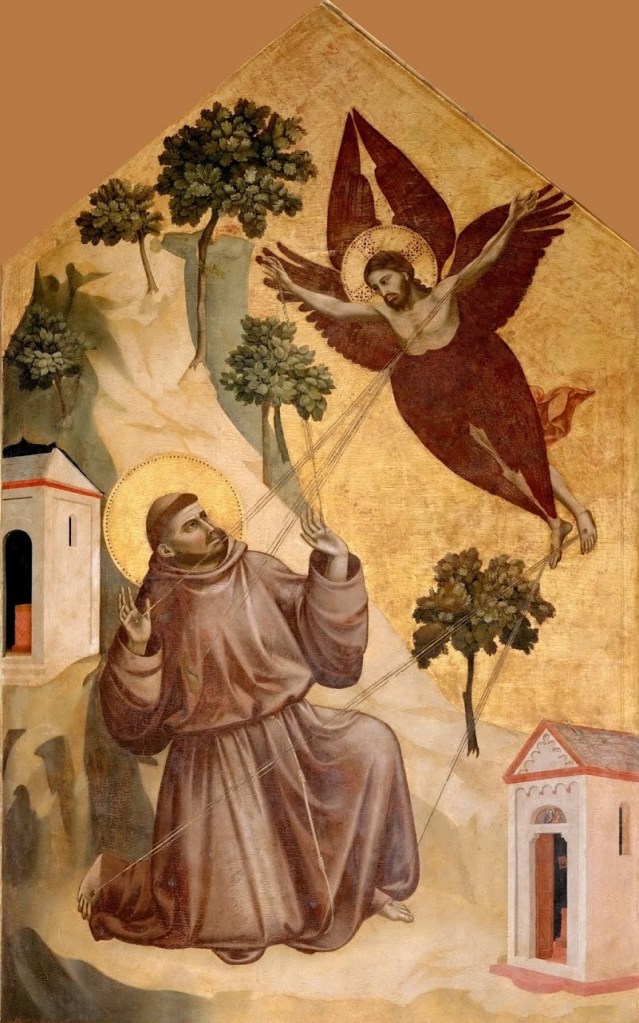

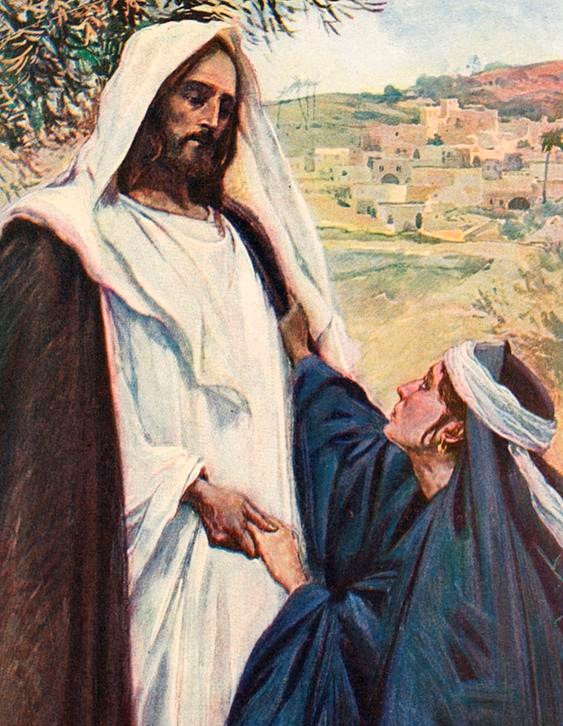


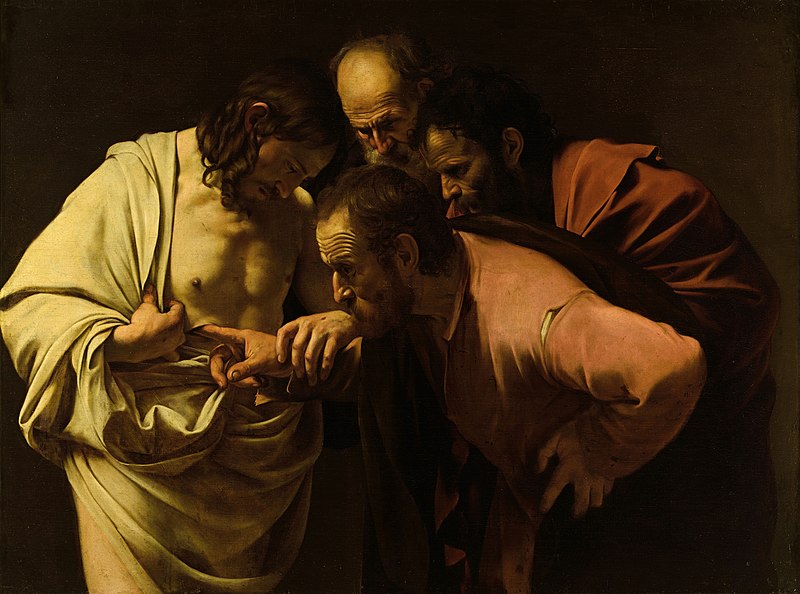


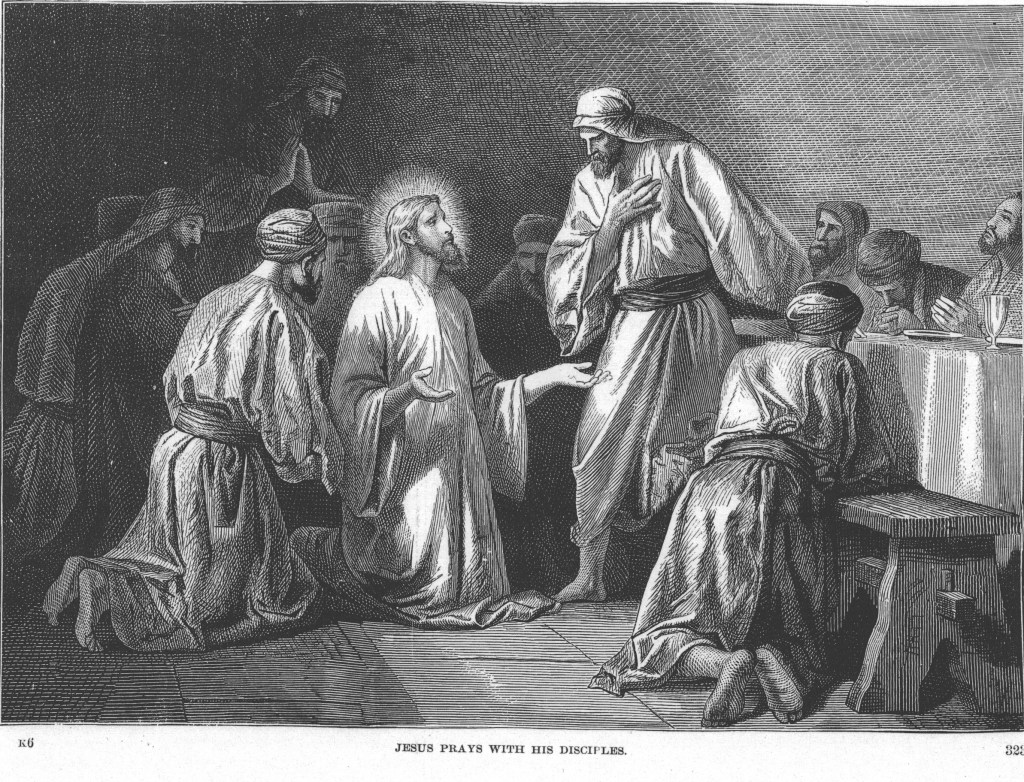
 OFS Ongoing